Privacy

Privacy is a topic that has become very controversial over time. There is no simple conversation when it comes to privacy because it covers a lot from surveillance to little things like your pictures being used without permission if its on the web. If you ask me I think we all benefit if we try to take control of our privacy or at least be aware that there is a problem. 

I agree that sometimes we have to give up a bit of freedom in exchange for security and safety, but I think the people should have a say in how it goes. Obviously, there will be abuse of power when it comes to surveillance and it sucks. From a quick perspective and without giving it to much thought, phrases like “you shouldn’t be worried if you have nothing to hide” seemed interesting to me. I used to think this was a valid reasoning but I think if you really sit down and dissect the different aspects of privacy with this phrase, what I think you’ll find is that it is very flawed. This flaw is well explained in the article “ Why Privacy Matters Even if You Have ‘Nothing to Hide’’” which can be found in The Chronicle. In the article the author mentions a quote from Aleksandr Solzhenitsyn who said “Everyone is guilty of something or has something to conceal. All one has to do is look hard enough to find what it is.” I think that this is a valid point. Not everyone has the same secrets or is trying to hide the same things. Everyone has their own thing and it would just seem to be impossible for someone to be so open about all aspects of privacy. 

Another person that was quoted by the author is Canadian Privacy Expert David Flaherty, who said, “There is no sentient human being in the Western world who has little or no regard for his or her personal privacy; those who would attempt such claims cannot withstand even a few minutes questioning about intimate aspects of their lives without capitulating to the intrusiveness of certain subject matters.” This is something he said that the author believed related to this “If you have nothing to hide, then that quite literally means you are willing to let me photograph you naked? And I get full rights to that photograph-so I can show it to your neighbors?”. I believe that this is an aspect that people don’t really consider. It’s easy to see why since the topic is very complex.
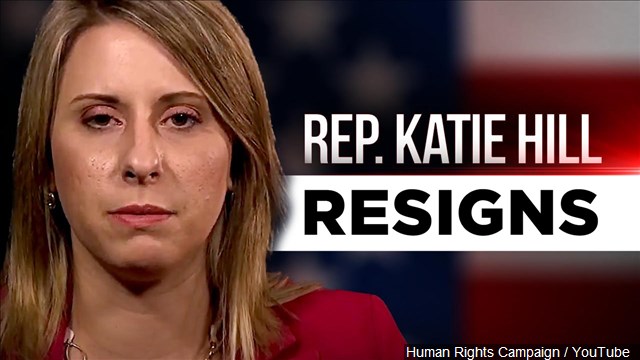
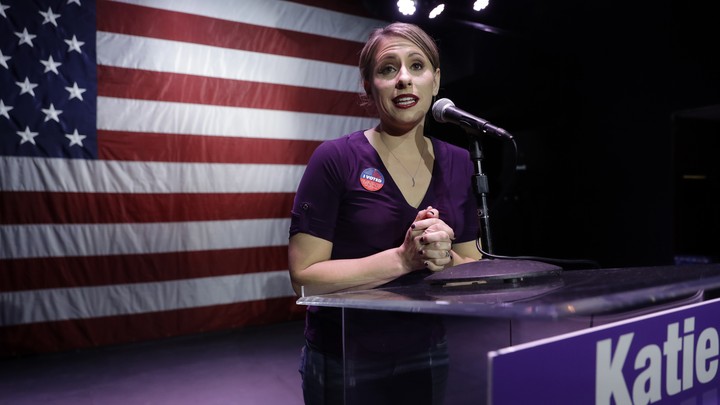
I’m sure we all worry about our privacy because we know how bad or embarrassing it could be. It’s unfortunate that some people have had issues with their privacy being violated and it’s something that happens a lot. One person who made headlines when their privacy was violated was Representative Katie Hill. She had some private photos leaked and shared all over the internet. I would imagine it was not easy for her to deal with as I’m sure most would as well.


https://www.businessinsider.com/prop-24-privacy-california-data-tracking-facebook-google-2020-11
Morals Don’t Matter If No One Is Watching

We all know the news is corrupt by now so I am not going to go into detail about that, but what I did learn from this week is that they take this to a whole different level of corruption. This week we had to watch The Newsroom Season 3 episode 1 titled Boston. This episode was centered around the Boston Marathon bombings back in 2013. While many of the events in the show were made out just for entertainment purposes it is clear the creator is getting at something deeper than that. Along with that television episode we had to read some articles that also helped me come to this common them of the materials for the week. The honesty and morals do not mean a thing if no one is watching.

Boston the first episode of the third season of the television series The Newsroom is based on the events of the Boston Marathon bombings that occurred on April 15, 2013. This was on a Monday and at the time of this event I was 13 years old and remember hearing about this in school when it happened. Just like the show portrayed all major news stations had no clue what were going on, but wanted to be the first to report something. In the show the station that is the main focus shows how all other news platforms are jumping the gun and trying to be the first to give the public insight on what just happened and who was responsible. This news station already was in trouble for doing so before and had to sit back and let all these other competitor stations try and be the first to report on this big incident. They were trying to almost say win back the trust of the public and to do so they had to report the actual truth. One of the characters in the show was actually talking about how they feel they have an obligation to report the real news while his seemed to be partner was always on Twitter looking for what was the rumor going around. When looking back at the episode it was actually social media that led some members of the team and another news stream to report an individual as a suspect wrongfully. In the end the team does the right thing and waits for the right leads and reports the correct suspect, but this short victory does not last long when they are given illegal information that they could either put out as breaking news or turn in. It was right back to the beginning again virtually.

An article we had to read that ties in with this episode was in the New York Times by Jay Caspian King. Like I stated before social media led to an individual being accused of being a suspect for these bombings, but actually was not. This individual was Sunil Tripathi. In the episode they did quote a Twitter user named Greg Hughes and that quote was “In 2013 all you need [is] a connection to the Boston police scanner and a Twitter feed to know what’s up. We don’t even need TV anymore”. He then twitted two suspects one of them being Tripathi. Now with many people seeing this information the Reddit community brought it upon themselves to create this propaganda and now everyone believes that the missing Sunil Tripathi is really a suspect in the bombings. The article asks if Reddit should be blamed for this spreading and my answer is no. I think us as a society should be blamed. We need to be better than this. There is way more information to be taken to account than a social media feed and connections before jumping to blame someone for a massacre like this. The actual perpetrator was sentenced to death so what would it have looked like if we tarnished the name of the deceased 22 year old all off what social media led us to believe?

WEEKLY NEWS: https://www.washingtonpost.com/elections/2020/11/06/trump-biden-election-live-updates/

We all know this election has been very controversial and for my weekly news post I thought it was only fitting we look at the updates and soon to be results.

Privacy and the Lack Thereof

I think that one of the biggest problems for our generation is the lack of privacy that we are all so accustomed to. Since we have lived with this dilemma for our whole lives, it doesn’t necessarily seem like a big deal that we’re constantly in everyone’s business. However, this does become a problem when the news has this same mentality; this was one of the major things that we learned this week.

The Newsroom' Recap: Save Neal Sampat! – iWatchiAm — My Life In  Entertainment

This week we watched “Boston”, an episode of The Newsroom, which really helped put the dangers of social media into perspective, especially because this was a real event. In the episode, we see how the spread of information can be both helpful and harmful. Of course the spread of the information would have been extremely helpful if they were the correct suspects. However, the spread of false accusations was extremely harmful to the people who were affected as a result.

We act like this is a crazy occurrence, but I see this happen everyday. Everyone places so much importance on being the first to report something that we lose the importance of accuracy. Whether it’s top news or info about a celebrity’s actions, we are constantly getting false or partially false information. Not only do we spread misinformation but propaganda or the spread of terrorist or hate groups can be fueled by social media. This is only natural and probably for the most part unavoidable. As we can see from the article “Social Media Networks Are the Handmaiden to Dangerous Propaganda”, social media can help pass information and propaganda for groups who mean to do harm to others. I think that the best way to prevent this type of issue is education. People need to know when they’re seeing something threatening and know when to report it, as the halt of these types of pages and posts is critical in it’s early stages. We have already seen how fast this media can spread.

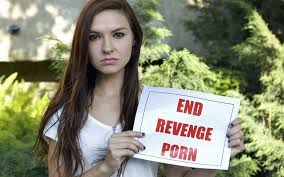
What You Need to Know about Revenge Porn and How Texas Legal Can Help —  Texas Legal

Another concept we talked about this week was revenge porn. Although it may not have be necessarily for revenge, I can bet that almost half of girls have dealt with something of this sort at least once in their lives. That’s why this is such a striking issue; it happens all of the time, and yet, the law still hasn’t figured out who to blame. We see this in the story about Katie Hill; although she fell victim to revenge porn, she ended up losing her career because of it. This is the same concept that Amy Adele Hasinoff, author of sexting panic, is fighting for. Although she focuses on sexting in the book, she is getting at the same theme. Privacy is important, and just as people can become immersed in legal trouble for defamation, they should be given the same punishment for ruining someone’s life over sexual content. Because these cases are so hard to get justice for, too many of them go unpunished or unnoticed entirely.

Here’s my question for the week: How do you think laws should be changed to fight issues like revenge porn and hate group propaganda?

The Weekly News

Wrong turn leads to postal carrier’s arrest; mail found in car included absentees

https://buffalonews.com/news/local/crime-and-courts/wrong-turn-leads-to-postal-carriers-arrest-mail-found-in-car-included-absentees/article_3834d150-1f6f-11eb-94be-97bbd829af9d.html

Mailbox

This story is about voter fraud, which does indeed happen, but probably not at the rate that Trump would like us to think it does.

The Newsroom & Mobile Terrorism

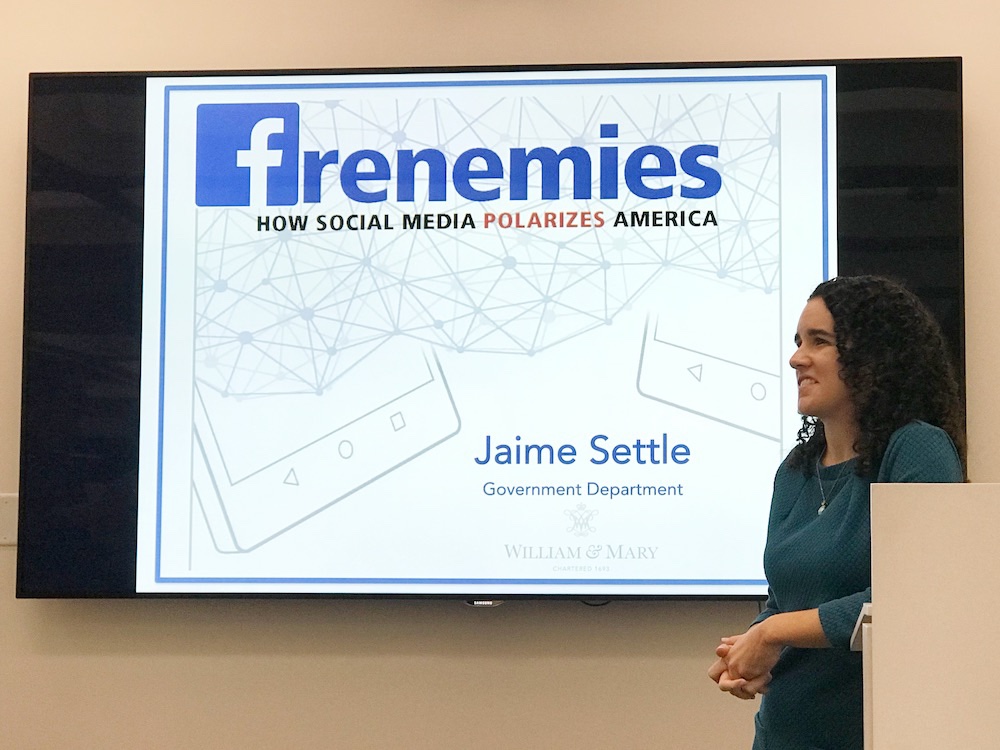
The eleventh week of Social Media & Society has delivered another informative and creative presentation by group four covering Frenemies: How Social Media Polarizes America, by Jaime Settle. Group four did a fabulous job at displaying Settle’s perspectives and message throughout her book. She presented her well executed scrutinization on the central idea of Facebook. Throughout the week we also discussed and viewed Social Media Networks Are the Handmaiden to Dangerous Propaganda and The Newsroom “Boston” episode. David Patrikarakos and the New York Times discussed the correlation between ISIS propaganda and serious acts of terrorism. Lastly, The Newsroom recreated and covered the terrible events that transpired on April 15th, 2013 and the following days that transpired in Boston Massachusetts.

Jaime Settle giving a presentation regarding her book, Frenemies

The Newsroom season three episode one, was created and written by Aaron Sorkin, and stars Jeff Daniels as Will McAvoy. The episode begins with the entire newsroom viewing the explosion at the Boston Marathon. The Atlantis Cable News (ACN) is completely taken back and scrambles to find the facts and gain the upper hand on the story. The ACN gains knowledge about the detonation of two separate bombings. The producer decides to sends reporters into the field in Boston. Will McAvoy addresses the nation and continues to cover and investigate the suspicious events involved with the terrorist attack. As several days pass by, the nation beings to grow worrisome as the ACN addresses the false accusations against two men. On day four, one police officer at Massachusetts Institute of Technology (MIT) had been killed in a shootout. A car chase proceeded and one of the two bombing suspects had been shot and killed. The entire city of Boston turns towards a massive manhunt for the second suspect. The media keeps close attention to new leads regardless if the information is true or misleading. The ACN provides creditable sources regarding the events unfolding in the city. At the end of the episode, the cast discovers information regarding the second suspect. He was identified hiding in a covered boat in an individuals backyard. The Newsroom also becomes aware of a hostile take over of the company.

Jeff Daniels (left), Sam Waterston (right)

Social media platforms today have become a serious weapon of influence to terrorist organizations such as ISIS. ISIS material has been identified and viewed on Facebook, Twitter, Google and YouTube. These syndicates have a sophisticated network that targets advertisements that stand out and attract individuals surfing online. The terrorists calculate algorithms and in which to feed us content to keep users as long as possible on their platform. The more people that participate and pass through these applications, the more successful their message spreads. There needs to be clear legislation that protects and prosecutes offenders on social media platforms. Social media platforms are accessible globally and required strict guidelines to combat negative propaganda. I believe the United States and other members of the United Nations need to address these issues before it becomes out of hand. Disinformation is steadily flowing into our media platforms and festering in our society.

Published by: Samuel Erickson

Weekly News Article: The Washington Post discussed the correlation between social media and terrorism. These acts of terrorism are generated in hope to receive attention towards their cause. However, it also created something much more.

https://www.washingtonpost.com/opinions/2019/03/16/why-social-media-terrorism-make-perfect-fit/

Ethics on Social Media

This weeks topics is zoned in on ethics, privacy, revenge porn, and last but not least, terrorism. we read articles such as ” Social Media spreads terrorism and propaganda,” and ” IS Social Media warfare in Syria and Iraq,” and ” Why privacy matters even when you have nothing to hide”, and a video on “Newsroom “Boston””. The “newsroom Boston ” is based on the real life event of the Boston marathon bombing that occurred and it showed how the media, and apparently reddit, horribly misconstrued the event. The media decided to take it in their own hands to try to figure out and they gathered all this information and from reddit and started comparing faces and people..and off of reddit they got their theories as to whom the suspects were. I guess they also used tweets and things of that nature to try to gain information as well. They identified their suspects off of theories on reddit and none of the information was necessarily valid nor accurate because to reiterate, it was just a theory. They identified the wrong men and those men were wrongfully accused and that threw the whole investing to a wrong direction and poor men who were wrongfully accused and quite frankly put their life in danger!

Social media is such a weapon nowadays. You would think with this generation specifically, they would be more careful or concerned about what they post or say but it is just the opposite for the most part. I think they just do not care. Revenge porn is a topic that I am more directly talking about in this case and like I said before, it is just a weapon and that is scary. In the article, “6 reasons why Revenge porn is so fucked up,” it talks about Chrissy Chambers, who is an LGBTQ activist youtube star, and how she is a woman making history by pressing criminal charges against her ex who posted Revenge porn. While trying to end things, she got extremely intoxicated and he took advantage of that and sexually assaulted her and filmed the entire process which she was on the verge of unconsciousness and without her consent. It then spread to many many different porn sites which included her face and first and last name but blurred his own face. I just don’t understand why people are so evil, the internet is forever and people cannot just unsee things even if taking It down. 

Going on to privacy..People need to realize that it is not that you have something to hide, but it’s about keeping your things private and just to yourself. Sure you might not be doing anything illegal, but would you let a person see your social security numbers or credit card information? No. And why is that ? because it is private and for your eyes only. Would you want a stranger coming into your house to have a look around ? if not, why ? You don’t have anything to hide? It all comes down to privacy and privacy is something that you need to protect. Everyone does have something to hide, however, not anyone should be entitled to look into your personal life. 

News: The link below talks about the weaponization of the internet.

https://www.npr.org/2018/10/09/655824435/the-weaponization-of-social-media-and-its-real-world-consequences

Privacy and Propaganda in The Social World

Privacy is an important thing it’s something we value very much and depend on to keep us sane. The real question is when do we consider are privacy to be breached, like when is our privacy being taken away? I guess it depends on the person really because everyone has levels I think to there privacy. A big place where are privacy is the most important is on social media. Social media outlets have had to be very diligent about there privacy terms to make sure people weren’t having there privacy violated. Actually something thats very prevalent is this years presidential election and conspiracy theories surrounding it. A big privacy issue during this election was the ballots and how the transcribing ballots had been damaged and were unable to be fed into the counting machines. Since that happened the ballots in that condition had to have there information copied, which violated peoples privacy. Not to mention the possibility of rigged votes with both candidates initiating false claims of each other. Privacy protects you from what you wish to tell people, but what about the propaganda that we see on an everyday basis and the affect it could have on your privacy.

Security for Privacy on Data Protection Day — ENISA

Propaganda has become a big problem in recent years creating false news and wrong information. On social media we see everyday fake news and it’s hard because it creates this dilema of what to believe and what not to believe and we see this on social media as well. One of the articles we had to read this week was called “Social Media Networks Are the Handmaiden to Dangerous Propaganda” and this goes over how easy it is for terrorism to flourish online, with the propaganda that comes with it. One of the things this article talks about is how the CSCC which protects against propaganda was unfortunately outgunned and ISIS managed to produce more on twitter than the CSCC did 1 to 99. ISIS was able to brand it’s self and spread there ideas to other people a making it easy to gain followers. So if you look at it social media contributed to terrorism and the rise of propaganda. Another article we had to read called “Should Reddit Be Blamed for the Spreading of a Smear? had to do with other propaganda scandals. The article was about the bombing of the Boston marathon and how one the original suspects was wrongfully accused. The mans name was Sunil Tripathi and his parents created a Facebook page called “Help Us Find Sunil Tripathi,” which had video messages of friends and family. The Facebook cite ended up back firing though because one of the suspects in Boston looked like Sunil, but even though it wasn’t the family started to get hate comments on the Facebook page. It just goes to show the affects that propaganda can bring.

50 powerful examples of visual propaganda and the meanings behind them

What I found the most interesting this week was the NewsRoom episode we had to watch. The episode was about the bombing at the the Boston marathon and takes you over the events that happened. I just think the show did a good job of showing the importance of that tragedy and just how they do the show in general. Overall privacy and propaganda have become a serious problem and need to be addressed more heavily.

Breaking: The Newsroom is still as irritating as ever | Television & radio  | The Guardian

https://www.cbsnews.com/news/fact-check-trumps-claims-poll-watchers/

This article is about President Trump delivered an error-filled speech from the White House on Thursday, inaccurately claiming Joe Biden’s electoral lead is the result of a far-reaching conspiracy mounted by the media, Democrats and big tech designed to deny him another four years in the White House

Recent News | Village of Bethany Illinois

Privacy Revoked

This week we read six articles, watched one video, and browsed one website. I had my group’s book presentation on Frenemies by Jaime Settle. I believe we did okay, but what I really liked was learning Settles’s different viewpoints. In the article Why Privacy Matters Even if You Have ‘Nothing To Hide’, we read that those who claim they have nothing to hide usually do. We all do honestly, no one wants someone looking at everything in their life meaning bills, trash, private photos, and their phones to name a few. On the surface, the nothing-to-hide claim seems easy to dismiss. Possibly everyone has something to hide from others. Everyone is guilty of something or has something to hide, as Aleksandr Solzhenitsyn said, “All one has to do is try hard enough to figure out what it is.” The nothing-to-hide claim, in a less drastic form, applies not to all personal information, but rather to the type of data that the government is likely to obtain. Retorts to the nothing-to-hide point about revealing the naked bodies of individuals or their darkest secrets are only valid if this kind of knowledge is likely to be gathered by the government. In certain cases, the data will hardly be used by anybody, and it will not be revealed to the public. The interest in privacy is therefore marginal, some would say, and the security interest in preventing terrorism is far more significant. The nothing-to-hide claim in this less severe form is a formidable one. It seems, however, from some defective assumptions regarding privacy and its meaning.

Photo by cottonbro on Pexels.com

In our other article, The Humiliation of Katie Hill Offers a Warning, we read that a politician, Katie Hill, was exposed to revenge porn. Hill engaged in a deep violation of accountability by engaging in a romantic relationship with someone who worked for her from her own account, and by doing so while running for public office. She stated “For the rest of my life, the mistakes I made which brought me to this moment will haunt me” Congressional participants are no strangers to bad behavior. But it would be intentionally cynical to shove aside the awkward complexities of Hill’s relationship with a staffer who was her junior for nearly a decade, and a recent college graduate, at a time when Americans are reshaping the complicated landscape of sex and power in the workplace. All together we have to ask the question was this ok to do, and I believe all of our answers are no. This is not an okay thing to do to another person, ever.

Photo by Brett Jordan on Pexels.com


In another article, 6 Reasons Why Revenge Porn Is Really Fucked Up, we learn that 90% of revenge porn victims are women. Social media has portrayed women’s bodies as objects and things to be owned instead of treated as human beings. By its very meaning, revenge porn is non-consensual. It is a form of harassment to post graphic material without someone’s permission, even if they consent to take photographs or videos. We should have full power over our bodies and our sexuality as human beings. It is undeniably a form of violence to violate our bodily autonomy and to cause our bodies to be subject to degradation and unwanted sexual abuse. Revenge porn is a product of rape culture and should be treated as such. I believe we should have a federal law pertaining to this and more so crack down on those doing this.

Photo by Kat Jayne on Pexels.com

Do you have anything you don’t want others seeing? What about videos that you pray will never come to light? Do you know a victim of revenge porn?

Weekly news:

Internet Ethics

This week was jam packed with a lot of information of all the messed up things that go on, on the internet. A lot and I do mean a lot of people really do not realize how to act when they are using the internet. You would think this new generation of kids would know what to do and what not to do while using the web, with all of the presentations and agreements and some classes that they have us take all through high school, so we don’t end up like some of these people who could get in some serious trouble. That ends up being the personal side of this very intensive topic, which only ends up accounting for a fraction of what people in other countries have to do with things, as well as the hackers that try to steal our informations or just make our lives miserable.

One of the topics that was a heavy one was the problem around revenge porn for primarily women. There are a lot of guys who think it is a good idea to either film their partners doing sexual acts or sexting them and getting either pictures or videos from them. Now this does not happen just to women, just like any other issue, but they are the primary target of most of these posts. This goes without saying that this is highly illegal and extremely unethical, along with promoting rape, as the article states. What begins to be the problem is when the people behind this and the people who hear about this have two very different knowledges of the situation. The word on the street is that one of your classmates in college could have made a porn, while that wasn’t it at all, so it could really really destroy someone’s reputation if people do not know the whole story.

Can I Get Arrested for Revenge Porn in Connecticut? - The Law Offices of  Mark Sherman,LLC

Another big topic was how social media can be a very bad place for propaganda and terrorist recruitment. This seems to be a huge tactic for a lot of ISIS member that sometimes can be left up on social median for days to weeks without the right people seeing it. I remember one certain case where this young girl, who I think didn’t even graduate high school, ran off to canid from buffalo because she believed what she saw on the internet. That was a caring thing for me to learn about when I was barely younger then that because I was like how could someone be so stupid and not know that all of that is absolute bullshit. But then I started watching some of these videos and if you aren’t a very informed person, I could see how you might think you have this fight to go fight I guess. Personally I don’t think that it’s too easy to get fooled about those but to each their own. My question to you is, have you ever been a victim of unethical online practices?

Heres an article about the election: https://www.theguardian.com/us-news/2020/nov/06/georgia-recount-us-election-biden-trump

History of Privacy of America

From Governor William Bradford opening pioneers’ mail intended for England, to President George W. Bramble’s sweeping home-based monitoring, the inspirations driving government investigation have changed little despite fast advances in mails innovation. However very regularly, American residents have been the cause of all their problems with regards to securing privacy, consistently doing without common freedoms in shocking occasions of battle just as for ordinary customer spaces. Every one of us currently adds to an ever-developing electronic record of web-based shopping sprees, photograph collections, wellbeing records, and political commitments, open to nearly any individual who cares to look. 

https://www.zlti.com/blog/the-history-of-american-data-privacy/

American Privacy follows the genealogy of social standards and lawful orders that have twisted around the Fourth Amendment since its selection. In 1873, the presentation of postcards split American assessment of public validity. Longer than a century later, Twitter has its spot on the range of human association. Between these two hubs, Anthony Comstock pursued an ethical campaign against disgusting writing, George Orwell wrote 1984, Joseph McCarthy chased Communists and “degenerates,” President Richard Nixon followed himself directly out of office, and the Supreme Court of the United States gave its most influential authentic suppositions concerning the privilege to privacy to date. Caught here, these memorable representations amount to a lively depiction of privacy’s victors and challengers. 

Lawfully, mechanically, and truly grounded, American Privacy finishes up with a call for Congress to perceive how advancement and violation go inseparably, and a test to residents to secure privacy before it is lost totally.

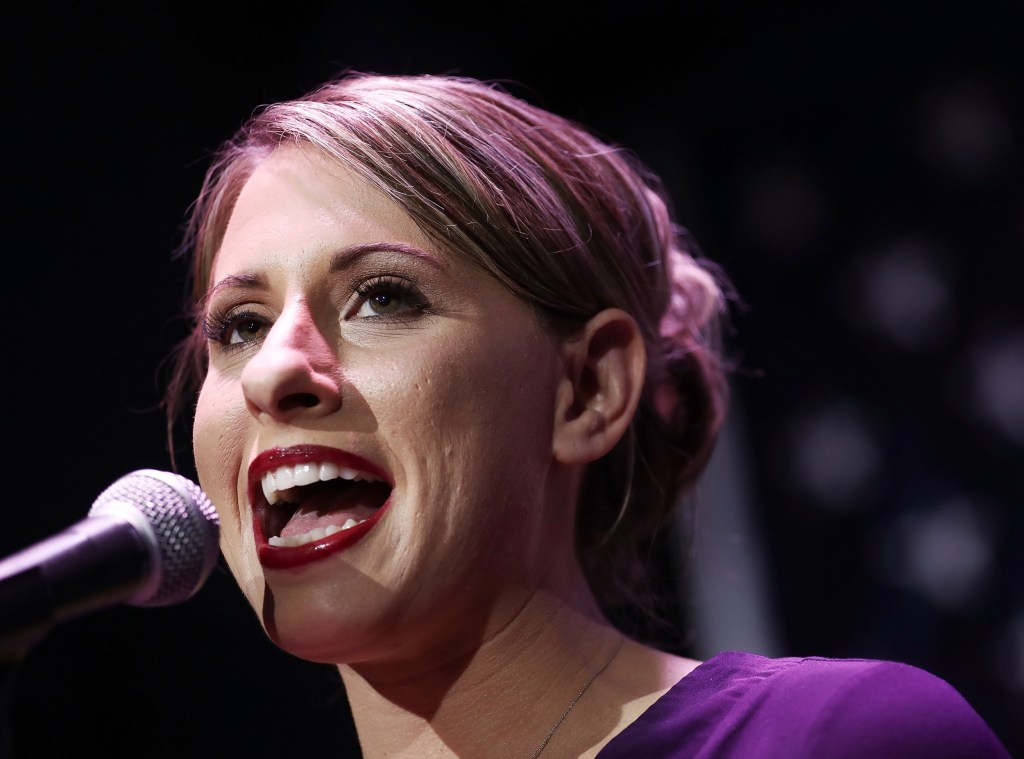
Agent Katie Hill’s short vocation in Congress untied up that Ernest Hemingway depicted chapter 11 occurring: steadily and afterward out of nowhere. On October 18, the traditional source redstate distributed an article claiming sexual connections among Hill and two staff members, alongside an express photo of Hill. Other right-inclining distributions got the story, and it started rising around Twitter. 

Katie Hill speaks to supporters during an election watch party
https://cdn.theatlantic.com/thumbor/P0rM6yX9CgQGSloMfDOzfdKpkq8=/0x226:5472×3304/720×405/media/img/mt/2019/10/AP_18311271095252/original.jpg

The Hill embarrassment has an uncanny inclination. It is both exceptionally recognizable—the political sex outrage is in a real sense wonder as old as this nation—but positioned in a setting that causes it to seem bizarre and awful. As I wrote in Lawfare before Hill’s abdication, this is the main occurrence of which I am mindful when a politically adjusted distribution has distributed an express photograph of a resistance legislator for the evident political increase. It’s both an indication of how revolting the political scene could become and a token of how terrible, for the numerous customary individuals who have endured this sort of misuse, the world as of now is.

The effects of nonconsensual pornography can be devastating. Victims report severe anxiety and depression. Many lose their jobs. Some are afraid to even step outside. The victims’-rights lawyers Carrie Goldberg and Annie Seifullah describe how their respective former partners used intimate photographs of them to try to destroy their careers. It is for this reason—recognizing the harm that nonconsensual pornography represents—that the vast majority of states plus the District of Columbia have criminalized the practice in recent years.

References

Daniel J. Solove (2006), “A Brief History of Information Privacy Law”

Available at: https://scholarship.law.gwu.edu/cgi/viewcontent.cgi?Article=2076&context=faculty_publications

[Accessed at: 6 November 2020]

Quinta Jurecic (2019), “The Humiliation of Katie Hill Offers a Warning”

Available at: https://www.theatlantic.com/ideas/archive/2019/10/katie-hill-and-many-victims-revenge-porn/601198/?Utm_medium=offsite&utm_source=yahoo&utm_campaign=yahoo-non-hosted&yptr=yahoo

[Accessed at: 6 November]

Google News
https://joebalestrino.com/how-to-improve-google-news-stories/

I found some good news about the U.S. economy added more jobs than expected in October and the unemployment rate fell sharply even as Americans continue to grapple with Covid-19 and its dampening impact on business.

https://www.cnbc.com/2020/11/06/heres-where-the-jobs-are-for-october-2020-in-one-chart.html

Why Privacy Matters

In the article, Privacy Matters Even If You Have Nothing To Hide, the ‘nothing-to hide argument’ is rebuked as being a short-sided point of view because it implies that since certain people have “nothing to hide” that they won’t mind if you spy on them, look through their records, and use information without permission. Privacy is not viewed as a right, but as a form of secrecy.  The argument is made that everyone has something to hide and that all someone has to do is look hard enough.  Privacy is not that simple and there is not just one element to privacy.  There is also the assumption that privacy is about hiding bad things, not taking into account types of surveillance.    As the article states, surveillance can inhibit such lawful activities as free speech, free association, and other First Amendment rights essential for democracy.  When a third party company harvests your data and uses it to make marketing decisions, this can be considered a breach of privacy.  Especially since you have no say in what the data is being used for, no idea who is using it, or if the parts they are using are even accurate.  There is no involvement from the people in which the data is being extracted.  There is only the government, which takes the control out of the people’s hands, which creates a power imbalance.  Another noted problem is the distortion of personal data.  If the government is gathering personal information about people, it may not reflect the whole person.  The article urges caution in claiming, “My life’s an open book.”  There is a narrow understanding of how much is actually at stake and how deeply pervasive this could be if we did not have any rules governing privacy issues.

Katie Hill found out how one little photo leaked to the press could change the life of her career permanently.  In the article, The Humiliation of Katie Hill Offers a Warning, the article talks about the right-wing outlet RedState and how they published an article alleging sexual relationships between her and two staffers, along with an explicit photograph.  Hill later admitted to having an inappropriate relationship with a staffer and as a result resigned from her position in Congress.  Apparently, this was the first time an explicit photo of an opposition politician was used for political gain.  She was one of the first members of Congress to identify publicly as bisexual, and the staffer with whom she was in a relationship with was female, which caused a lot of media coverage.  Regardless of her personal life the article asks if the photos should have been made public at all and suggests that this fits into the category of “revenge porn,” since they were released without Hill’s approval.  The article says that the effects of nonconsensual pornography can be devastating and that victims report severe anxiety, depression, and are afraid to even go outside.  All of this does pose an interesting question:  What can be done about instances like this in the future and in our political system? 

Katie Hill, former member of the U.S. House of Representatives.

Works Cited:

The Chronicle of Higher Education. May 15, 2011. Why Privacy Matters Even if You Have ‘Nothing To Hide’ https://alfredu.instructure.com/courses/12951/files/folder/Readings?preview=632634

The Atlantic. October 31, 2019. The Humiliation of Katie Hill Offers a Warning https://www.theatlantic.com/ideas/archive/2019/10/katie-hill-and-many-victims-revenge-porn/601198/