Final Blog: WAKE UP AMERICA!

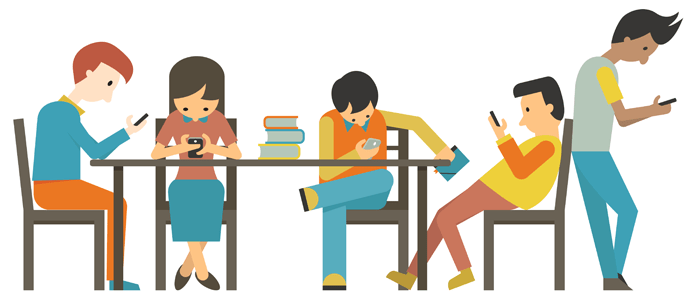
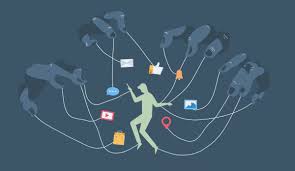
There is a growing problem within our society that is only going to get worse if we do not make some changes:  the social media dilemma and its effects on our youth.  Social media affects our everyday lives, our democracies, and will have a negative outcome on our future if we do not harness its power and truly use it for greater good.  No matter the original intentions of social media platforms, they have morphed into something more sinister; more nefarious.  The companies who control the apps that we use daily are more interested in creating without regulation and making money from advertisers.  Meanwhile, we are used as puppets; our data and information harvested, and our mental health declining.  These tech companies are creating wonderful and genius technology, but at what cost?  We have essentially become addicted to our phones; consulting apps for reassurance and measuring our worth with how many likes we get.  We are constantly bombarded by advertisements all competing for our attention and they have it.  We are more disconnected from each other than ever and our democracy is at serious risk.  We must take the necessary steps to mitigate these issues before it is too late.  We cannot continue to allow our youth to suffer.
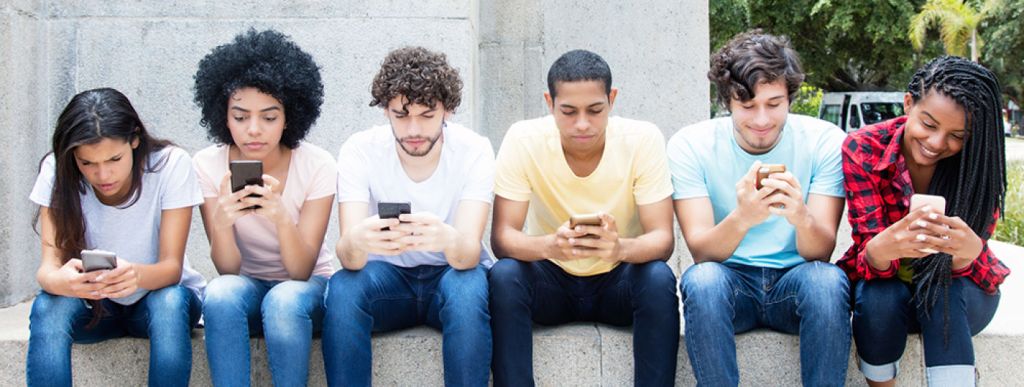
Adolescents and young adults are at risk for depression and anxiety related to social media and the numbers continue to rise.  Within the last ten years, there has been a shift in the purpose of these technologies and instead of bringing us closer together, they are driving a wedge between us and society at large.  Kids born around 1995 (and starting in 2011) are on their phones much more than previous younger generations, contributing to the rise of depression, anxiety, and self-harm. (The Kids Are Not Alright) The increase spans across age, race, and social class.  Girls are more affected by depression while boys are more prone to anxiety.  Kids see what other people are posting and if someone posts something that looks better than what they have they feel like their lives are less than.  Boys seem to gravitate more towards video games while girls are putting something out there like a picture or a post and waiting for comments.  Social media distorts our self-image and only 1/10th of what you post is reality (Talk Space, Social Media Dependency) At a time when teenagers’ minds are developing and they are cultivating coping and emotional skills, this type of validity seeking is harmful to development. 

Depression – 3 million adolescents ages 12 to 17 in the U.S. had at least one major depressive episode.

Anxiety – 6.3 million teens ages 13-18 have had an anxiety disorder.

Suicide rates have increased by 70% for girls. (The Kids…)  Self-harm is on the rise and there is a direct correlation between social media.  Anxiety and depression has increased since 2012 and experts are struggling with figuring out the best way to help.  The post 9/11 generation was raised in an era of economic and national insecurity, having experienced terrorism and school shootings in our nation.  As Faith-Ann Bishop says in The Kids Are Not Alright, “we’re the first generation that cannot escape our problems at all.”  She is right.  With recent technology advancements, there is a hyper-connectedness that expands everywhere.  Rural students are not so isolated anymore.  We live in a world where we are more aware of everything.  You have our attention, now it is up to the tech giants to accept responsibility for their platforms and harness the beast that they have created. 
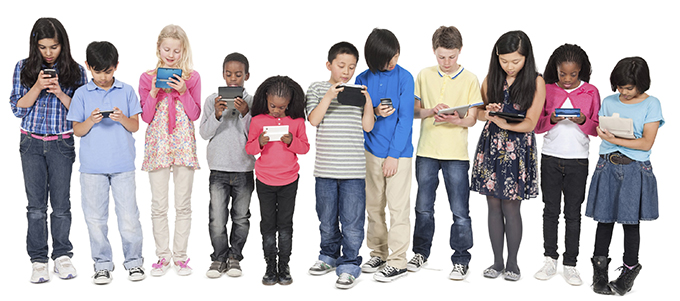
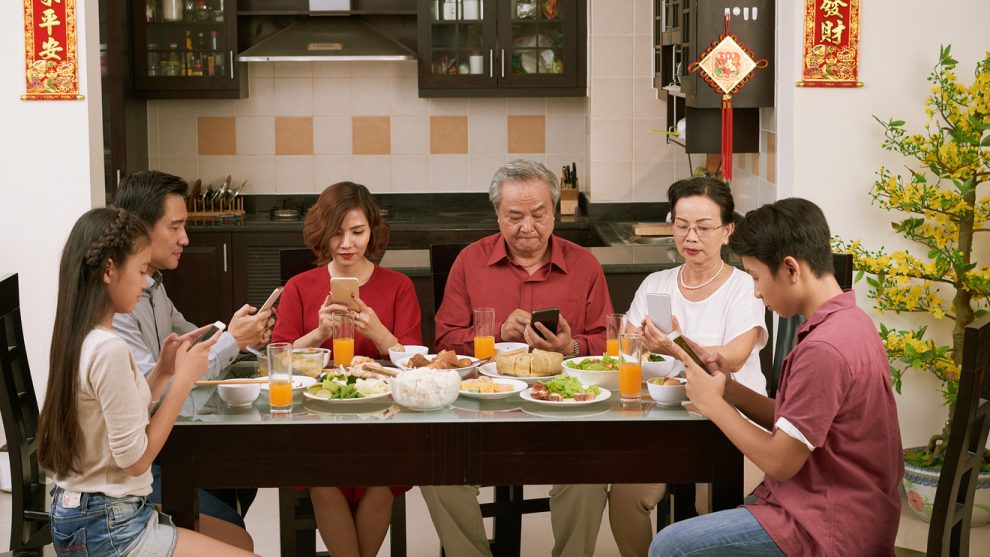
It is easy to shift blame, though.  We could say that parents are not doing their part and that they are contributing to the problem by also being on their phones constantly and not setting good examples.  Parents are either watching their kids too much and coddling or not keeping an eye on their kids and their technology usage enough.  As Jonathan Haidt, the Social Psychologist and Author of The Coddling of the American Mind stated, that kids are unable to cope with adversity and that some things must be challenged, not protected.  Parents are more apt to negotiate with their kids as opposed to providing structure and authority.  Parents are also dealing with their own restraints with technology and social media.  There used to be a distinction of when you were at work and at home.  Now, adults are never truly away from work and as a result are mimicking their children’s social media habits, like “zoning out,” “ignoring people,” and being on their phones during family time.  We all need to take responsibility for our social media habits, but it is up to parents to establish those boundaries and teach their children how to be responsible consumers.
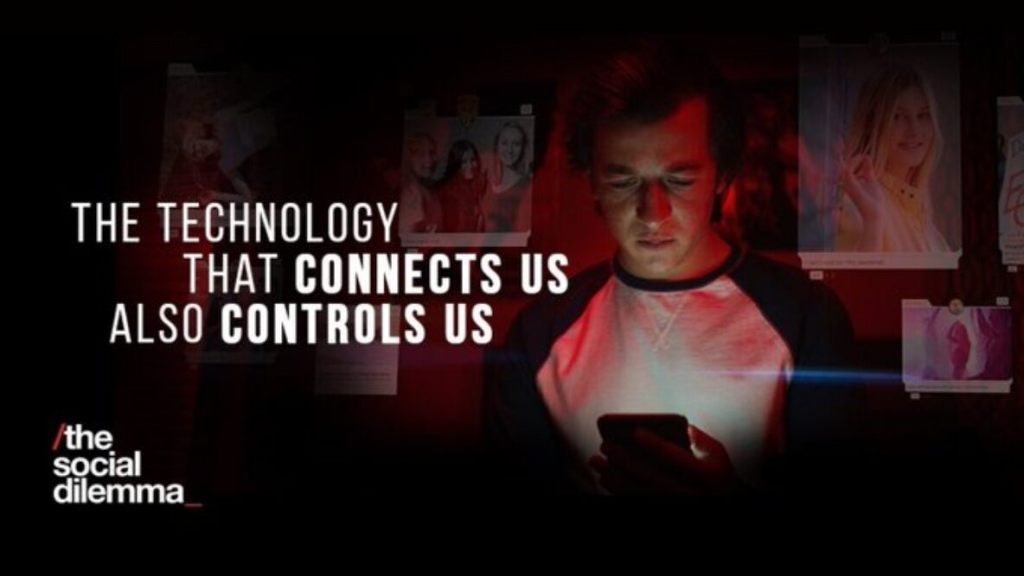
In the documentary, The Social Dilemma, top designers, and innovators of our social media culture conveyed that when they were developing these tools, they were concerned, but did not intend on the consequences.  It is true that these tools have accomplished amazing things, but as Google Design Enthusiast, Tristan Harns puts it, the “world is going crazy.”  The documentary presented a “Call to Arms” from tech producers in the industry and states that we have a moral responsibility to solve the problem of social media dependency and its effects on 2 billion people.  After the Call to Arms was submitted, nothing happened.  Social media has changed our behavior towards one another.  We are losing the ability to empathize all in the name of money.
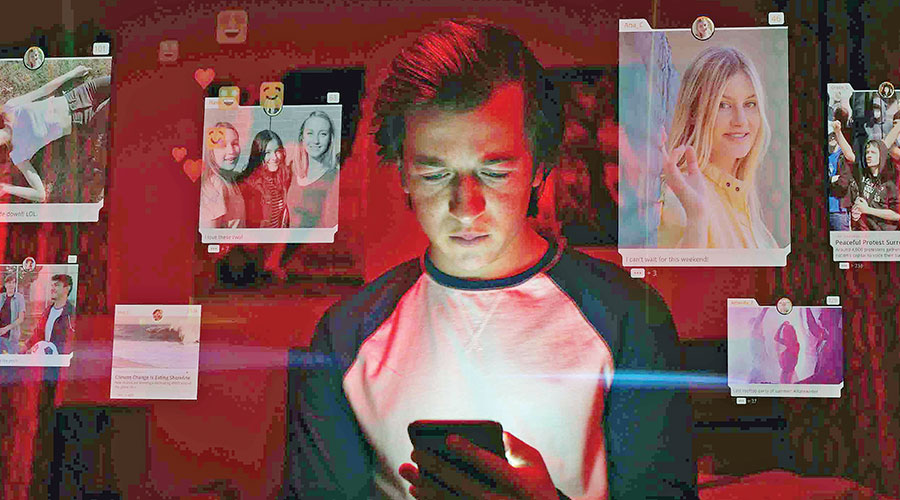
 It is the tech corporations’ goal to keep us engaged on-screen. They make money from advertisers that compete with other advertisers for ads on social media platforms.  The corporations are then paid a percentage.  “If you are not paying for the product then you are the product” as Jaren Lanier, Founding Father of Virtual Reality and Computer Scientist states.  The change in behavior of individuals IS the product.  How you think and who you are changes and so does the world gradually.  Different companies purchase all the data that is collected by these platforms and use that data against us for their own personal gains.  Every action you take is monitored and recorded, including the amount of time you spend looking at something online.  Advertisers have more information on us with no supervision or any regulations.  What are they doing with all this data?  They are building models that predict actions; whoever has the best model wins.  The Social Dilemma describes it like building an avatar that monitors the videos you watch, pictures you like, and elicits and responds to what kinds of emotions trigger you.  The three goals are engagement, growth, and advertising and they are all powered by an algorithm that keeps the numbers going up.  What is scary is that they can turn the dial up whenever or however much they want to. 
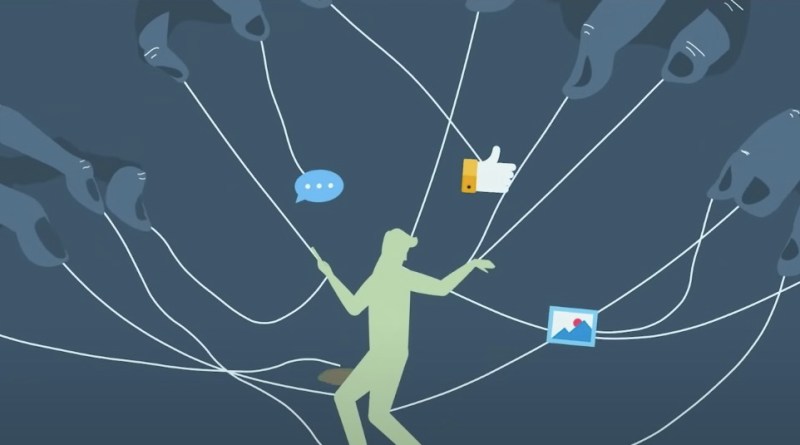
We are being treated as participants in a game with which we are unaware of the rules.  Tech companies have learned how to make technology more persuasive through positive reinforcement.  We are not simply being coerced; we are being programmed on a deeper level.  As stated in The Social Dilemma this programming is not by accident; it is a design technique.  Through an endless cycle of subliminal queues, suggestions, and dopamine responses we have become lab rats.  These platforms have moved away from tools-based technology to manipulating us with our own psychology.  Social approval and the attainment of a perceived sense of perfection from likes forces you into an endless cycle of “what can I do to get more likes” mindset.  Our youth are suffering.  They are more anxious, depressed, and fragile.  Self-harm and suicide are on the rise.  It is time to take responsibility.  It is okay to make money, but without regulation there are no reasons for companies to change.  If we continue this path there will be inevitable, destructive consequences.  This is not how we want to treat our fellow human beings.  We have a responsibility to ourselves, our children, and our future. 

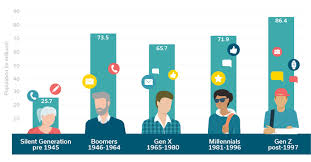
https://www.businessballs.com/glossaries-and-terminology/generational-nicknames-model-theory/

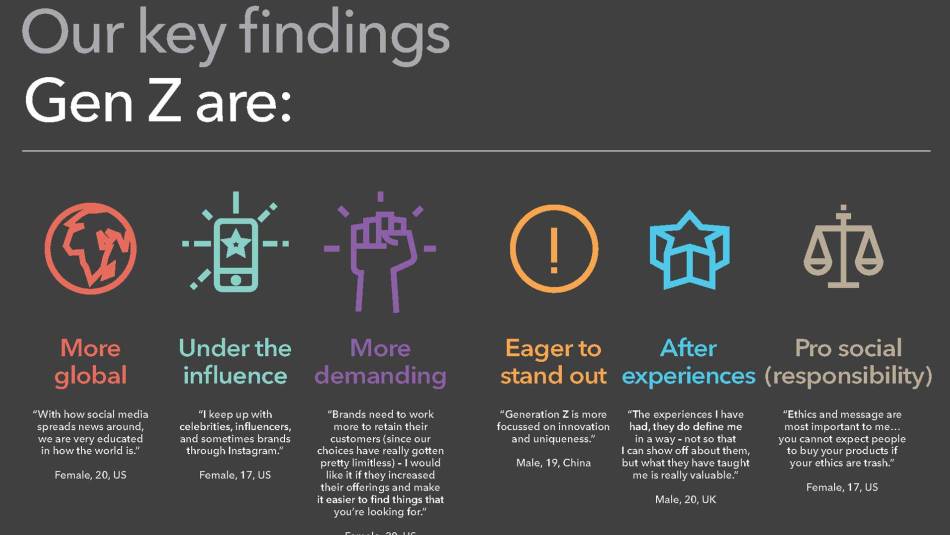
The Generational Theory implies that people’s formative years are the most sensitive in shaping their attitudes in response to political, economic, and social factors of the time. (Generational Nicknames…)  The major factors that are considered to influence the character of each generational group are:

-societal norms and standards

-economic and political situations

-technological developments

-music and fashion

My generation, Gen X (or MTV/Xennial) is known for apathy, anarchy, detachment and being technophiles, resentful, nomadic, and struggling and our fashion and music is anarchic, bold, and anti-establishment.

Five Things Beneficial of Gen X:

  1. Can adapt easily; good at in-person conversation and technological communications
  2. Developed good social skills during a time when people were not addicted to their phones
  3. Good workers and get along well with others
  4. Can multi-task easily; open to change and innovation
  5. Good problem-solvers; solution driven

Five Problems of Gen X:

  1. Had to fend for ourselves growing up due to divorce and parents entering the work force
  2. Dislike authority and rigid work environments
  3. Nomadic and not grounded
  4. Score low at cost-effectiveness
  5. Scored lowest when displaying executive presence

Here is great article that pretty much sums up my generation: https://www.nytimes.com/interactive/2019/05/14/style/generation-xers.html

Works Cited:

Schrobsdorff, Susanna.  Time, The Kids are Not Alright pp. 44-51

Talk Space:  Social Media Dependency

Generational Nicknames:  Model and Theory

https://www.businessballs.com/glossaries-and-terminology/generational-nicknames-model-theory/

Netflix, The Social Dilemma documentary

Weekly News Article:

“One root of the problem is the insatiable land grab by nearly every company imaginable — whether it’s Facebook or weather, parking and dating apps — to siphon every digital morsel of information about us, mostly because they can.”

Exploring the Real World

This is going to be our last blog of this semester and what we have learnt overall was quite informative and interesting. Same is our last topic of discussion i.e. “Reality, Authenticity & making Sense of it All”. We are going to talk about the reality, authenticity and the things that make sense.

The first article: “The Kids Are Not Alright” is about reality. What is happening in the real world should be our main concern. In the article, the author mentioned the lives of the children who got raised in the fosters and when they did not get the proper advice for their future many of the children from foster end up having a bad life ahead. And many of the foster children would become involved in the crimes and end up in the prison. The author said that young adults emerging from foster care or the criminal-justice system are in an especially difficult situation, often released without guidance or support. “This abandonment not only worsens the divergence in the individual fortunes of young people,” Kim writes, “but also contributes to the widening gaps in income, wealth, and opportunity that have increasingly become a concern for policymakers.

Kim lays out the problem in the first half of the book, and offers possible solutions in the second. She writes with a quiet anger. Her sentence-by-sentence dissection of a system that isn’t working for so many reveals a place where policy makers could, with a little ingenuity (and, of course, money), make a big difference in the country’s growing inequality.

The next article: “Addicted to Distraction” the author have discussed about many of the things that are accessible to us and that can make us distracted so easily. Not only the internet and the social media but now the games are also getting so seductive for the young children that they spent hours on the internet in order to get mastery on such games.

At this point, I want to ask from you all that what do you think about this situation?

Do you believe that we should have a balance in our lives in order to achieve our goals?

Is internet filled with such seductive material that can summon a person for hours?

The next article: “The Decade the Internet Lost Its Joy” the author said that As someone best described it to me recently, the internet has moved from a flat ecosystem — with a multitude of smaller, trusted communities — to a vertical one, with everyone being pushed together into the same few platforms (investor parlance termed it FAANG — Facebook, Amazon, Apple, Netflix, and Google), all in the pursuit of data collection and ad revenue.

The book “Program or be Programmed” by Douglas Rushkoff is a book which is based on the ten commands for this digital age. In this the author has made the discussion about the fact that the debate over whether the Net is good or bad for us fills the airwaves and the blogosphere. But for all the heat of claim and counter-claim, the argument is essentially beside the point: it’s here; it’s everywhere. The real question is, do we direct technology, or do we let ourselves be directed by it and those who have mastered it? “Choose the former,” writes Rushkoff, “and you gain access to the control panel of civilization. Choose the latter, and it could be the last real choice you get to make.” In ten chapters, composed of ten “commands” accompanied by original illustrations from comic artist Leland Purvis, Rushkoff provides cyber enthusiasts and technophobes alike with the guidelines to navigate this new universe.

I am going to share this week’s news post article which is based on the concerns of democracy in the digital age

https://www.pewresearch.org/internet/2020/02/21/concerns-about-democracy-in-the-digital-age/

Addicted to distraction

Holistic mentor and writer Tony Schwartz’s generally perused New York Times article “Addicted to Distraction” started with an acknowledgment that he had slipped into a period where he was dealing with his life ineffectively. Thus, he began an “unreasonably yearning” plan to eliminate unnecessary eating regimen pop, liquor, awful dietary patterns, and web and email distractions during the day.

Through incredible assurance, Schwartz fixed almost all that he needed to achieve, fundamentally better-eating regimen and more exercise, however, flopped totally in one conduct – scaling back time on the web. As Cal Newport notes, there is something genuine going on when Schwartz, who has assembled a profession around helping individuals arrive at his maximum capacity, thinks that it’s simpler to commence sugar, liquor, and sloth than his impulsive web propensity.

Are You Addicted to Distraction?
http://www.1simplethingonline.com/are-you-addicted-to-distraction/

There is anything but a recommended arrangement here however, it is clear, that it is a requirement we all to look at the idea of our web conduct and trial with arrangements that suit our style this year. Tony Schwartz shares a couple in the article (here) and I, for one, have discovered tremendous incentive from not permitting my cell phone in our room after 8 pm.

Schwartz recalled a powerful story about a man and his 4 or 5-year-old daughter at a family restaurant – “Almost immediately, the man turned this attention to his phone. Meanwhile, his daughter was a whirlwind of energy and restlessness… [attempting many things] to get her father’s attention…she didn’t succeed and after a while, she glumly gave up. The silence felt deafening.”

The Decade the Internet Lost Its Joy

I Disagree wholeheartedly. For me, all the blogs that I cared about back then when I was more into economics are still there: Scott Sumner, Tyler Cowen, or Brad DeLong but also Less Wrong or Scott Alexander.

Now in form of media, I absolutely love the explosion of podcasting and audiobooks as media. It changed the way I learn things – like listening to hundreds of episodes of podcasts like The History of the Twentieth Century or Mindscape – the podcast of aforementioned Sean Caroll. I also have a YouTube downloader so I can listen to some of the YouTube only shows as a podcast. Today if you need to do some plumbing yourself you can learn what to do in a matter of minutes most likely, save yourself some money, and learn something useful.

Image for post
https://gen.medium.com/the-decade-the-internet-lost-its-joy-4898c2c44cb4

We also have many other things stemming from the overall connectivity of smart devices to the internet ranging from online gaming to services like Uber or TripAdvisor to things like mobile online banking, smart homes, and who knows what other things there are that make life easier.

Additionally, there is still an active network of people similar to pioneers of old developing open-source software, engaged in peer-to-peer platforms (with blockchain being the buzzword of the day) capable of communicating from safe platforms. And if you have a “darker” streak there still are things you can do.

I think there is Joy aplenty for everyone. Nobody forces you to follow your granny on Facebook or get into the Twitter status game. It is based on the type of people who engage in these things.

References

Tony Schwartz (2015) “Addicted to Distraction”

Available at: https://www.nytimes.com/2015/11/29/opinion/sunday/addicted-to-distraction.html

[Accessed at: 19 November 2020]

Clio Chang (2019), The Decade the Internet Lost Its Joy

Available at: https://gen.medium.com/the-decade-the-internet-lost-its-joy-4898c2c44cb4

[Accessed at: 19 November 2020]

Google News
https://joebalestrino.com/how-to-improve-google-news-stories/

I fuond bad news about Covid-19 in U.S. reports record 153,400 new Covid cases as Dr. Fauci urges Americans to be careful: ‘It is not futile’:

https://www.cnbc.com/2020/11/13/us-reports-record-153400-new-covid-cases-as-dr-fauci-urges-americans-to-be-careful-it-is-not-futile.html

Is there a link between dependency and disinformation?

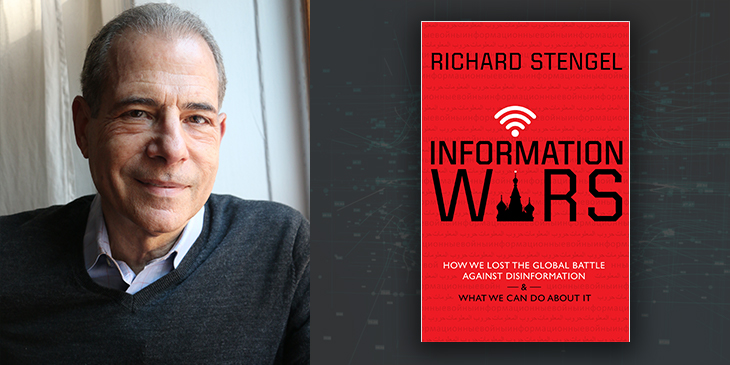
This week, the class got to see group 5 present their book presentation on Information Wars:How We Lost the Global Battle Against Disinformation. It was an interesting presentation with a lot of information to offer. I believe the book is very relevant today as the last couple years have been sort of confusing for many. With social media platforms becoming very popular and having most of the world on it it has been easy for a lot of disinformation to reach a bigger audience. This book explores this issue and how a lot of this disinformation tactic has bleed into the realm of politics. If you look at the issues with social media and the internet, I think what you’ll find is that a lot of these issues are overlapping or blended into each other to some extent. 

For example, another issue related to social media is social media dependency which is something a lot of people are facing. These two issues I think lend themselves to each other. With people being dependent on social media, it allows for a lot of room for disinformation to get across and be exposed to more viewers at probably a higher frequency.

After the presentation we discussed how we as a society go about being able to understand and comprehend what information is valid and was false. One major point brought up was that perhaps higher education, at least college, would benefit people by opening them up to different experiences that a university or college can provide. It is unfortunate that not many people care or have the opportunity to go on past high school education and that really sets back a lot of people. It’s a difficult task to think of the best way to combat disinformation or to be able to convince people that not everything posted is true. I think disinformation definitely adds to the division in this country for example during times of elections. 

As technology continues to give people a larger platform to reach people, it can also add to the amount of information that gets put out with no credibility. For now, I believe it’s just about people trying to be accountable for themselves and in their best interest, do research or even attempt to look a little bit into the people they are listening to or source of information. I think truly the generations coming up are going to be worse off, most of us grew up at the time where social media has too but the upcoming generations are coming in being younger than the take off of social media’s popularity to where it basically is here before them. 

There are five positive things that I believe about my generation and they are 1)basic social media literacy, 2)ability to use social media for creating a presence for whatever we may be into, 3)communication with other people around the world who share the same interest.4) Access to quick information. 5) ability to make money online.

5 negative things that are faced by generation is 1) falling for online fraud, 2)hacking, 3)addiction 4)OverSharing and 5)dependence ,it basically becomes a part of you.


News of the week

https://www.chicagotribune.com/featured/sns-tweets-flagged-election-disinformation-fake-news-20201117-ccqqmdqmfrg5dhjdhicqnetffm-story.html

Social Dilemma

This week we focused on the reality, authenticity, and “making sense of it all”. We read the articles, “addicted to distraction,” and “the kids are not alright,” and the movie “The Social Dilemma.” The Social Dilemma is portrayed in a documentary form but also movie sense and it kind of goes back and forth. It talks about the social dilemma with social media such as facebook, instagram, twitter, visco, tik tok, and all other platforms. It also touches base on what we have talked about this entire semester such as fake news, being disconnected from the world but connected at the same time, addiction, hacking, and body dysmorphia due to social media and comparing yourself constantly. All these things are portrayed in this movie. People who worked at these social media companies speak out on here and say that these companies have lost their way by making these sites more addicting. Their business model is to keep you on your phone longer and on their social platforms. How much time can you give these apps is what they’re trying to get. They have all the information about us that we could ever imagine. It makes better predictions of what we are going to do next and things of that nature. It is like a game ” whoever has the best model, essentially wins.” They created a world where online connection is primary. This whole thing is manipulation after manipulation and it is all to keep you online for a longer period of time. They also tap into psychology of human nature, for example the feature of tagging people on post… honestly it is quite genius.

They figured out that they can control the mindset and behavior of society without letting the users know… that to me it is quite scary that we are essentially being manipulated and we are completely unaware. I know I have because I fall for these ads and tagging and just getting on my apps for no reason. It is an addiction and manipulative technology that uses psychology against us. I found this very eye opening and again a little nervous. In the article, “the kids are not alright,” it talks about how these children are growing up In a world of technology unlike any other generation. They are essentially the ginny pigs with social media and this new technology. The generations of the baby boomers, Gen x, Gen y (millennials), Gen z which is me, have all experienced different lives throughout the generations. Some got to go outside and hangout while others lived through a screen the whole lives. Very interesting indeed the differences.

5 things that are beneficial about my generation (Gen z), is that 1) We now could look information up quickly, 2) contact anyone in a matter of seconds 3) I don’t have to talk to people face to face all the time 4) Everything is quick pace 5)Transportation Is a lot easier as well. 5 things that I feel as though is not so great, is that 1) people forget how to speak properly to each other due to a human disconnect of phones , 2) Social norms are changing such as being respectful on dates like going to the door instead of waiting in the car ( Im old school what can I say), 3) people want attention 24/7 instead of just living their lives 4) People have been more sensitive.. not my age group so much but younger people who are only a few years younger than me… it could also be immaturity as well though 5) People are more focused on what is going on in other people’s lives which leaves their face in the phone instead of enjoying the day.

News Link: https://www.socialmediatoday.com/topic/algorithm-updates/

This is a link that has information on what algorithms other social media sites are using or changing. It is connected to other links of what you want to know on what apps I guess.

Final Blog- The social Dilemma

The social dilemma had people working from the most used social media site like Google Facebook and Pinterest talk about how dangerous the computer algorithm for making us use our phone more can have a negative effect on us. These people worked for these companies for years and realized that the development of these social media is becoming more and more addictive and that we are the product. They themselves work for the company and know the tactic and they themselves are falling for it when they leave to go home. This movie installed fear in me and because we talk about how technology is taking over and it is happening before our eyes.  

We were assigned to watch an episode of Silicon Valley and in the episode, this tech guy had this technology that is very valuable, and rich tech people wanted to buy it off of him and he just couldn’t believe it. He was about to be rich but didn’t know what decision he would make and the deal he would take. Silicon valley just showed me how much money people in the tech field could make and how greedy people are for new and improved technology. They don’t think of how it can and would negatively affect society but they like the profit they would make from being the one that gets the technology to the public. The Silicon Valley connects with the movie Social dilemma because those tech guys were once the naive silicon valley members but are now, Years later, seeing and speaking out about the effects of social media on our generation. They want to warn us if we are even willing to listen and actually care. The problem is that the Social dilemma is on Netflix but to get people to watch it another thing. For example, If this movie was not assigned to the class, I would not have watched it, unless it was recommended to me by someone that I have a common interest with and has a strong case as to why I should watch this movie. 

In the article “Why The kids are not alright”, we read about the effects technology has on our generation. He states that “We’re the first generation that cannot escape our problems at all”. Young people are having depression and anxiety. The idea of knowing a lot of information and not knowing what to do with it can affect your daily functions and create fear. The rise of children inflicting pain and self-harm on themselves is scary and continues to rise. Challenges on TikTok and on youtube have been going around targeting the younger generation. They would create challenges like The Outlet Challenge, Fire Challenge, Salt and Ice challenge, Tide-pod challenge, The Pass-out Challenge or the Choking Game, and the Benadryl challenge. Most of these challenges lead to death and made it to the news outlets to warn people about these challenges. 

 Five positive and five negative things about my generation 

Positive 

  1. People are more aware of what is going on in the world. 
  2. Personal memories (pictures, video) can be saved and live on forever. 
  3. Communication is a lot quicker and easier. 
  4. We are entertained beyond imagined by just having a phone. 
  5. The increase of entrepreneurship. People are learning how to create and do a thing for themselves instead of working your way to the top. 

Negative

  1. The government invades our privacy. 
  2. We are provided with so much information in the palms of our hands and we don’t know what to do with it. 
  3. It’s hard to distinguish fake news from real news. 
  4. Our ability to communicate in a social setting is decreasing. 
  5. People are in everyone’s business on social media and everywhere else. The lack of privacy. 

Weekly News: will you take the vaccine if or when it is approved?

https://www.bbc.com/news/health-54986208

Is it just a push of a button?

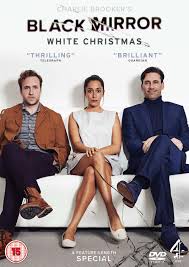
This week I watched black Mirror White Christmas on Netflix where Matthew and Joe were in a cabin for a federal investigation. At the start of things, Matthew has a life outside of the cabin where Mathew was interrogating a copy of a human being inside a cookie but he also was a guide for men who can’t pick up women on there because of their own lack of confidence. The many weird situations that Matthew put many men in are partially his fault for leading those men on to situations they can’t handle on their own. Matthew has put himself in a complex situation where he witnesses a murder that he could have reported but didn’t through fear of getting thrown in jail.  When dealing with the heavy burden of guiding and witnessing a murder, it will make you do stuff for the government to get out of your own situation but later be punished by the government for the crime. In fact, Mathews’ real job is working for a company called “Smartelligence” in reprogramming those copy codes of humans into a private service stool for the original’s own home. Do you think having a job like Matthew is beneficial for human? Do you think Maythews morals are all over the place?

 The conversation that took place in the cabin has made it clear that those two have gone through a lot in their past life. Joe had a hard time opening up to Mathew due to his struggle with his PTSD. In the episode because a block or blocking someone else is the harshest thing to do. When your Block, you can’t see or hear the person who you blocked in the show Mathew’s ex has blocked him plenty of times and he said “it wasn’t fun”. Joe has a complex situation where he was in a delusional relationship because his girlfriend was secretly cheating on him with the Chinese guy who was with another female by his side. The dark truths Joe explained to Mathew made him think about his situation, but Matthew didn’t care for Joe because he treated him like a thing with the comfort of Mathew soaking up to him. In the cabin, Mathew has set the time for Joe to feel longer than it should be so, every minute that passes by its years passing by that it made it easier for Matthew to get close to him to hear confession. In truth, it would be fair for someone to pass judgment on a copy of someone because it’s not the original and when dealing with such a complex situation it’s better to hear from the source other than a copy. Do you agree with Matthew selling out Joe? What do you think would happen if Mathew reported the crime instead of pushing it too far with selling out a real person through a copy of them? Do you think Joe had a right to kill the old man? Did the government give the code a fair punishment for the crime his orginal did?

Workd Cited:

Black Mirror: White Christmas (74 min) (NETFLIX)

Just a Fantasy or Soon to be Reality?

This week we had an interesting black mirror episode called “White Christmas” which shows us some new technologies being used. It starts off with Matt Trent talking with Joe Potter about what he did on his spare time. Matt helped men who were uncomfortable talking to women by having them wear an ear piece and glasses so he could see what they saw. He would use what the other person was seeing to read how the person they were talking to reacted so he could figure out the best way for the dude to talk to them and end up taking them home. The guy he was helping ends up being successful and ends up going to this women’s house where the women ends up killing the guy and herself and Matt and his team end up deleting the video and any proof that they saw it happen. This then leads to Joe sharing his story. Joe talks about his struggles with his ex girlfriend. Joe was taking out the garbage when he finds a positive pregnancy test and then confronts his girlfriend about it. She doesn’t want to keep the child where he does and they get into an argument and she blocks him. Everyone has a chip or lenses on that allow them to block certain people and then they cant hear them or see them they just be come blurred. His girlfriend the next morning end up leaving him. Joe then sees her out many months later and only recognizes her because she is blurred out and now very pregnant with their child but she still wants nothing to do with him. Joe knows that she goes to her fathers cabin every year for Christmas and goes so that he can see his child but when someone has you blocked you are also blocked by their offspring. He does this every year and finally see from the blurred image that he has a daughter. Then tragically one day his ex dies in a train crash and the blocker is removed after death so he can finally go see his daughter. He goes to the cabin with a snow globe for his daughter but the grandfather tells him to get out and that he cant be apart of his daughters life. Joe then irritate hits him in the head killing the grandfather and then leaving only for his daughter to find him and go out looking for help and freezing to death. This all happens inside a fake mind imprisonment of sorts where time moves very fast to trick the people inside. This allowed for joe to be convicted of the crimes and for Matt to be able to walk free for his help. Matt is allowed to walk but is but down as a sex offender and then blocked by everyone.

Why I Don't Block: On Black Mirror's "White Christmas" |  ReadMoreWriteMoreThinkMoreBeMore

This episode bring up some very interesting technology that could be very possible in the next couple of years. The blocking technology would be very interesting to see how it would play out and the effects it would have on people because you could have no idea who that person is and you would never really be able to find out. While the mind prison could work very well at getting people to confess to crimes that they have committed without having to put a whole lot of time into it. I think if that was something that became available to be very helpful for that reason and then also helping people get over traumatic experiences. Then having the ability to have someone be blocked by everyone in society could either lead to them changing their ways because they are unable tell who is who or doing even worse thing because they don’t know who they are effecting so then it bothers them even less.

Prison Mind Images, Stock Photos & Vectors | Shutterstock

An article we read this week called “Emojis Don’t Mean What they Used to” which talks about the evolution of the emoji. Emojis when they first came out were simple pictures used to express a certain way you felt about something and depending on the context meant different things. The article talks about the snowman emoji which could simple mean something about a snowman but could also mean that a person is cold or that it might snow today depending on how it was used. Now there are thousands of emojis will the ability to change the skin color to make it more universal and make everyone feel included. This has lead to emojis having more of a literal meaning and only really being used for the way they were intended as a snowman just being a snowman. While I think this is true for most there will always be the one that have double meanings or that get used to mean different things depending on the context. Have you ever received emojis in a text message or sent them and have them be interpreted in a completely different way then they were suppose to be? Sort of like this picture below.

Thanks, I Hate Eggplant Parmesan Now : TIHI

News Article

This article talks about the evolution of the emoji from where it started to where it is now.

https://www.wired.com/story/guide-emoji/

What?..Yup,Muted.

(SUBMITTED LATE WITH APPROVAL). Another week, another topic of social media. We focused this week’s discussion on newspeak, memes, emojis, & participatory culture and the semiotics of social media. We read the articles “emojis don’t mean what they used too,” and ‘ if it doesn’t spread, its dead,” and breaking up isn’t as hard as it used to be (on facebook)’ and last but not least we watched movie called “White Christmas” which is a black mirror episode. In the episode, it starts off with two men in the cabin and Matt wants Joe to open up about why he’s there in the first place. He ran a service where he helped men meet women and he placed a camera on him to help him out. This led him to accidentally being killed because the women he was pursuing was mentally ill and thought he was too so she did a murder suicide on both of them. Joe then open up and tells Matt that he was ” blocked” by his finance after they fought over her decision to have an abortion. Blocking means that they see each other in kind of like a grey blob or so and you can’t see or hear them but you know they’re there. Each Christmas Eve he goes to his ex fiancés fathers house to see (spy)on the little girl even though he is blocked from seeing her. The block was removed when his ex died and it finally allowed him to see the little girl’s face and he discovered that she had an affair and wasn’t the father. He confronted the father and struck him in the head which led to him dying and then left which then led to the little girl to find her grandfather and walk in the snow to go find help which ultimately led to her freezing to death. There’s more to the movie but I’m going to focus on the blocking. 

I found it to be very interesting that the movie portrayed “blocking” as in real life blocking and not just on the internet, however, it does the same thing in a sense. When you block someone on social media sites you really do not see them unless you happen to run into each other by accident but even then there is no communication ( for the most part I guess). That relationship is terminated in a sense. In the article,”Breaking up isn’t that hard as it used to be,” it talks about how they use algorithms when a relationship is done in order to avoid ties or contact or association with that person. By not seeing them as often on your feed, it allows for a quicker healing time of a break up because you are not constantly reminded of them. 

In the article, “emojis don’t mean what they used to” it talks about the evolution of emojis and how they are now being used in today’s atmosphere. It has moved away from ideography and more towards illustration which is very interesting. Im must admit I do use them quite a bit if I am being honest and I love to use them. You don’t even have to type sentences to express yourself.. just put emojis. Another thing Is memes as well. Memes have really transformed and like it said in the ted talk, if it’s not trending then it’s dead. Which is true because it’s basically not being seen which has zero benefit. I love memes because they are so funny and they are funny to me because some memes hold truths for me and some I can personally rate too. Others are political or poking fun and all have an agenda and that is very interesting to me. 

News: https://www.technologyreview.com/2019/10/24/132228/political-war-memes-disinformation/

This is a link that has a some more added info on the weaponization of memes.

Emoji: A Modern Way of Expression

This week’s topic “NetSpeak, Memes, Emoji’s & Participatory Culture” is a different topic with totally a different meaning to understand. After reading the articles and listening the ted talks. I came to know more about what the emoji is use for.

Starting from the article “Emoji Don’t Mean What They Use to do” the author said that the pictorial language has now moved away from the ideography and now is part of the illustration. And while moving so it lost the power of expression in this process. With every passing years, the number of emoji are being increased and giving people diverse options to choose from. People now are so dependent upon the emoji in order to express their emotions. The emoji that we use in our daily lives does not tend to mean what they represent. In the article the author said that “Pictograms are powerful because they are specific but flexible. The train can represent a light-rail line, a subway, a toy, and so on. A snowman can mean a literal snowman, or a warning that it’s cold out, or even a gripe about the office thermostat. The pleasure, and power, of emoji arises from the ambiguity inherent in picto-ideographic writing”.

In the next article “If It Doesn’t Spread, its Dead”, the author talked about the future of the entertainment world. The author further added that in the world of entertainment the people are so involved with the viral media and memes that we are lacking the connection with the real world. The author said that “Use of the terms “viral” and “memes” by those in the marketing, advertising and media industries may be creating more confusion than clarity. Both these terms rely on a biological metaphor to explain the way media content moves through cultures, a metaphor that confuses the actual power relations between producers, properties, brands, and consumers.”

The third article “Breaking up isn’t hard as it used to be on (Facebook)” has made the discussion even more interesting. The author in this article discusses the love of the modern world that as the world is growing fast so is the love life of the modern people. And now people find it easy to break up on Facebook and they do not even feel hurt about it. But one of the feature of Facebook makes it quite a difficult task to do. The memory list where your memories after a year will be shown and even you moved on it is still difficult to see those happy memories there.

In the Ted Talk “Memes and temes” Susan Blackmore she said that memes are like the virus that spread from brain to brain. She said that humanity has spawned a new kind of meme, the teme which spreads itself via technology.

All of the above discussion make me to think about the fact that how we have turned our lives from reality to digital world where in order to express the love, sadness, humor and excitement we are slaves of the emoji now.

What you think about this fact? Do you think that this digital life we are living is worthy?

For this week’s news post. I have chosen this article to share with you all in order to understand more about the emoji and their different meanings.

https://ludejo.eu/10-emoji-that-dont-mean-what-you-think/