This week we had a very good presentation about how the safety of the internet and social media platforms affects a lot of kids an their parents, as well as when you get older and have to make some of the decisions that your mom and dad used to have to make for you. Back when we were kids, it sounded like a lot of people had the same experience with these kinds of things. A lot of parents want to make sure and control whatnot are doing online, and honestly who can blame them for doing that. The internet, especially social media, is a huge breeding ground for toxic things that parents might not want their teens to be seeing just yet.
Another big topic was how now that we were adults, how do we keep our social network. Personally I don’t really care who is friends with me, as long that I know they re a real person and that they are around my age. A lot of people said that they will only let their friends become friend with them on the social media, and I totally get that too because sometimes you just don’t want some random people getting in your business now a days. Personally I refrain from adding older family members on instagram and places like that, because It just feels weird to me, but the family members around my age that I like, I will definitely add them on those platforms and interact with them through there.
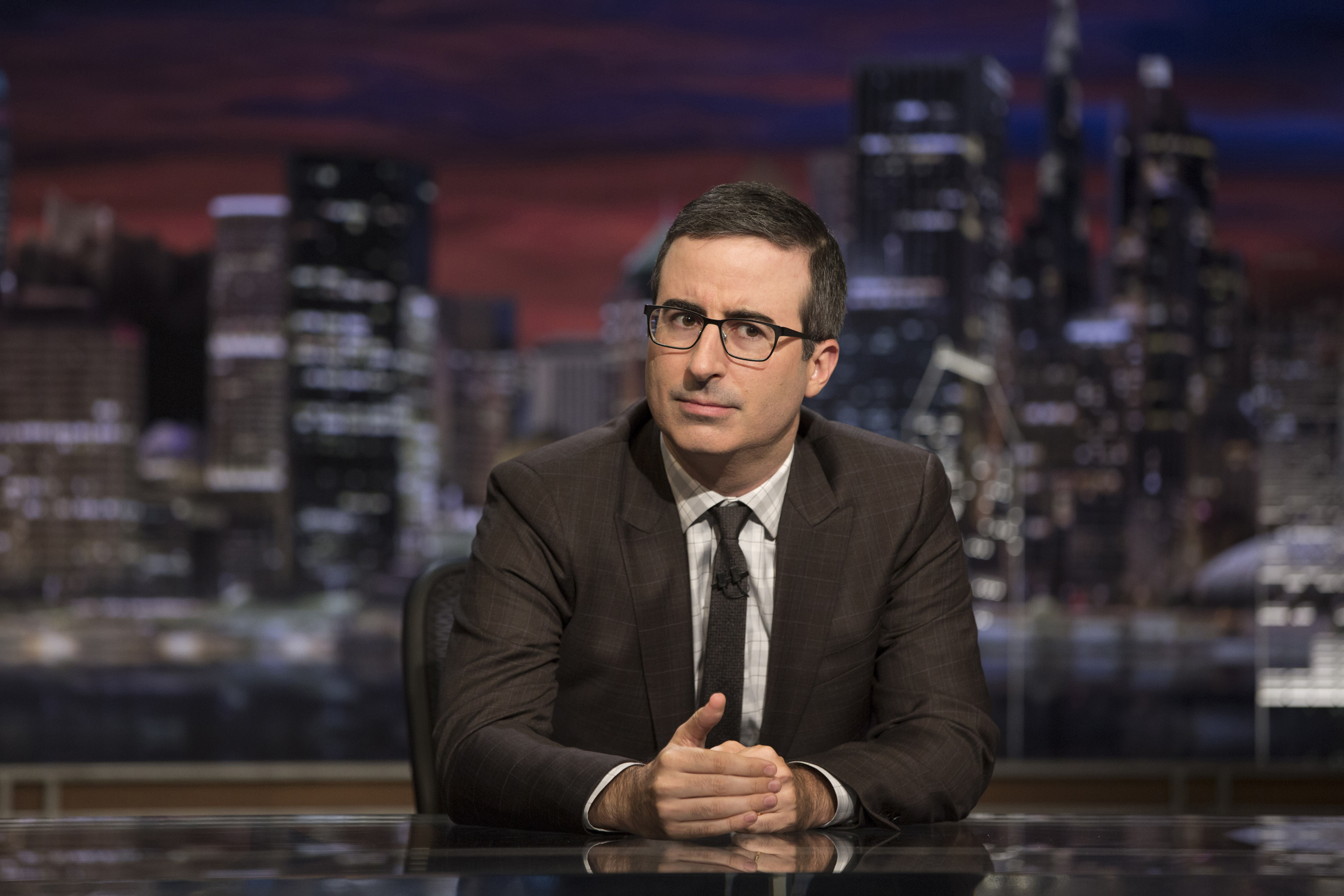
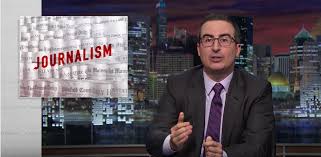
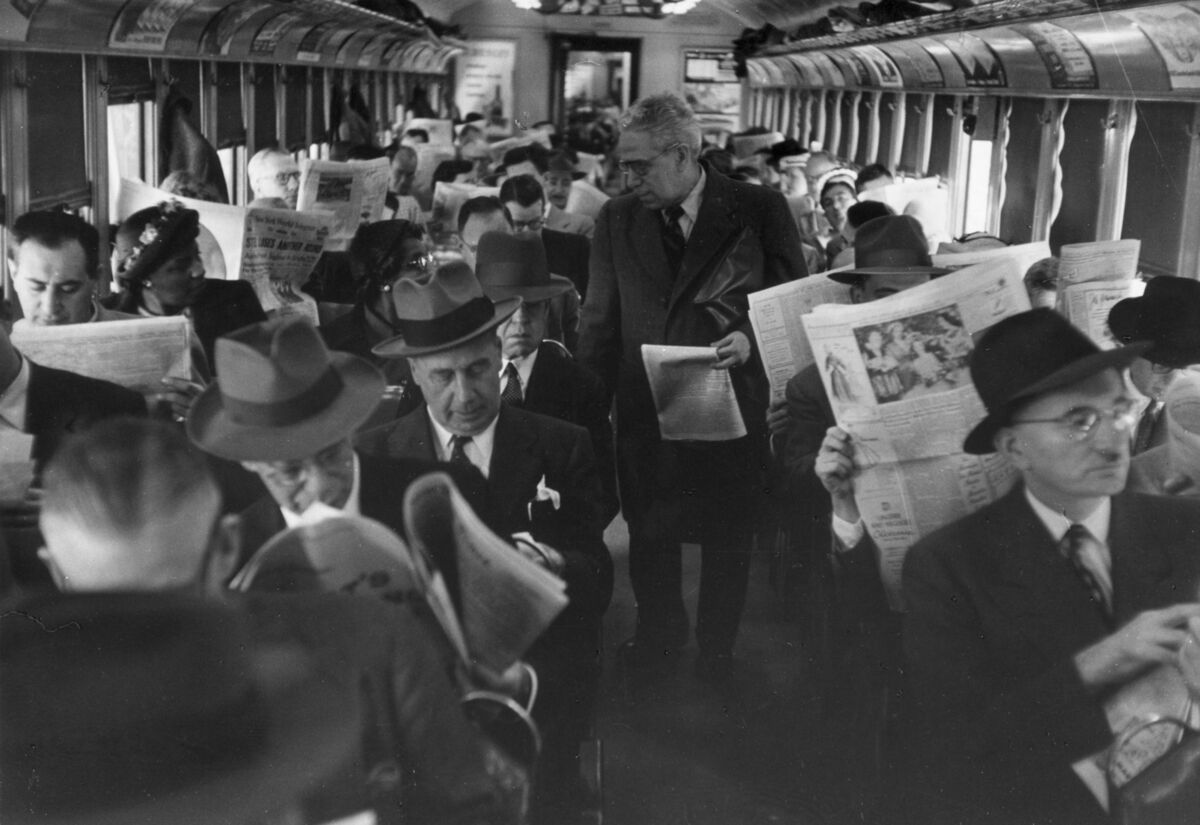
One of the big things we watched this week was a John Oliver video about the crazy world of newspaper and online journalism. He was talking about how it isn’t how it used to be with these news papers now a days, because they are frankly going out of style. People want to get their information from the convenience of online and not have to go physically buy a newspaper, or go out and get it from their mail box. A big problem with these companies now is that all they want to do is make money and get clicks, also known as click baiting sometimes. This is a popular thing all over the internet just to gain some traction, and therefore gain more revenue. I couldn’t believe the owner of that one newspaper who said fuck you to one of his employees because she questioned him on why they wouldn’t be doing actually news research and news work for the people reading their stuff. I think that unacceptable and if was that employee I would have packed up my bags and left for another company because I wouldn’t be able to work for an asshole like that ho thinks he’s the far above all of us.
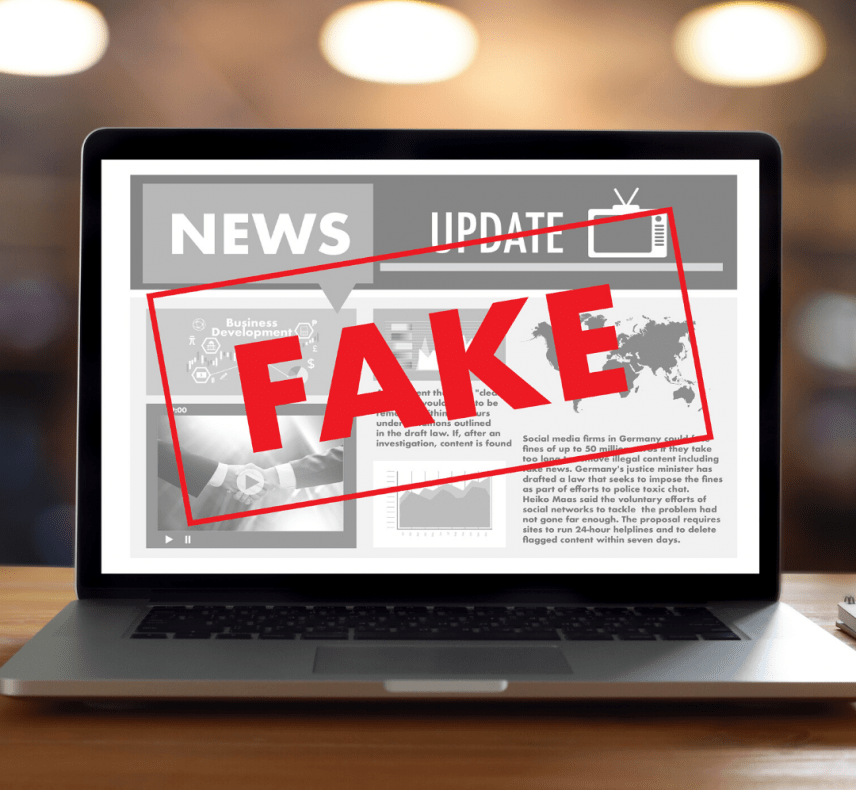
Personally I don’t like where everything as gone with all of these news papers and news outlets and I think that fake movie shows it all. These companies are just becoming social media outlets at this point. I do get the desire to make the money, but cmon that unacceptable. What do you think about the news papers doing this?
This week’s class consisted of group three’s presentation, read seven articles, and watched three videos. We started class with group three’s presentation, they did a great job and had a well-thought-out presentation. “We take newspapers for granted. They have been so integral a part of daily life in America, so central to politics and culture and business, and so powerful and profitable in their own right, that it is easy to forget what a remarkable historical invention they are.” (Goodbye to the Age of Newspaper) Before technology newspapers were one of the only ways to get information out to the public. During the nineteenth century, newspapers gave people information on what is happening around the state, country, and world. During the rise of the internet, newspapers started having problems, people could start looking up things using computers and the newspapers start dying. The recession further pushed newspapers out of the market and forced editors to lay-off their journalists. By two-thousand and eight most newspapers were out of the market and they became a forgotten part of regular society. “The financial crisis of the press may thereby compound the media’s crisis of legitimacy. Already under ferocious attack from both left and right for a multitude of sins, real and imagined, the press is going to find its job even more difficult to do under economic duress. And as it retrenches in the face of financial pressures, Rosenstiel says, “More of American life will occur in shadows. We won’t know what we won’t know.”(Goodbye to the Age of Newspaper) We can see this vividly present online with the random fake ads that try to capture your attention.
“We increasingly see journalists who are the commentators on what’s going on. Now, that’s a tricky position, because journalists are supposed to be unbiased, but also, at the same time, they’re supposed to be explaining to the public what’s going on with inside information.” (Longtime Reporter Leaves NBC…) Because of all this fake news, it is getting harder and harder to distinguish what is true and false. There are many answers we look for on the internet and we hardly realize what is fake anymore. In order to know what we are reading is legit we can look at the comments under that post, the editor’s other posts, or by looking something up on a know legitimate site. We have to be more careful about what we believe and question things that don’t seem right. “And while the new digital environment is more open to “citizen journalism” and the free expression of opinions, it is also more open to bias, and to journalism for hire. Online there are few clear markers to distinguish blogs and other sites that are being financed to promote a viewpoint from news sites operated independently on the basis of professional rules of reporting. So the danger is not just more corruption of government and business–it is also more corruption of journalism itself.” This can make it almost impossible to discern between the legitimate journalists and the ones who do it to make a quick buck. We need to focus on the bigger picture, what is going on in our country. Journalists choose to leave out information so we truly don’t know what is happening in our society. In order to find more information, we must search for it and want to know the truth.
This week brings forward a new hot topic of discussion for all of us. And I am so eager to discuss my thoughts on the topic: “Politics, Subversion of Democracy, News (Fake) and Digital Activism”. All of the material given on this topic is based on the news, reports and articles filled with the facts and news that how social media and the mass media is being used by the politicians and how they are taking advantage from these platforms.
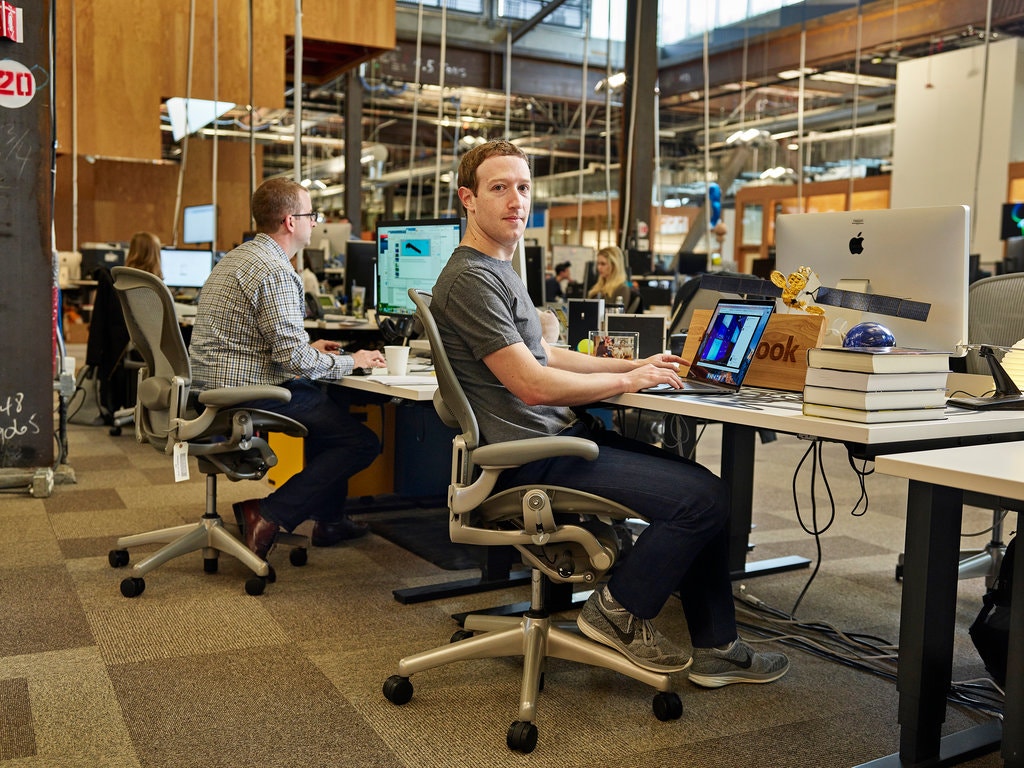
Let’s get started with the article: “Can Facebook Fix Its Own Worst Bug?” in this article it has been discussed that how a small innovation like Facebook which has been started by Mark Zuckerberg and now has become a global political and cultural force that now not even Zuckerberg is able to stop what he has started years ago.
Nearly two billion people use Facebook about every month and 1.2 million on daily basis. The Company which Zuckerberg co-founded in his Harvard dorm room 13 years ago, has become the largest and most influential entity in the news business, commanding an audience greater than that of any American or European television news network, any newspaper or any magazine.
The author said that “It is also the most powerful mobilizing force in politics, and it is fast replacing television as the most consequential entertainment medium. Just five years after its initial public offering, Facebook is one of the 10 highest market capitalized public companies in the world.”
The next article “Longtime NBC Reporters Quits” has opened up a new fact door for all of us when a reporter from the NBC quit his career and said that the mass media has now become puppet in the hands of the President and the Trump free days are over for all of us. And on such basis he quits his career after reading this I felt it so much that I really thought is it really happening to that level now?
What do you think about this fact? Are the politicians are using the mass and social media for their own purposes?
Is it logically and ethically right to make mass and social media the puppets for politicians?
Coming towards the next article i.e. “The Next Big Focus in the Russia Investigation: Social Media” the author has stated that Facebook has acknowledged that it sold ads to some 500 fake Russia-linked accounts between 2015-2017 and what most alarming is that the ads addressed the socially divisive issues like gun control, immigration and race relations. It is also written in the statement that it may discover more.
On this issue the CEO of Facebook Mark Zuckerberg stated that “We are looking into foreign actors, including additional Russian groups and other former Soviet states, as well as organizations like the campaigns, to further our understanding of how they used our tools”.
What I figured out from all of the above discussion is that politicians are now using the mass and social media for their own sake and are now trying to get their agendas fulfil by the help of these global networks where it is easy to make false news and accounts and make the trends go viral in just seconds.
This week’s news article is based on the topic that we have discussed and I am sharing this article with you all to let you know more about what social media giants are doing in order to counter misinformation in this election.
This week’s topics focus on Politics, Subversion of Democracy, News “fake”, and Digital Activism. I read an article called ” Long time NBC reporter quits,” watched “John Oliver on Journalism,” and another article about Facebook and if they can fix their own bug. While watching the clip of John Oliver, he talks about journalism and how the media and news take the information from the newspaper and incorporates it into their stories. He explained how the news casts and media don’t do much of their own reports and simply uses others and they now want the newspaper companies to write, tweet, post and all of that and it is a lot to ask for so things eventually get messed up. I found that rather interesting. Also he stated that they are starting to decline now and without the papers digging into information, it will be all surface things and now actual news… He gave an example at the end making fun of it turning it into a joke. The video were these actors at the newspaper and they had a story of a corrupt politician but they did not care and wanted to focus on puppies instead because that was going to get them the most likes and views. So Instead of reporting actual news, they are going to report things they think the public would want to see or read and this generates more revenue and likes I guess. That explanation to me was pretty eye opening and rather scary.. I feel as though reporting real events and news is way more important than just generating likes or ” what the people might want to see’ instead of what we need to see.
I then read the article called ” Long time NBC reporter quits,” and he talks about why he quit and everything behind his reasoning. He states that some journalism has steered away from reporting actual news and have gone into a realm where they are now commentators to what is going on. He states that it is a tricky situation because they are supposed to be unbiased but also be reporting what is happening in the world. Also, because of this, news coverage has begun to get shallower and shallower thus not getting deep coverage of the event. To comment on this, I absolutely hate when news cast put their own opinion on events. I like to see all the information and come to an opinion on my own and of course by doing so on the news, it makes so that they are biased which means I can not fully trust the news report. This really takes away from news reporting because people need the facts and information, not your personal opinion. This also leads to lack of reporting and coverage which is crucial because we can’t just have half the information… This leads to people being misinformed and “fake news” being spewed out to the public so no one knows what is real or not. What are your thoughts on this subject ?
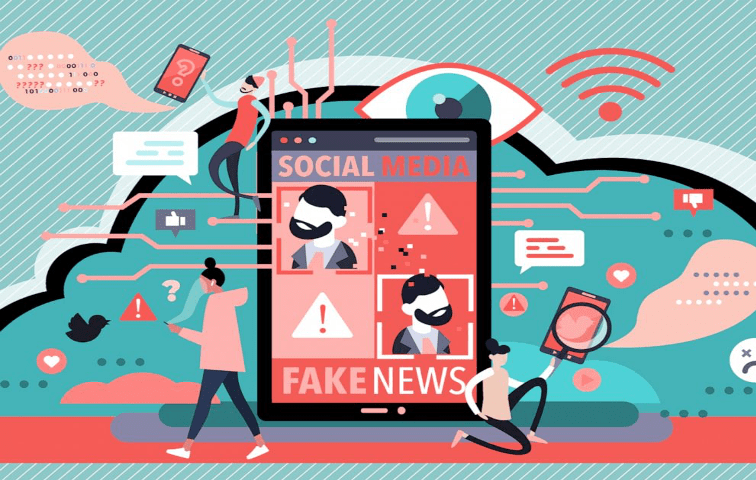
Here is a link to an article about fake news and its impact.
This world is slowly coming to a media frenzy where there is so much information being spread that opinions and inaccurate statements are being shown in the frontline news, social media and news journals. We are subjected to the information that the media tries to program us to believe everyday. Years ago people got all their information from news channels and newspapers, but it wasn’t known to fact check their sources.This leaves me wondering what information is really real and is the news media fraud? It is true that the government controls what is put out there, but to what extent will they go to keep the citizens from the truth of the country and the globe. William Arkin, longtime NBC reporter and analyst states that, “So, to me, the crisis is that we condone perpetual war by virtue of our lack of reporting and investigation, and then, second, we fill the airwaves or we fill the newspapers with stories about the immediate and don’t give an adequate amount of space to deeper investigations or what I would say would be net assessment investigations of what really is going on”. Living in a country that puts more importance on military budgeting than the citizen’s well being is haunting alone. However, that shouldn’t stop the news media from covering all that is important that has to do with America.There should be more regulations added for the news media and outlets to express what we have the right to know and not only focus on the current problems, but of every problem.
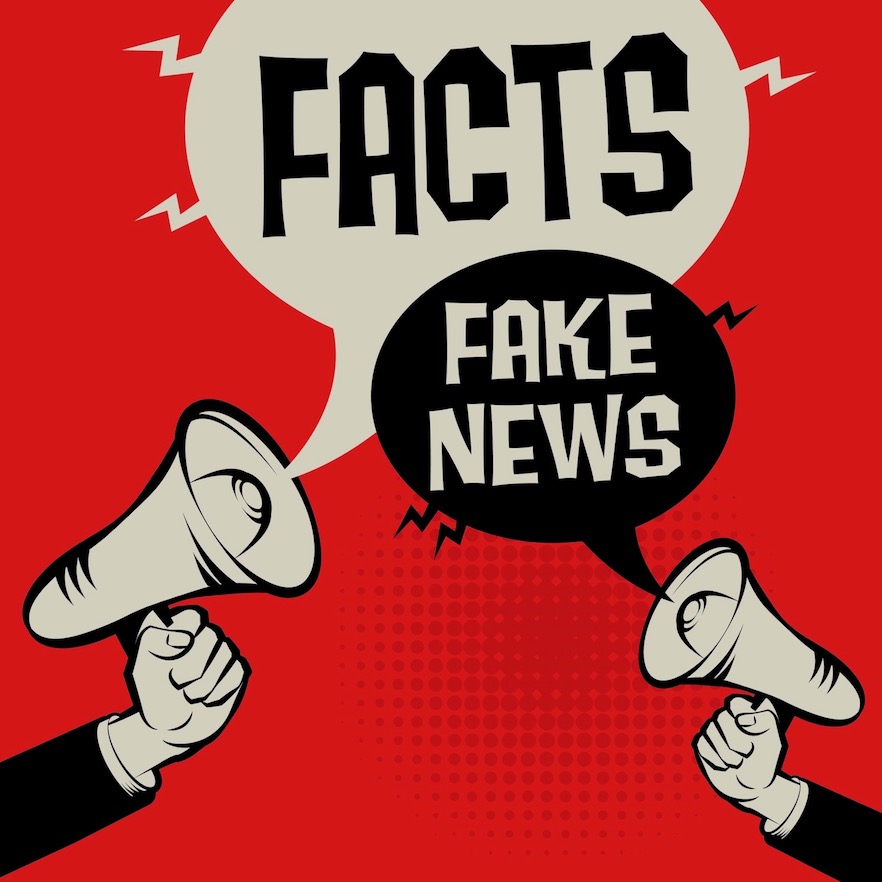
Megaphone Hand business concept with text Facts versus Fake News, vector illustration
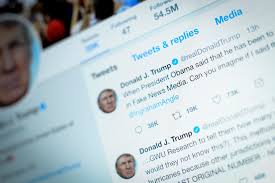
Farhad Manjoo states that, “Late last year, Facebook outlined a modest effort to curb misinformation. News Feed would now carry warning labels: If a friend shares a viral story that has been flagged and shot down by one of Facebook’s fact-checking partners (including Snopes and PolitiFact), you’ll be cautioned that the piece has been ‘disputed’”. Being that I occasionally check my Facebook, I have noticed the implementation of “Fact Check” for certain links being posted. Most times Facebook will give you an explanation of why the link shouldn’t be shared as the truth. It is not as often that I see the “Fact Check” on Facebook, but the app is trying to change their ways of promoting the sharing of misleading information. The “fake news” concept was created by the repetitive misleading reality TV star, Donald Trump, which he would say against anything negative that was said about him in the media. “Fake News” gave the people an eye opener that there are facts and lies being programmed for us to ingest, we as a society should be more fierce about what we believe in even if it’s being televised or stated by a favorite celebrity. An idea of helping the “fake news” could be with implementing the AI to gather information all across the internet to make sure of it’s authenticity.
Do you think that AI could help collect the data to bring forth the facts of a topic?
Journalism is changing and we have to consider the way in which we get our news. Online there is a great amount of opinion, but there is little reporting and rigorous fact-checking or editorial scrutiny, as suggested in the article, Goodbye to the Age of Newspapers. It is unpredictable whether the Internet will be able to support journalism at a level that is comparable to newspapers, the the former methods of journalism are not matching up with the developments of new media. Rosenstiel says, “More of American life will occur in shadows. We won’t know what we won’t know.”
William Arkin agrees that something happened post 9/11 in which people disappeared from the airwaves and we don’t see as many journalists reporting. We see journalists who are the commentators on what is going on. (Democracy Now, Longtime Reporter) He says this is a tough spot to be in because journalists are supposed to be unbiased, but at the same time, they are supposed to be explaining to the public what is going on with inside information. Arkin feels that we are becoming shallower with our coverage particularly in areas of national security. “We’ve shifted from the Industrial Age to the Information Age.” Consequently, we have also shifted from the dominance of the military-industrial complex to a more difficult-to-diagnose information complex.” I found it interesting that Arkin says for instance, Amazon is one of the largest defense contractors, that they are building the cloud and building data centers to support the intelligence community and the military. He also says there are other civilian companies who we think are acting civilians that are benefiting from military backing.
Arkins suggests that today’s journalism is biased using the example of a panel discussion on television. He says that in the mainstream press and newspapers, we don’t populate that panel with people who are in opposition. That the problem is that there aren’t critics who are countering what is being said. Hinting at a time of journalism that is at risk for extinction and a moral code that is now overlooked, he says, “I just don’t think the American public gets well served by the fact that there isn’t a broad range of opinions on those panels. I want to see peaceniks. I want to see academics. I want to see historians.” The lack of biased opinion and the spread of misinformation can be examined by exploring the impact of Facebook and social media….
Nearly two billion people use Facebook every month, and about 1.2 billion of them daily. It has become the largest most influential entity in the news business, commanding an audience greater than that of any American or European television news network, any newspaper or magazine in the Western world and any online news outlet. It is also the most powerful mobilizing force in politics, and it is fast replacing television as the most consequential entertainment medium. (2017. Can Facebook…) Its widespread influence has become a liability. During the U.S. election, propagandists used Facebook to turn fake stories into viral sensations. “With its huge reach, Facebook has begun to act as the great disseminator of the larger cloud of misinformation and half-truths swirling about the rest of media. It sucks up lies from cable news and Twitter, then precisely targets each lie to the partisan bubble most receptive to it.”
A team of researchers at M.I.T. and Harvard did a study on how 1.25 million people shared information during the 2016 campaign and they found that social media created a right-wing echo chamber and social media was used to transmit a hyperpartisan perspective to the world. Their finding reinforced that people would use social media sites like Facebook to cocoon themselves in a sort of self-reinforcing bubble. The NYTimes article, Can Facebook Fix its Own Worst Bug? says that Trump had benefited from a media environment that is now shaped by Facebook by utilizing a single feature known as the ‘News Feed.’ Digital activist, Eli Pariser gave this phenomenon a title of “The Filter Bubble.”
Facebooks own researchers have been studying the filter bubble since 2010 and published an in-house study in 2015 which they found that the News Feeds algorithm did filter out some opposing views in your feed, but the bigger effect was the users’ own choices. They found that when the news feed did not show people views contrary to their own, they tended not to click on those stories. Zuckerberg felt like Facebook was let off the hook. He wanted Facebook to become a global news distributor that is run by machines, rather than humans who would try to look at every last bit of content and exercise considered judgement. (Can Facebook…)
Zuckerberg
“At some point, if they really want to address this, they have to say, ‘This is good information’ and ‘This is bad information,'” says Emily Bell, the Director for the Tow Center for Digital Journalism at Columbia Journalism School. “They have to say, ‘These are the kinds of information sources that we want to privilege, and these others are not going to be banned from the platform, but they are not going to thrive.’ In other words, they have to create a hierarchy, and they’re going to have to decide how they’re going to transfer wealth into the publishing market.” The article states that in many ways, how Facebook changes the news is really a bigger problem with News Feed, which is dominance. That News Feed wouldn’t be much of an issue if it weren’t crowding out every other source.
The News Feed’s team aren’t making decisions that consider human ideas like ethics, judgement, intuition, or seniority. They are concerned only with quantifiable outcomes about people’s actions on the site. Data is the only truth that News Feed is searching for and the News Feed team are ultimately trying to figure out what users want; what they find meaningful and use that data to give them more of what they want. Social-science research shows that most of us simply prefer stuff that feels true to our worldview even if it isn’t true at all and that the mining of all of those preferences is likely to lead us deeper into bubbles rather than out of them.
Questions: In what ways can we best support and sustain professional journalism in a digital media environment? Do you feel that Newsfeed/Facebook could effectively support journalistic efforts to bring accurate news to the people?
Works Cited:
January 9, 2019. Democracy Now. Longtime Reporter Leaves NBC Saying Media Is “Trump Circus” That Encourages Perpetual War
April 25, 2017. NYTimes Magazine: Can Facebook fix its own worst Bug?
March 4, 2009. Goodbye to the Age of Newspapers (Hello to a New Era of Corruption)
The decrease in papers over the most recent twenty years, including the gutting of article staffs and contracting in quantities of pages, the expansiveness of news inclusion, highlights of different sorts, and home conveyance of print versions matters. The Internet has not and can’t fill one of the customary popularity-based functions of the press to go about as a guard dog of government and corporate offense. As per Starr, experimental investigations have demonstrated that newspapers give most of the unique inclusion of public issues and set the plan for different news media, including TV.
Starr traces how the ascent of the Internet superseded the paper’s parts as the essential supplier of data and the essential market go-between (interfacing publicists to purchasers) in a network. Fewer columnists don’t only mean less inclusion, yet also a lower nature of reports, as aptitude is lost, and interior checks vanish.
Starr contends that the upsides of the Internet assuming control over papers’ function as a market mediator – the proficiency and lower cost of data spread – accompany “an expense to majority rule esteems,” as newspapers’ lost benefits keep them from delivering the public great of metro news.
Starr’s answer is an expansion in altruistic news coverage to make up for the shortfall of paying for the public great of news that can presently don’t be filled by papers. The administration isn’t an alternative, he says, since the media must be isolated from the administration it looks out for.
Political bot:
A political bot is a program that generally works on a web-based media site like Twitter or Facebook. Typically, they naturally create online media posts, which may seem as though they’ve originated from an individual. The objective of a political bot is to advance a particular belief system or public approach thought. For example, there are multitudes of favorable to Trump bots and supportive of Clinton bots, and they’ve been exceptionally dynamic all through the 2016 official political race.
However, these political bots regularly don’t distinguish themselves as bots. They profess to be human clients. Furthermore, they’re frequently utilized for negative battling, or to spread falsehood. They will target explicit clients and hassle them, scare them, or attempt to interfere with a discussion. There are likewise “acceptable bots” that occasionally play out public assistance. In any case, as a rule, we’re discussing enormous multitudes of robotized web-based media accounts used to control general supposition and spread deception. That is the reason a few specialists call them “computational publicity.”
Analysts and legislators themselves are keen on sorting out the degree of profitability of bots. On the off chance that a mission chooses to burn through cash on a multitude of political bots, is it justified, despite any trouble? Also, that might be the most stressful part since it’s not in every case clear who’s a bot. One that is very much customized can do a sensibly great job of making itself look like a human.
Concerning the U.S. political race, the effect of bots will be hard to gauge. However, if there’s any sign that they could be an effective campaign tool, expect to see even more of them.
References
Paul Starr (2009), “Goodbye Newspapers, Hello Corruption”
The presentation was very strong and Steve did a great job engaging the class to participate. We are in a time and age where social media impacts everyone’s lives differently and is a platform where you can be who you want to be whether you are like that in reality or not. The questions asked were very engaging and nostalgic because it made me think back to the times when I first started using social media. I had a friend that lived in the same apartment build as me but she was in the other building so our windows were facing each other so we would communicate by yelling out the window if we wanted to go outside together or if we were ready to walk to school together and once we had phones we would use Facebook to communicate. That transition was very dramatic but helpful.
In my opinion, fake news came about when the media learned that people love news and it’s got to the point that fake news is created to entertain people and keep people talking. This is scary because news media and blog pages would rather feed people information than to fact check them the publish the information. They would bullish the fake news then the person related to the news or the news is about specks out about the news on whether it is true or not and that response becomes a whole new story. The news source I think about when it comes to fake news is the Instagram page “theshaderoom”. The shade room gained its popularity by posting information about celebrity lives or entertaining videos. The problem is that now they are so popular that they don’t care whether they are posting fake news or real news as long as they have evidence to back up their claim. The only information I fact check are the ones that interesting to me but what really bothers me is the fact that this page is making money off-putting peoples private information into the public or find joy in solving a mystery in someone life that would be just a good story that people would find entertaining.
Fake news published in the media about politics or on a judgment of character is a form of defamation and can have serious consequences. In the article “ Goodbye to the Age of Newspapers (Hello to a New Era of Corruption)”, newspapers were the way people got news and information but now that we have social media the newspaper is out of date. Newspapers were credible because they had to fact check every information they put out and make sure that it was worth publishing and relevant. But now with social media and having the president uses Twitter to put out information it makes it harder to make sure that information is real or not.
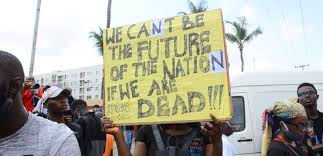
Weekly news: My weekly news is about what is happening in Nigeria as we speak. They are fighting against police brutality and just yesterday their police were shooting at the protester and not letting the ambulance pass so they could help the wounded. Many lifeless bodies were laying on the ground.
This week we are going to discuss some new topics related to “Copyright, Privacy and Fair Use”. The materials that has been given is covering different topics for this week’s blog. The reading material like “South Park wins Lawsuits over “What What in the Butt” Parody, “Yes, Copyright’s sole purpose is to benefit the Public”, “Fair use Doctrine”, and the documentary “Downloaded: Napster Documentary” was quite interesting to watch.
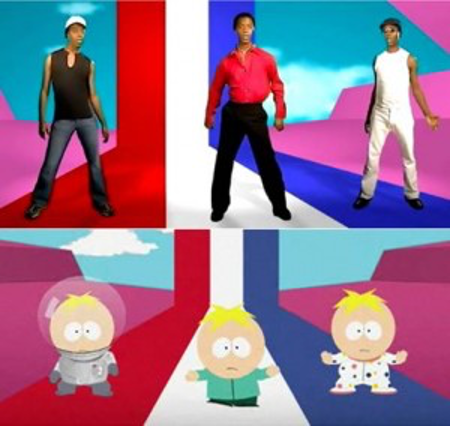
Starting from the article “South Park wins Lawsuits over “What What in the Butt”, it was about the fight over a copyright video where the Brownmark Films in November, 2008 was got sued over a South Park episode entitled “Canada on Strike” in which the character Butters re-created an Internet video sensation from the singer Samwell. Brownmark claimed that the re-creation of its video constituted copyright infringement. In response to that Viacom said it was a parody and fell squarely within “fair use” exceptions to copyright. We all are familiar with the copyright term and that if we are using any other person work either the writing, visuals or in any other form we are bound to give the credit to that original person and we cannot use their work in any case.
Coming towards the next article “Yes, Copyright’s sole purpose is to benefit the Public”, this articles was based on the constitution about the copyright phenomenon and the debates of people on it. The key argument of this article is what the law does for both author and for the general public, who it impacts and how is it structured. And it is simply outrageous, and outside the monarchy of the logical thoughts, to argue that it was designed first to benefit the artists. Of course, it surely does benefit the artist as a byproduct of the method. But it also refer that if it benefits the public then it is great to benefit the author.
What I have understood from the term “Fair use Doctrine: is that it is a legal doctrine that promotes freedom of expression by permitting the unlicensed use of copyright-protected work in certain circumstances. In the Copyright Act the whole list of the situations was given in which the use of copyright work will be considered un the terms of the “Fair use” and the person is not being charged for copying the work of any author.
In the last, the documentary “Downloaded: Napster Documentary” was based on the time when the use of internet was not that common among people. And in that period of time it was like a big thing for people to have the music of their choices available on internet and they can download those tracks too. This documentary was based on such a topic in which two of the characters named Sean Parker Shawn Fanning were dreaming for a file-sharing online service that brought down the wrath of rock stars and record companies.
From all of the above discussion, I have felt that we are now engulfed so much in the internet and we now become use to of having the information access to us that we do not consider copyrights anymore. My question to you all is
What are your suggestions/opinions on these facts?
Do you think that Copyrights should be placed for everything available on internet?
Do you consider the Copyrights when you use any of the data from the Internet
Keeping in mind this week’s topic I am going to share an article on the Copyright news about Netflix sued for Copyright Infringement over Tiger King.
Music plays a huge part of my life. I’ve been playing guitar since the 6th grade and that’s when my music taste started developing. I can remember the first band I was really into and since then many bands have taken the spots on what I would consider my favorites of all time. Since the 6th grade, many years have come between then and now, and with all the time spent listening to music, reading up on histories of bands, and watching documentaries I’ve learned several things about the music industry. One of the issues I learned through this time was about the idea of Copyright, Piracy, and Fair Use.
I believe that understanding these things are important because when you know the rules and/or regulations, you can move around and avoid any trouble. It’s understandable why these things are in place, artists/musicians don’t want to lose out on making money, or others in Don henley’s case, are misinformed. About 2-3 years ago I heard a song over the radio (I know, old fashion) called “Boys of Summer”. It turns out that this very popular song is Don Henleys. I looked it up on Youtube and could not find the song at all. It was strange to me because every song that I knew was a Youtube click away. I never really thought anything of it until recently. During one of my classes, we talked about Copyright, Piracy, and Fair Use. One of the things that were interesting that related to the topic was the video of a well respected musician named Rick Beato. Rick Beato has a Youtube channel where he uploads a lot of music related things. From a few videos I saw, it looks like he has an appreciation for music and is knowledgeable on the things he is talking about. In class we saw a video where he expressed his anger and ideas about one of his videos being flagged down because he used a couple seconds of a song in a video where he was showing his appreciation in a video series called “What makes that song great?”. One thing that was interesting about the video to me is that he explained how some artists are misinformed about how a lot of the stuff works in respects to youtube, spotify and the use of copyrighted material. With these misunderstandings, artists seem to be going to great lengths to make sure no one uses their music without permission. In Henley’s case, they went as far as to hire 60 people who are in charge of filing complaints against people who use their songs despite for what the reason maybe. In most cases, it is not used to monetize.
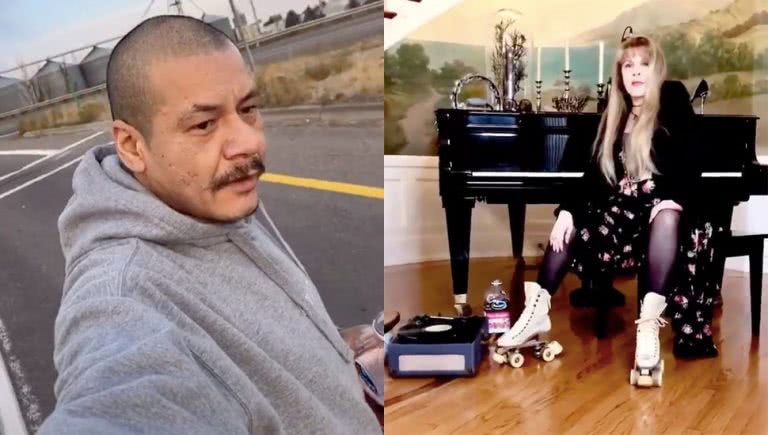
It’s funny how these things work in life. This week Rick Beato posts another video that was entertaining to watch and as usual he brings up several good points. This video mentions a current event that I’m sure many people are familiar with. Several weeks ago towards the end of September, a video went viral of a man who was riding some sort of board on his way to work while also drinking a huge bottle of Cranberry juice. The video was loved by many because it was just this man living his best life all to the tune of Dreams by Fleetwood Mac. Rick Beato explained to us that if the man had used another Fleetwood Mac song like the popular “Go Your Own Way”. The video will possibly get flagged if not now, soon but In this case Dreams was used and it’s interesting why this is. Although the two songs are from Fleetwood Mac, the songs were each written by a separate member. Lindsey Buckingham wrote “Go Your Own Way” and Stevie Nicks wrote Dreams. Each of them gets a say pertaining to their song. In this case Stevie Nicks embraced this situation. She has gone out to show her appreciation and credit the man for putting Dreams back on the charts. If she wanted to, She could have possibly had the video removed but in some way this is also exposure for the band. Everyone on these platforms, especially TikTok, probably never heard of Fleetwood Mac but this video opened them up to the possibility of expanding their music taste.
Channeling the rules of Copyright, Piracy, and Fair Use can be a tricky thing because a lot of the situations vary case by case but for the most part all end in the side of the people who aren’t trying to make a profit from popular works.





 SOCIAL MEDIA & SOCIETY