Summoners War

Summoners War is an online technique game where players bring beasts to take on thusly based conflicts, working with assaults and aloof capacities to pick up the high ground. There are more than 1,000 beasts that players can bring and battle with, some with preferable capacities over others, so the opportunities for various kinds of the methodology are extensive. However, the thing about the Summoners War is that it was not intended to be serious when the game was dispatched in 2014. (Garst, 2019)

Summoners War is an allowed-to-play game, which means you can download it for nothing; however, there are alternatives to put resources into microtransactions to progress quicker. Players can get it and manufacture a group for nothing, yet they need to contribute a genuine measure of time or cash (or both) on the off chance that they have to make more beasts and make the most ideal team. You can envision the contention that framework raises when South Korean game engineer Com2Us began coordinating rivalries for it in 2017. 

Like each sport, a meta has been worked around top serious Summoners War play. Certain beasts are utilized more than others, including the unbelievably flexible Dark Dragonite that a big part of the players contending claimed, and are viewed as the best technique during competitions. Beasts like those are hard to get as the bringing cycle incorporates numerous arbitrary factors, and you have not ensured the beasts you need. Paying builds that opportunity. 

Com2Us has presented various feasible allowed to-play beasts that let players fabricate a serious crew without paying anything. A few contenders, similar to the UK’s Yuhan “Baus” Gao or Peruvian finalist DRMZJoseph who played at the title in Seoul a year ago, have demonstrated that triumphant with these allowed to-play groups is conceivable. Albeit a few players accept that on the off chance that you do not have a group worked, in any event incompletely, from meta-characterized beasts then you could battle at a more elevated level of play. 

Top Monsters in Summoners War:

1. “Sigmarus (Water Phoenix)

2. Veromos (Dark Ifrit) ​ 

3. Loren (Light Cow Girl)

4. Galleon (Water Pirate) ​ 

5. Verdehile (Fire Vampire)

6. Jeanne (Light Paladin) ​ 

7. Shaina (Fire Chakram Dancer) ​

8. Maruna (Fire Boomerang Warrior)” (Best Monsters In Summoners War, 2020)

Tricks to play Summoners War as a Pro:  

  1. Add Friends: 

Having bunches of companions in SW is significant. If you are beginning, do not stress. Simply ask individuals in the visit, and they will add you. 

A significant advantage is having the option to utilize your companion’s Rep beasts to help level your different beasts. The best part is you get additional reward exp since rep and coach beasts give you theirs when you use them! 

Search for companions who can cultivate Faimon like Lapis or Verad. You ought to consistently utilize your rep beasts first every day to help accelerate your leveling cycle. Try not to be timid! Go out there and make a few companions!  Be an old buddy! Ensure you have a rep beast that is useful for cultivating Faimon like Lapis. Individuals would not add you if have a pointless rep. For what reason would they? On the off chance that they cannot cultivate with your rep beast, at that point, there is no reason for adding you. On the off chance that you need a magnificent companion who is valuable, at that point, you should be one as well.

2. Join a League:

There is one motivation to get into an organization at the earliest opportunity. Organization Rewards. These are open to society individuals. 

As you fight different societies and go into attacks you get organization focuses. There are a ton of prizes that you will need to spend your focuses on. 

In the early game, there are a lot of lower-level societies that consequently acknowledge new individuals. No compelling reason to demand high societies except if you are more elevated level with loads of potential to profit that particular organization. 

3. Concentrate on Development Monsters: 

There are a ton of top beasts in Summoners War. Knowing which ones to burn through your effort on is troublesome. 

There is no set-in-stone manner to play this game. In any case, there is a moderate path and, obviously, a quicker way. 

On the off chance that you discover a beast you like, there is nothing amiss with leveling it up. Remember that there is plenty of beasts that are not even worth step up because they do not offer enough advantages in the long haul. 

These beasts are intended for end game PvP or are Food Monsters (Ones used to take care of to step up or expertise up different beasts). 

4. Overcome the Giant in GB10: 

Goliaths B10 may be overwhelming from the outset, yet you unquestionably need to pursue this objective. GB10 is the place where you will cultivate to get runes to reinforce your beasts. 

Presently, there is unquestionably a higher methodology to handle the solid goliaths, and you will require the correct line up to manage the work. 

Attempt to center a lot of energy and time into getting to GB10 to make your game experience simpler as well as much more fun! 

Perhaps the error early players do is step up a beast to understand it is just useful for end game substance. It squanders heaps of significant assets and drastically hinders your advancement. 

It is alright if you have one and need to construct it. However, I strongly suggest not making this a propensity except if you need to be stuck in the early game for eternity. 

5. Shine with Skill Ups: 

 Individuals whine a ton that even with beasts and runes their beasts are as yet not enduring. You have to ability them up to take advantage of them. 

You would be astonished the number of summoners disregard this. In the early game, use family beasts to ability up. Focus on ones that are the most effortless to get first. 

Spare your DEVILMONS for your best Nat 5 beasts (they are difficult to get family aptitude ups). 

6. Make a Team: 

In Summoners War, synchronizing your group so that they all work together is urgent to advance in the game. Numerous summoners wrongly load up the entirety of their wagers on one beast or in no way different sort. At the point when you do this, odds are your group would not endure. 

A commonplace group needs to have a harm vendor, assault/speed buff, depuffs, the capacity to take buffs from supervisors, and a healer. Remember that buffs do not stack, so having two of a similar will be inefficient. 

Attempt to plan and perceive how every beast adds to the group overall and not as a person.

References

Aron Garst (2019), “Summoners War players strive to be competitive without paying in free-to-play mobile game”

Available at: https://www.espn.in/esports/story/_/id/27957000/summoners-war-players-strive-competitive-paying-free-play-mobile-game

[Accessed at: 23 November 2020]

Summoners War Database, (2020), “Best Monsters In Summoners War”

Available at: https://www.sw-database.com/monsters

[Accessed at: 23 November 2020]

Addicted to distraction

Holistic mentor and writer Tony Schwartz’s generally perused New York Times article “Addicted to Distraction” started with an acknowledgment that he had slipped into a period where he was dealing with his life ineffectively. Thus, he began an “unreasonably yearning” plan to eliminate unnecessary eating regimen pop, liquor, awful dietary patterns, and web and email distractions during the day.

Through incredible assurance, Schwartz fixed almost all that he needed to achieve, fundamentally better-eating regimen and more exercise, however, flopped totally in one conduct – scaling back time on the web. As Cal Newport notes, there is something genuine going on when Schwartz, who has assembled a profession around helping individuals arrive at his maximum capacity, thinks that it’s simpler to commence sugar, liquor, and sloth than his impulsive web propensity.

Are You Addicted to Distraction?
http://www.1simplethingonline.com/are-you-addicted-to-distraction/

There is anything but a recommended arrangement here however, it is clear, that it is a requirement we all to look at the idea of our web conduct and trial with arrangements that suit our style this year. Tony Schwartz shares a couple in the article (here) and I, for one, have discovered tremendous incentive from not permitting my cell phone in our room after 8 pm.

Schwartz recalled a powerful story about a man and his 4 or 5-year-old daughter at a family restaurant – “Almost immediately, the man turned this attention to his phone. Meanwhile, his daughter was a whirlwind of energy and restlessness… [attempting many things] to get her father’s attention…she didn’t succeed and after a while, she glumly gave up. The silence felt deafening.”

The Decade the Internet Lost Its Joy

I Disagree wholeheartedly. For me, all the blogs that I cared about back then when I was more into economics are still there: Scott Sumner, Tyler Cowen, or Brad DeLong but also Less Wrong or Scott Alexander.

Now in form of media, I absolutely love the explosion of podcasting and audiobooks as media. It changed the way I learn things – like listening to hundreds of episodes of podcasts like The History of the Twentieth Century or Mindscape – the podcast of aforementioned Sean Caroll. I also have a YouTube downloader so I can listen to some of the YouTube only shows as a podcast. Today if you need to do some plumbing yourself you can learn what to do in a matter of minutes most likely, save yourself some money, and learn something useful.

Image for post
https://gen.medium.com/the-decade-the-internet-lost-its-joy-4898c2c44cb4

We also have many other things stemming from the overall connectivity of smart devices to the internet ranging from online gaming to services like Uber or TripAdvisor to things like mobile online banking, smart homes, and who knows what other things there are that make life easier.

Additionally, there is still an active network of people similar to pioneers of old developing open-source software, engaged in peer-to-peer platforms (with blockchain being the buzzword of the day) capable of communicating from safe platforms. And if you have a “darker” streak there still are things you can do.

I think there is Joy aplenty for everyone. Nobody forces you to follow your granny on Facebook or get into the Twitter status game. It is based on the type of people who engage in these things.

References

Tony Schwartz (2015) “Addicted to Distraction”

Available at: https://www.nytimes.com/2015/11/29/opinion/sunday/addicted-to-distraction.html

[Accessed at: 19 November 2020]

Clio Chang (2019), The Decade the Internet Lost Its Joy

Available at: https://gen.medium.com/the-decade-the-internet-lost-its-joy-4898c2c44cb4

[Accessed at: 19 November 2020]

Google News
https://joebalestrino.com/how-to-improve-google-news-stories/

I fuond bad news about Covid-19 in U.S. reports record 153,400 new Covid cases as Dr. Fauci urges Americans to be careful: ‘It is not futile’:

https://www.cnbc.com/2020/11/13/us-reports-record-153400-new-covid-cases-as-dr-fauci-urges-americans-to-be-careful-it-is-not-futile.html

Emoji Don’t Mean What they used to do

As of last week, there are now 3,053 emojis, including the 230 recently approved group of people of the year – yes, thumbnails are now receiving annual releases, such as Microsoft Word or tax refunds.This is too much emoji. We now have icons representing people with disabilities – which are an excellent digital representation – but we also have badges, many train types, fingers wrapped in all styles, great heroes, and gangs. This year, we got garlic and yo-yo. All the new additions make it difficult to find the right icon Also, not all emoji represent everything that is possible. There are no brides with redheads, for example.

https://www.theatlantic.com/technology/archive/2019/02/how-new-emoji-are-changing-pictorial-language/582400/

There are no white men with brown hair and a beard. The new emoji features hand-held pairs of different skin tones, allowing racial couples to have their own mobile graphics at the end. However, incorporating different skin tone options for each family member in multiple groups, such as a family, could result in obtaining 4,225 permissions. This year’s emoji category adds stand-alone gender-neutral options, but those aren’t available as jobs like a doctor or an astronaut. Unless the emoji meets the creators of the Bitmoji style, they will always leave other people out. And then, who wants to create a new avatar for everyone they want to expose in an instant message? As a white man whose identity is always flawed in emoji, let me be clear that the growing diversity in the world’s favorite language is a good thing.

Ted Talk:

Henry Jenkins said that there are here are many ways to think about such a topic. An important choice I faced was between the studies of fan culture, which would be at the center of what fans do and think, as well as fan studies, which would highlight the emergence and influence of a new field of education focused on hypocritical research and other forms of participatory culture. At the undergraduate level, I would have taken the first course but at the graduation level, I chose the second – to try to mark the emergence of a research field that focuses on the study of fan communities and show how they have addressed a wide range of issues in media and culture over the past two decades.

https://www.ted.com/tedx/events/223

As you will see, I am teaching a lesson right now, I have found that it is impossible to separate the cultural dialogue of followers in contemporary discussions with web 2.0 so I made that problematic, controversial, and evolving relationship an important topic for students to investigate. Don’t get me wrong – I don’t think it’s a simple game between three words in my title. The dynamic relationship between those three words is the most important thing in the classroom. I think it’s about the richness of the fan research site that I’ve put in so many jobs that I have and I still feel worthless because it’s easy to see gaps and omissions. Some of the topics are overly explored with research.

References

  1. EMOJI DON’T MEAN WHAT THEY USED TO (2019)

Accessed at:” https://www.theatlantic.com/technology/archive/2019/02/how-new-emoji-are-changing-pictorial-language/582400/

TED: Ideas Worth spreading (2010); TEDx NYED

Accessed at:” https://www.ted.com/tedx/events/223

Google News
https://joebalestrino.com/how-to-improve-google-news-stories/

I found some news abou DoorDash company As the company’s losses reached 149 million in 2020, this is a complete change from the previous year, where losses were 533 million:

https://www.cnbc.com/2020/11/13/doordash-releases-s-1-for-ipo.html

History of Privacy of America

From Governor William Bradford opening pioneers’ mail intended for England, to President George W. Bramble’s sweeping home-based monitoring, the inspirations driving government investigation have changed little despite fast advances in mails innovation. However very regularly, American residents have been the cause of all their problems with regards to securing privacy, consistently doing without common freedoms in shocking occasions of battle just as for ordinary customer spaces. Every one of us currently adds to an ever-developing electronic record of web-based shopping sprees, photograph collections, wellbeing records, and political commitments, open to nearly any individual who cares to look. 

https://www.zlti.com/blog/the-history-of-american-data-privacy/

American Privacy follows the genealogy of social standards and lawful orders that have twisted around the Fourth Amendment since its selection. In 1873, the presentation of postcards split American assessment of public validity. Longer than a century later, Twitter has its spot on the range of human association. Between these two hubs, Anthony Comstock pursued an ethical campaign against disgusting writing, George Orwell wrote 1984, Joseph McCarthy chased Communists and “degenerates,” President Richard Nixon followed himself directly out of office, and the Supreme Court of the United States gave its most influential authentic suppositions concerning the privilege to privacy to date. Caught here, these memorable representations amount to a lively depiction of privacy’s victors and challengers. 

Lawfully, mechanically, and truly grounded, American Privacy finishes up with a call for Congress to perceive how advancement and violation go inseparably, and a test to residents to secure privacy before it is lost totally.

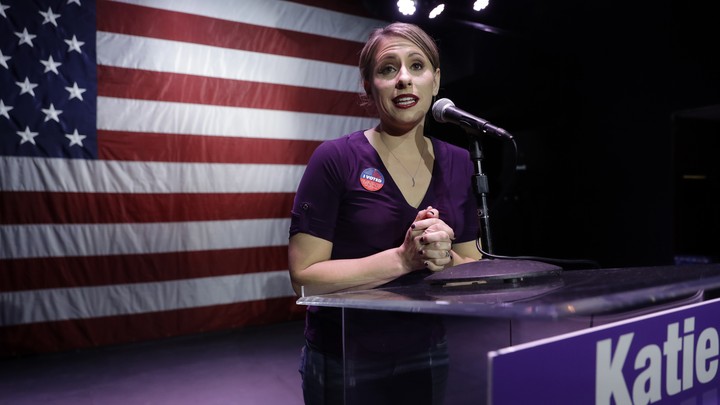
Agent Katie Hill’s short vocation in Congress untied up that Ernest Hemingway depicted chapter 11 occurring: steadily and afterward out of nowhere. On October 18, the traditional source redstate distributed an article claiming sexual connections among Hill and two staff members, alongside an express photo of Hill. Other right-inclining distributions got the story, and it started rising around Twitter. 

Katie Hill speaks to supporters during an election watch party
https://cdn.theatlantic.com/thumbor/P0rM6yX9CgQGSloMfDOzfdKpkq8=/0x226:5472×3304/720×405/media/img/mt/2019/10/AP_18311271095252/original.jpg

The Hill embarrassment has an uncanny inclination. It is both exceptionally recognizable—the political sex outrage is in a real sense wonder as old as this nation—but positioned in a setting that causes it to seem bizarre and awful. As I wrote in Lawfare before Hill’s abdication, this is the main occurrence of which I am mindful when a politically adjusted distribution has distributed an express photograph of a resistance legislator for the evident political increase. It’s both an indication of how revolting the political scene could become and a token of how terrible, for the numerous customary individuals who have endured this sort of misuse, the world as of now is.

The effects of nonconsensual pornography can be devastating. Victims report severe anxiety and depression. Many lose their jobs. Some are afraid to even step outside. The victims’-rights lawyers Carrie Goldberg and Annie Seifullah describe how their respective former partners used intimate photographs of them to try to destroy their careers. It is for this reason—recognizing the harm that nonconsensual pornography represents—that the vast majority of states plus the District of Columbia have criminalized the practice in recent years.

References

Daniel J. Solove (2006), “A Brief History of Information Privacy Law”

Available at: https://scholarship.law.gwu.edu/cgi/viewcontent.cgi?Article=2076&context=faculty_publications

[Accessed at: 6 November 2020]

Quinta Jurecic (2019), “The Humiliation of Katie Hill Offers a Warning”

Available at: https://www.theatlantic.com/ideas/archive/2019/10/katie-hill-and-many-victims-revenge-porn/601198/?Utm_medium=offsite&utm_source=yahoo&utm_campaign=yahoo-non-hosted&yptr=yahoo

[Accessed at: 6 November]

Google News
https://joebalestrino.com/how-to-improve-google-news-stories/

I found some good news about the U.S. economy added more jobs than expected in October and the unemployment rate fell sharply even as Americans continue to grapple with Covid-19 and its dampening impact on business.

https://www.cnbc.com/2020/11/06/heres-where-the-jobs-are-for-october-2020-in-one-chart.html

Kickstarter

When Kickstarter was launched in April 2009 it paved the way for young boys to fund their dream projects. Someone with a great idea but a small bank account can still earn money through crowd resources. Recently, that seems to be changing. We see a lot of people with big ideas and big bank accounts getting sponsored. People like Zach Braff, perhaps best known as Dr. John ‘J.D.’ Dorian on the TV Scrubs program. Last week he launched Kickstarter to sponsor his film Wish I Was Here. The film, which follows his indie love story Garden State, tells the story of a 35-year-old actor and father trying to find himself. According to Braff’s court, the film needs fan support because it believes Kickstarter could be a small “film”, which does not involve signing all of your artistic controls. “Braff is the latest on the Kickstarter hat-trick.” the biggest ever asked for Kickstarter to get their funding. Hat this sweating looks as bad as Amanda Palmer Problem. Last year the Dresden Dolls singer raised about $ 1.2 million for Kickstarter with his Album Theater Is Evil, which is well over $ 100,000 did not ask. When he turned a few months later and asked the artists to join his tour without getting a beer and a hug, a few people were outraged.

Handprint Games Office
https://www.google.com/search?q=Kickstarter+was+launched+&tbm=isch&ved=2ahUKEwiSkIijuMnsAhXDn-AKHZ5gB4gQ2-cCegQIABAA&oq=Kickstarter+was+launched+&gs_lcp=CgNpbWcQAzoHCCMQ6gIQJ1Dv56K6Aljv7KK6AmCG_qK6AmgBcAB4AIABY4gBY5IBATGYAQCgAQGqAQtnd3Mtd2l6LWltZ7ABCsABAQ&sclient=img&ei=SCGSX5LMNMO_ggeewZ3ACA&bih=754&biw=1536&hl=en#imgrc=r5LOxkaKDGQquM

That you have solicited donations and the giving of work, you are openly admitting that you are stupid, and obviously have no experience in your work as… the team will continue the journey without a slush bag. Palmer continued to make TED speeches on “the art of questioning” and participated in a Southwest-panel panel to explain and respond to the attack. “I’m not Oprah, OK? I think there are people who have negative thoughts about how much money I have,” Braff said in an interview with Wired. “I’ve been very successful in my job, I’m going to put in a lot of money for this project, but I can’t go out and pay about a $ 5.5 million movie in my wallet. If people think they are. While it is unlikely that Kickstarter will overthrow Hollywood anytime soon – making one episode of Game of Thrones more expensive than any other ever-funded campaign – it would be a little unhappy when Hollywood played in the indie world box office. Even Thomas acknowledged this when he told Wired that “it would be a great deal of courage” to try to unite people with a multimillion-dollar project that was not well-known. And music blogger Bob Leaflets wrote after Braff’s campaign that “when the big boys come to play, the wannabes are squeezing. While it is natural not to want to help someone who seems to be in the middle of what they have, telling them not to play on Kickstarter can hurt those who have it. The day Braff’s campaign began, Kickstarter saw more traffic than ever before, and it’s not hard to imagine that at least some of his supporters received, and supported other campaigns.

References:

  1. WIRED (2013); Why people get annoyed celebrities on kickstarter (and why they probably shouldn’t)

Received at: “https://www.wired.com/2013/04/zach-braff-kickstarter/

  1. CROWDFUND INSIDER(2013); Today in “should use kickstarter”

Received at:” https://www.crowdfundinsider.com/2013/05/14659-today-in-should-celebrities-use-kickstarter/

News
http://campbelltonregionalchamber.com/temporary-news-post-2/

I found some news about Apple, Twitter, Facebook and Amazon stocks plummeting after earnings failed to dazzle Wall Street:

https://www.cnbc.com/2020/10/30/apple-twitter-facebook-amazon-stock-down-after-earnings.html

Goodbye Newspapers, Hello Corruption

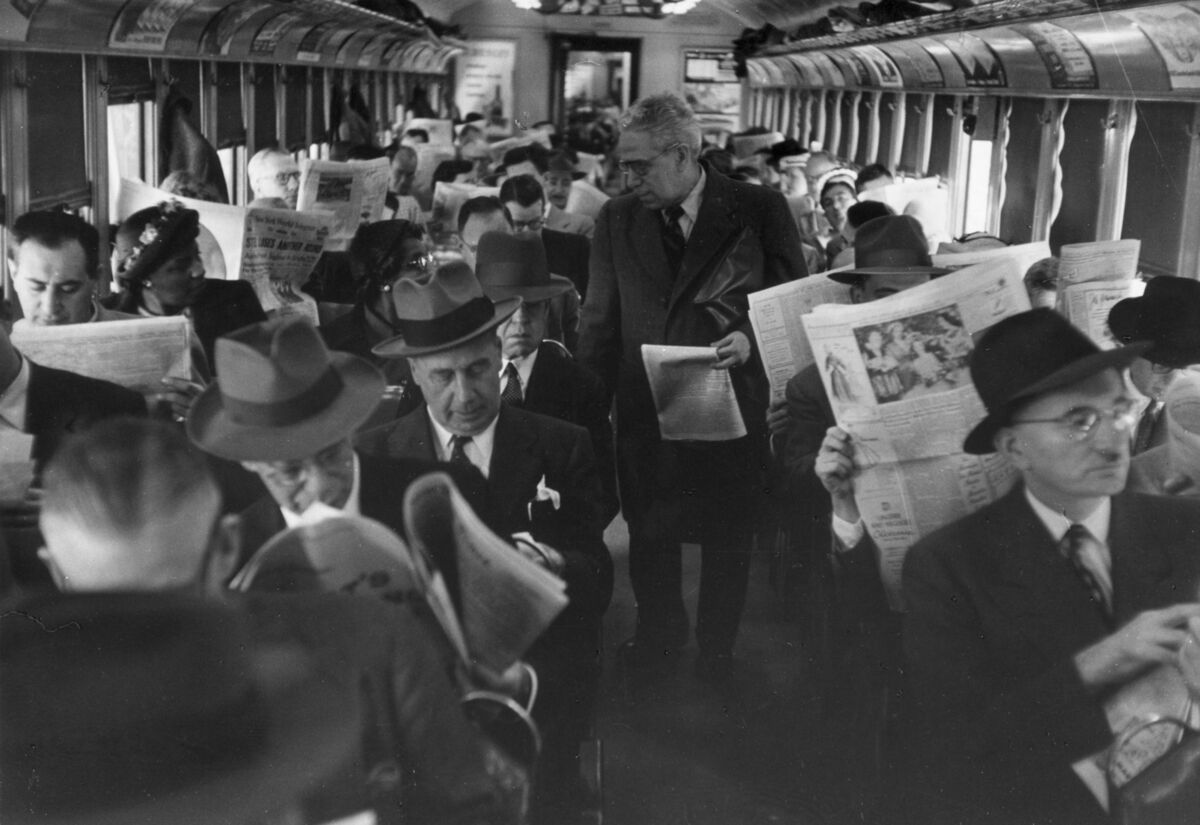
The decrease in papers over the most recent twenty years, including the gutting of article staffs and contracting in quantities of pages, the expansiveness of news inclusion, highlights of different sorts, and home conveyance of print versions matters. The Internet has not and can’t fill one of the customary popularity-based functions of the press to go about as a guard dog of government and corporate offense. As per Starr, experimental investigations have demonstrated that newspapers give most of the unique inclusion of public issues and set the plan for different news media, including TV.

Starr traces how the ascent of the Internet superseded the paper’s parts as the essential supplier of data and the essential market go-between (interfacing publicists to purchasers) in a network. Fewer columnists don’t only mean less inclusion, yet also a lower nature of reports, as aptitude is lost, and interior checks vanish.

In Philadelphia, nearly everyone used to read the Bulletin.
https://www.bloomberg.com/opinion/articles/2018-06-01/goodbye-newspapers-hello-bad-government

Starr contends that the upsides of the Internet assuming control over papers’ function as a market mediator – the proficiency and lower cost of data spread – accompany “an expense to majority rule esteems,” as newspapers’ lost benefits keep them from delivering the public great of metro news.

Starr’s answer is an expansion in altruistic news coverage to make up for the shortfall of paying for the public great of news that can presently don’t be filled by papers. The administration isn’t an alternative, he says, since the media must be isolated from the administration it looks out for.

Political bot:

A political bot is a program that generally works on a web-based media site like Twitter or Facebook. Typically, they naturally create online media posts, which may seem as though they’ve originated from an individual. The objective of a political bot is to advance a particular belief system or public approach thought. For example, there are multitudes of favorable to Trump bots and supportive of Clinton bots, and they’ve been exceptionally dynamic all through the 2016 official political race.

However, these political bots regularly don’t distinguish themselves as bots. They profess to be human clients. Furthermore, they’re frequently utilized for negative battling, or to spread falsehood. They will target explicit clients and hassle them, scare them, or attempt to interfere with a discussion. There are likewise “acceptable bots” that occasionally play out public assistance. In any case, as a rule, we’re discussing enormous multitudes of robotized web-based media accounts used to control general supposition and spread deception. That is the reason a few specialists call them “computational publicity.”

Political bots are poisoning democracy – so, off with their heads
https://phys.org/news/2017-06-political-bots-poisoning-democracy.html

Analysts and legislators themselves are keen on sorting out the degree of profitability of bots. On the off chance that a mission chooses to burn through cash on a multitude of political bots, is it justified, despite any trouble? Also, that might be the most stressful part since it’s not in every case clear who’s a bot. One that is very much customized can do a sensibly great job of making itself look like a human.

Concerning the U.S. political race, the effect of bots will be hard to gauge. However, if there’s any sign that they could be an effective campaign tool, expect to see even more of them.

References

Paul Starr (2009), “Goodbye Newspapers, Hello Corruption”

Available at: https://newrepublic.com/article/64252/goodbye-the-age-newspapers-hello-new-era-corruption

[Accessed at: 22 October 2020]

Dan Misner (2016), “Political Bots”

Available at: https://www.cbc.ca/news/technology/political-bots-misinformation-1.3840300

[Accessed at: 22 October 2020]

News
http://campbelltonregionalchamber.com/temporary-news-post-2/

I found some news about President Donald Trump’s campaign used stock footage from Russia and Slovenia in a digital ad intended to convince voters that America is bouncing back from the coronavirus pandemic.
https://www.cnbc.com/2020/10/22/trump-ad-on-americas-comeback-features-footage-from-russia-slovenia.html

Fair Use Doctrine

Fair use is a legal doctrine that promotes freedom of speech by allowing the illegal use of copyright-protected activities in certain circumstances. The amount and size of the portion used in relation to the copyrighted work as a whole: Under this feature, the courts consider both the quantity and quality of copyrighted material used. If our use is centered around a lot of work related to copyrighting, pure use is difficult to find; if the user uses only a small amount of copyrighted content, fair use is most likely.

25 Years of July Fourth Box Office Winners Ranked
https://www.vanityfair.com/hollywood/photos/2020/07/july-4-box-office

Generally, the principle of fair use applies to anyone who wants to use parts of a copyrighted work or all copyrighted work without permission. Proper use analysis helps you decide if you can legally use someone’s work or not. That is to say, some courts have found the use of all functions to be justified under certain circumstances. A rock-doc with no sense of what fans want to see or what young people need to know, Kevin Kerslake’s Bad Name ignores the most exciting parts of Joan Jett’s pioneer music and enters his image once the work reaches its climax. Despite enough access to its title and evidence from the people of Jett’s time and the young stars he promotes, the film is disappointing and has a limited number of viewers hoping to hear (or recall) the years in which Jett proved that a woman can shake hard as a boy.

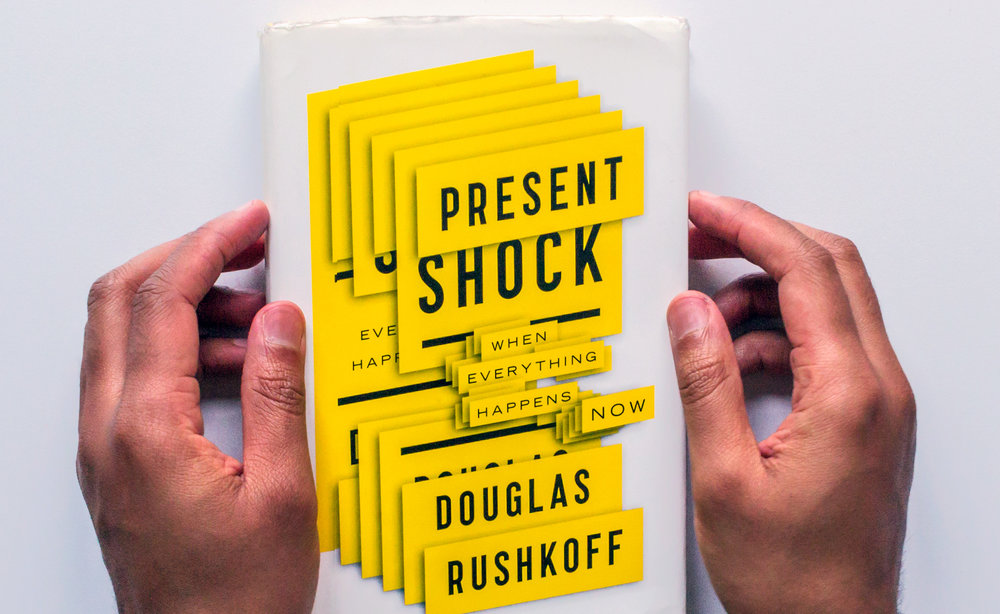
Douglass Rushkoff on Present Shock:

I think are we living in the future or not. When I was a child in the late 1970s, the future was everything that happened after 2001. That was the year everything had to change. We will have moon colonies, world peace, or a nuclear holocaust so at least we would not have to worry anymore. Here we are in 2013, and to be honest, I just don’t feel like it’s any different than in the 1980s. And I’m not just talking about the lack of flying cars and the trip to Saturn. When I was growing up, the future was a place of progress, where even the dark corners were illuminated with the hope of a better future. It was the future created by Star Trek.

Image4.jpg
https://www.davidleonmorgan.com/blog/2018/2/2/book-review-present-shock-by-douglas-rushkoff

Present Shock is gradually followed in the popular cultural analysis of the future by Alvin Toffler. Toffler suggested in his book that many changes in a very short time would be the norm for the future. In his letter, Toffler warned us of the dramatic cultural changes that we would experience. According to Rushkoff, we are in that future, but not the future we thought it would be. Our society has no interest in building a better future than building a meaningful gift. “There’s something great now. The time to be in the current state of society” is how Rushkoff put it in a recent conference where he heard him speak at a recent Web event.

News
http://campbelltonregionalchamber.com/temporary-news-post-2/

I found some good news about States face Friday deadline from CDC to submit plans to distribute coronavirus vaccine

https://www.cnbc.com/2020/10/16/states-face-friday-deadline-to-submit-covid-19-vaccine-distribution-plans.html

The Cute Cat Theory of Digital Activism

The cute cat theory of digital activism is a theory concerning Internet activism, Web censorship, and “cute cats” (a term used for any low-value, but popular online activity) developed by Ethan Zuckerman in 2008. It suggests that most people are not interested in activism; instead, they want to use the web for ordinary activities, including surfing for pornography and lolcats (“cute cats”). The tools that they develop for that (such as Facebook, Flickr, Blogger, Twitter, and similar platforms) are very useful to social movement activists, who may have deficient sources to advance devoted tools themselves. This, in turn, makes the activists more immune to revenge by governments than if they were using a dedicated activism platform because shutting down a popular public platform incites a larger public outcry than shutting down an obscure one.

http://www.ethanzuckerman.com/blog/2008/03/08/the-cute-cat-theory-talk-at-etech/

One extension of the cute cat theory, as we’ve learned, is that when a government shuts down a popular platform, it has to make room for another one to fill the void and temper the anger.

The initial visions of an open, interconnected internet now are being challenged: as countries begin to more regularly ban and/or consider banning platforms with origins in other countries, our internet is steadily becoming defined by geopolitical boundaries and alliances. That doesn’t just mean platform blocks (remember, blocks alone end up anger more people) but entirely new and different visions of what the internet can and should look like.

The Digital Culture Shifts: From Scale to Power:

Like never before, social developments in the advanced age are utilizing innovation to accomplish more prominent scope and effect. Be that as it may, is the Internet building power for social change? Or then again keeping up business as usual? The American public keeps on being immersed with incorrect depictions in news and amusement media1 that distort networks of shading and America’s poor. 

To an ever-increasing extent, however, individuals are deciding to avoid these conventional traditional press guards by utilizing the Internet. However, unfair practices in Internet substance, cost, and application by partnerships and governments strengthen racial and monetary progressive systems and keep on propagating inconsistencies, with now and again lethal outcomes. Seat Internet Project’s examination finds that 87 percent of U.S. grown-ups utilize the Internet. 

https://sloanreview.mit.edu/article/building-digital-ready-culture-in-traditional-organizations/

As indicated by the Pew study: Who’s Not Online and Why there is a whole other world to this number. While 95 percent of upper-pay households5 utilize the Internet, 37 percent of lower salary family units don’t. Nor do 48 percent of those without a secondary school recognition. Significant discoveries include: 

  1. 100% of those met said that advanced methodologies and stages give a voice when established press overlooks issues. 
  2. The lion’s share broadly utilizes advanced stages to catalyze activity, however, state overreliance on these devices can restrict relationship building. 
  3. The Internet is changing the importance of enrollment and compelling social change pioneers to reexamine the types of association. Over 80% of respondents showed that the Internet was assisting with moving public associations from brought together to de-incorporated, from topographically explicit to geologically differing, and from progressive authority to staggered administration.

References

Tom Steinberg (2008), “The Cute Cat Theory is a challenge worth of contemplation”

Available at: https://www.mysociety.org/2008/08/20/the-cute-cat-theory-is-a-challenge-worth-of-contemplation/

[Accessed at: 9 October]

James Rucker (2005), “The Digital Culture Shifts: From Scale to Power”

Available at: https://mediajustice.org/wp-content/uploads/2015/08/digital_culture_shift_report.pdf

[Accessed at: 9 October]

News
http://campbelltonregionalchamber.com/temporary-news-post-2/

I found some news about prsdent Trump is getting increasingly desperate, sparking new fears for his health:

https://edition.cnn.com/2020/10/09/politics/donald-trump-health-coronavirus-election-2020/index.html

The messy media ethics behind the Sony hacks

In late November 2014, Sony pictures amusement was hacked by a gathering considering itself the watchmen of harmony. The programmers, who are generally accepted to be working in probably some limit with north Korea, took immense measures of data off of Sony’s organization. They released the data to columnists, who expounded on humiliating things Sony representatives had said to one another.

At that point the programmers, utilizing one of their close everyday dispatches through the site Pastebin, took steps to submit demonstrations of psychological warfare against cinemas, requesting that Sony drop the arranged arrival of the meeting, a parody around two Americans who kill North Korean pioneer Kim Jong-un.

[All photos are public domain unless specified]
https://turbofuture.com/internet/Most-Powerful-Active-Hacking-Groups

At first, Sony responded by racking the film. Pundits, including president Obama, cautioned that yielding despite psychological oppressor dangers would set a terrible point of reference. At that point the studio turned around itself, delivering the film in select theaters and on the web.

Us government says it has solid proof that North Korea was answerable for the assault, however, the North Korean system has denied it. Security specialists have scrutinized the feeble proof the FBI has delivered up until this point, yet the public security office announced it has more grounded proof that it hasn’t delivered for security reasons. The assault could have broad results for the film business as well as for American international strategy and the fate of fighting.

In the spring of 2015, the entirety of the hacked messages was delivered to the web everywhere by WikiLeaks.

The story is genuinely intricate, particularly in the manner in which Stone and Fitzgerald have decided to handle it. They offer a tad of “the beginning of Edward,” yet it’s not some time before Snowden is, will we say, perceiving how the hotdog gets made. For those watchers who have not seen “Citizenfour” or read huge numbers of the articles expounded on Snowden, the waist of Stone’s film could demonstrate extraordinarily stunning and may constrain a pattern of individuals putting bits of tape over their PC camera. That secret tasks run by our legislature can turn on your PC camera without you realizing it is just one of the disclosures here. Also, as Snowden keeps on getting further into the bunny opening of security intrusion, Gordon-Levitt’s presentation turns out to be more outstanding. From the start, it seems like something of an impression (albeit a great one, for the record), however, the film works in the way that Gordon-Levitt catches the tangled inward unrest of Snowden as the story advances. He has a momentous capacity to do what so numerous different entertainers can’t: take a look at a PC screen and take in its data as though he’s seeing it unexpectedly. He grounds an intricate story by giving it an exceptionally human, responsive component in its middle.

Joseph Gordon-Levitt as Snowden
https://www.geekwire.com/2016/geekwire-movies-snowden/


Stone’s film vacillates with the relationship dramatization including Snowden and Shailene Woodley’s Lindsay Mills. The two entertainers give a valiant effort to cause these scenes to the interface, yet a few minutes feel like they emerged from another film and the pair don’t exactly have the correct science to make them viable. Less relationship show, and maybe going sequential from front to back as opposed to utilizing flashback structure, may have helped the rhythm.

References

Anne Helen Petersen (2014), “The Messy Media Ethics Behind The Sony Hacks”

Available at: https://www.buzzfeednews.com/article/annehelenpetersen/complicated-sony-ethics

[Accessed at: 1 October 2020]

Brian Tallerico (2016), “Snowden”

Available at: https://www.rogerebert.com/reviews/snowden-2016

[Accessed at: 1 October 2020]

https://www.albertadoctors.org/services/media-publications/news-for-docs

I found some news about President Trump And First Lady Test Positive For The Coronavirus, and The White House physician says they are well in this time.

https://www.npr.org/sections/latest-updates-trump-covid-19-results/2020/10/02/919385151/president-trump-and-first-lady-test-positive-for-covid-19

Social Media and Spiral of Silence

A significant understanding of human conduct from pre-web period investigations of correspondence is the inclination of individuals not to shout out about approach issues openly—or among their family, companions, and work partners—when they accept their perspective isn’t broadly shared. This propensity is known as the “spiral of silence.” The study revealed in this report looked for individuals’ sentiments about the Snowden releases, their eagerness to discuss the revelations in the different face to face and online settings, and their impression of the perspectives on everyone around them in a variety of on the web and off-line settings. This survey’s findings produced several major insights:

https://safeum.com/blog/430-social-media-and-the-spiral-of-silence.html
  1. 86% of Americans were willing to have an in-person conversation about the surveillance program, but just 42% of Facebook and Twitter users were willing to post about it on those platforms.
  2. Of the 14% of Americans unwilling to discuss the Snowden-NSA story in person with others, only 0.3% were willing to post about it on social media.
  3. For instance, at work, those who felt their coworkers agreed with their opinion were about three times more likely to say they would join a workplace conversation about the Snowden-NSA situation.
  4. Previous ‘spiral of silence’ findings as to people’s willingness to speak up in various settings also apply to social media users. Those who use Facebook were more willing to share their views if they thought their followers agreed with them.

5.This was especially true if they did not feel that their Facebook friends or Twitter followers agreed with their point of view.

Black Mirror: Hated in the Nation

Hated in the Nation” is organized like a police procedural, as doubtful in any case kind authorities try to protect innocent residents from a private, disturbed villain. The scene spins around a progression of odd deaths brought about by little robot bumblebees, or Autonomous Drone Insects. The honey bees were made by a private tech organization to fill the environmental hole left by the death of genuine bumblebees, yet a security opening made by the organization in line with the UK government permits the honey bees to be hacked and redirected to attack and murder obvious individuals.

https://gingesbecray.com/black-mirror-s3e06-hated-in-the-nation-recap/

All alone, the idea of an enormous self-governing blossom pollinating drone fleet being co-picked by the administration for huge scope flying observation of private residents is most likely all that could be needed future-fear feed. Hated in the Nation” all the while handles another current innovative plague: cyberbullying. A viral Twitter game called “Round of Consequences” publicly supports demise by asking clients to pick the honey bees’ next casualty with the hashtag #DeathTo. While Black Mirror’s commitment to the specialty of the wind is splendid in the theoretical, it doesn’t generally work practically speaking. Black Mirror’s most frustrating quality is its inclination to seem like an as of late profound companion who appreciates persuading about the end times, yet is prepared to log off when the discussion gets excessively confusing.

References

Noelle-Neumann, E. (1974). “The Spiral of Silence A Theory of Public Opinion.”

Available at: https://www.pewresearch.org/internet/2014/08/26/social-media-and-the-spiral-of-silence/#fnref-11806-1

[Accessed at: 24 September 2020]

Emily VanDerWarff (2016) “Black Mirror: Hated in the Nation”

Available at: https://www.vox.com/culture/2016/10/21/13341528/black-mirror–6-hated-in-the-nation-recap-review

[Accessed at 24 September 2020]

https://www.albertadoctors.org/services/media-publications/news-for-docs

I got some news about Trump Administration Plans Crackdown On Hospitals Failing To Report COVID-19 Data:

https://www.npr.org/sections/health-shots/2020/09/24/916310786/trump-administration-plans-crackdown-on-hospitals-failing-to-report-covid-19-dat