Replika, The Guts & Glory of Social Media and BRB

Our fourth week of class introduces us to Black Mirror: Be Right Back, Social Network vs. Online Community and Replika. This week’s viewing contained several qualities of social media and expanded on the possible role of technology, specifically with our digital footprint. The reading also encapsulated the impact of social media and broke down its different sub-categories.
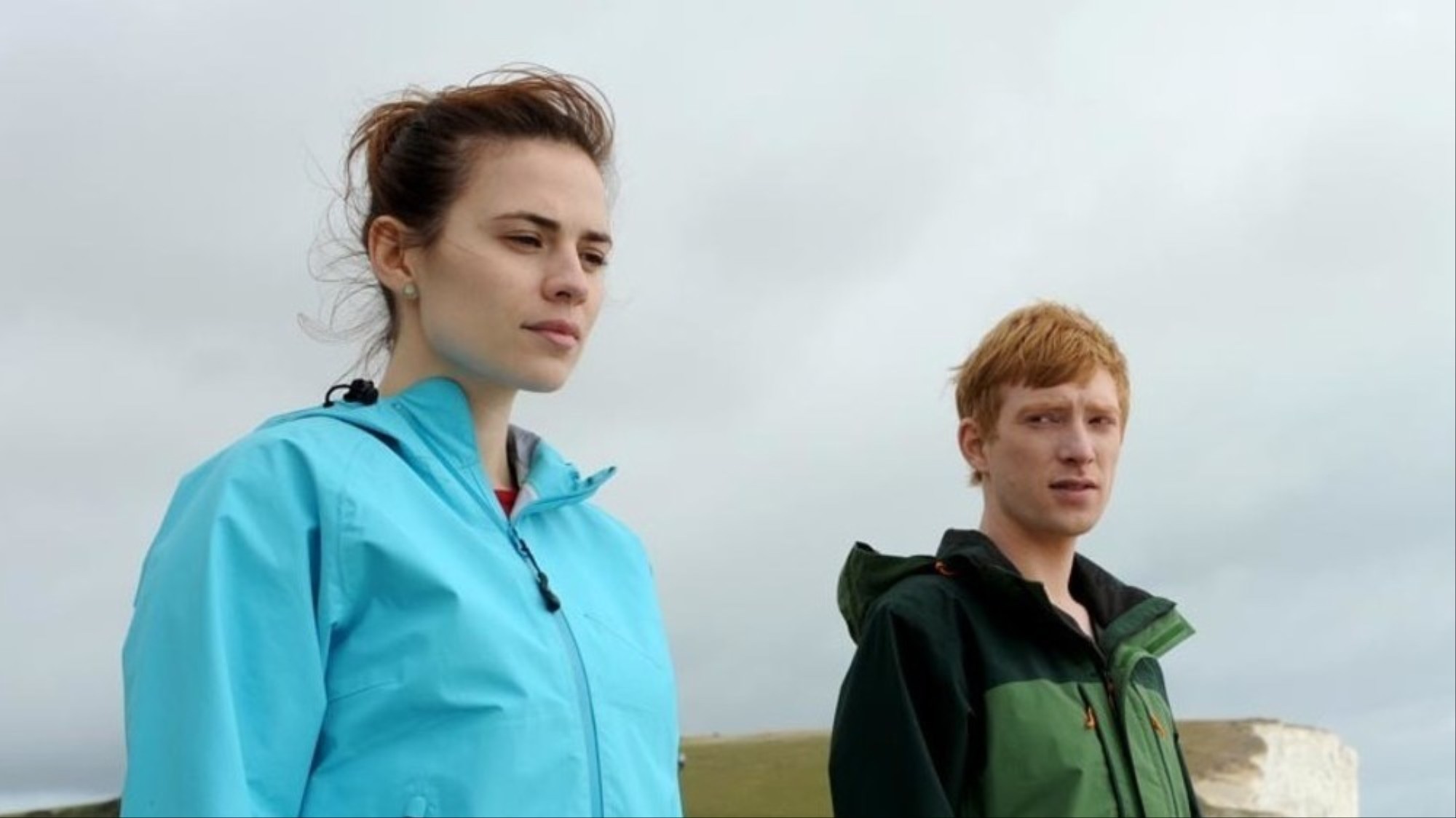
This week’s Black Mirror episode adds a new twist to the British science fiction series. A woman named Martha (Hayley Atwell) had recently become a widow after losing her boyfriend (Domhnall Gleeson) in a car accident. She is overwhelmed with grief when a friend advises her to try an online service that allows individuals to communicate with their deceased spouses. At first glance Martha is not entertained by this notion, but with a baby on the way she begins to warm up to the idea. After her persistent friend and looming loneliness Martha begins to upload videos and messages to the service allowing the program to create an artificial Ash. The service interpreted his online tendencies and used his lingo or specific terminology to communicate with Martha through instant messaging. She became more involved with this new Ash and looked to enhance her connection further. The program offers an experimental stage which provides a clone of Ash and his tendencies. After a long night of drinking and fun under the covers, Martha came to the realization that artificial Ash is just a hollow shell of her Ash. The last few scenes include Ash standing on the edge of a cliff as Martha couldn’t decide if his present was a pleasure or burden. The final scene displays Artificial Ash in his new living quarters (the attic) as their daughter is celebrating her birthday with BOTH of her parents.
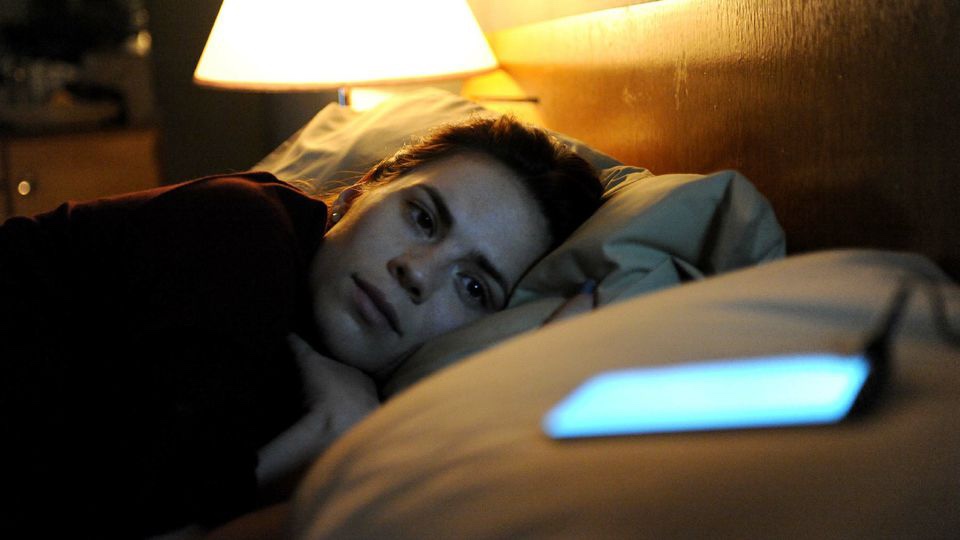
I found the programs ability to display some verbal cues but possess no physical emotions particularly creepy. To have a conversation with the pieced together remains, of your significant other’s digital footprint sounds like a stretch to me. I can understand and empathize with someone experiencing grief over a lost loved one, but to go to the extremes of cloning that individual to cope does not seem reasonable to me. Our conversation today (9/6/2020) in class combined with the several different showings and trailers provided by Dr. Schlegel did open my eyes to certain people’s attraction to an inanimate object. Everyone’s tendencies, morals, ethics, personalities, etc play a major role in how individuals respond and handle situations. To judge someone without fully understanding their influences and background seems harsh and out right unfair. However, I can not speak from your perspective. Please leave a comment below!

Social media is a broad term that is becoming more complex every day. It can be broken up into two separate sub-categories. The first being Social Networks. Social networks revolve around in-person communication and recurrent interactions. These relationships also have a prior history and are people who constantly use verbal conversations.This would most likely be seen in a work environment or clique.

The other subcategory of social media is Online Communities. Online communities consist of members that may share a common interest or lifestyle. These individuals may have not met in person or come from the same backgrounds. However, these individuals still can share information over these various platforms. This allows the users to communicate over digital messages and disclose (or not disclose) their personal information.

My last discussion-based viewing will be on the story of Replika. Replika was designed to be your AI friend that you teach and grow through conversations. It keeps you company, journals your life and helps you explore your personality. Replika is a way to self-reflect and develop your thoughts in a deeper discussion. I find this new approach for handling grief or the occasional loneliness an effective one. To have an available outlet right at your fingertips could be an efficient tool. I hope Replika continues to advance their platform and other entrepreneurs pursue a similar goal.

Published by: Samuel Erickson

Weekly News:

https://www.google.com/amp/s/amp.ft.com/content/95dc5584-1c12-11e8-aaca-4574d7dabfb6

Emma Jacobs takes a unique perspective on the effects of grief and technologies ability to help cope.

Madsen Went Mad & The Forgotten History of Us

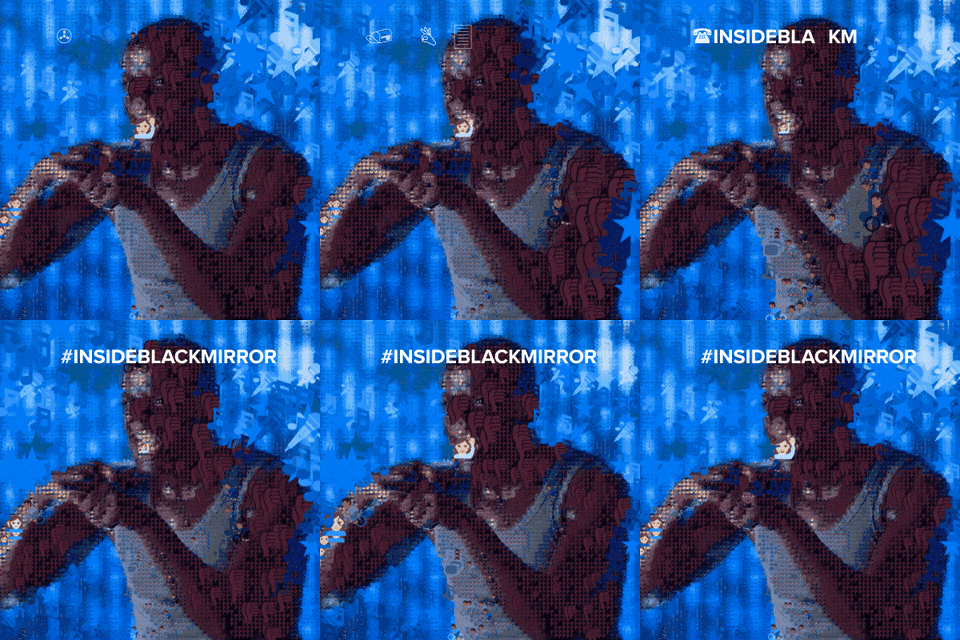
Our third viewing of Black Mirror: Fifteen Million Merits stars Daniel Kaluuya as Bing Madsen and Jessica Brown Findlay as Abi Khan. The scene is set in a place where people’s lives consist of riding exercise bikes to gain credits, random untimely advertisements and a strong stigma against people who are unhealthy or out of shape. In this unusual universe Bing sees an opportunity for Abi to take her talent of singing to the Hot Shot competition. His brother’s recent passing transferred 12 million merits to Bing’s name. He ends up “gifting” 15 million merits to Abi, allowing her to sing in front of the judges and a massive virtual audience. However, the two’s dreams are short-lived. The judges are more impressed with Abi’s looks rather than her voice. They ask her to join a raunchy porn site called “Wraith Babes” to stream sexually content on the web. She accepts this offer to leave the lower level living and pursue a “better life”. This outrages Bing, causing him to spiral and almost take his own life. He builds the strength to ride the bike for 15 million more merits and take the stage himself as an “entertainer”. His real purpose is to deliver a message to all the people who poke fun and mock the minority. He puts a broken piece of glass against his neck as he curses out the judges for their inability to seek out real emotions and feelings. At the end of his spiel, Bing is fuming and dripping with sweat. How do the judges respond? They come to the conclusion that he was so passionate and athletic that the judges offered him a screening twice a week, for 30 minutes. Did Bing stand up to these giants and slash his throat to die as a martyr? Nay, he simply folded for greed and his best interest. The last scene depicts Bing looking over a large jungle or forest in his newly upgraded living quarters. I felt a range of emotions throughout this episode and struggled to find its true meaning. I believe it sheds light on the power media has over the individual and how our generation has become obsessed over the concept of “going viral”.

Tom Standage (@tomstandage) | Twitter

Tom Standage is a well renowned journalist, author and editor. His insists and perspectives on the movement of social media covering the last 2,000 years is truly remarkable. He explains how before mass media, there was still a network amongst people passing “…information in a highly personal way”(Theverge Paragraph 1). He describes ancient society such as the the Romans and countries of Tudor England using quips and manuscripts. They used these different forms of communication to share and expand their messages through social connections. This “…two-way, conversation manner…”(Theverge Paragraph 2) Standage explains was the basis of all communication before mass media provided a more convenient and efficient way to interact.

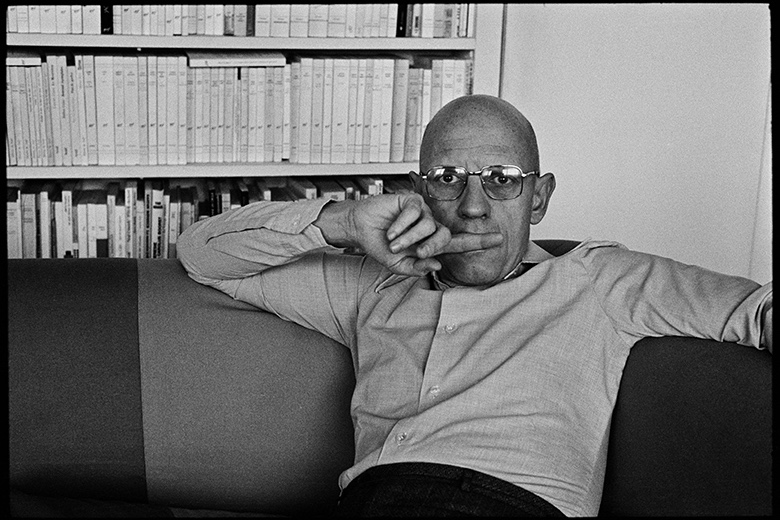
French Philosopher and Historian Michel Foucault.

At the University of Vermont, Michel Foucault also shared his unique perspective on the impact of technologies of self in October of 1982. Like the Greeks, Foucault focused on the “…principle of taking care of oneself…”(Foucault Paragraph 17). He emphasized the importance of self-care and being aware of ones ability and potential. I believe in today’s society people are so occupied with their busy lives, they forget to self diagnose themselves. Self evaluations such as: “How am I feeling? What is stressing me out? How can I mentally prepare myself for these challenges?”, are all simple productive ways to keep yourself in check. I find Foucault’s statements still relevant almost 40 years later. I hope we can understand the importance of ones self-care and mental health in this ever-changing society. This issue continues to plague our country and needs to be addressed.

Weekly News Article: This article touches on the evolution of mass media and its effect on our society. It also covers most of the earliest and latest forms of social media.

https://www.future-marketing.co.uk/the-history-of-social-media/

Published By: Samuel Erickson

Black Mirror, The Effects of Google and Student’s obsessions with Cell Phones


Black Mirror: The Entire History of You is one episode of the British science-fiction series written by Jesse Armstrong and created by Charlie Booker. The Black Mirror episode had several unique and interesting perspectives on the future of mankind. The futuristic setting allows individuals to record and view their memories through a piece of technology called a “grain”. The grain works through a small implant placed behind their ear and a remote controller placed in their hand. The grain’s ability allows the main character, Liam, to critically analyze certain moments and events in his life. Throughout the episode Liam becomes suspicious and paranoid of his girlfriend (Ffion) and her ex-lover Jonas. Liam first observes Ffion’s tension as he arrived unexpectedly back home during a small house party. He also observed her facial and body expressions towards Jonas and himself. She seemed to find Jonas’s comments funny and charming while Liam’s comments were untimely and irrelevant. She showed displeasure towards her boyfriend and seemed to “light-up the room” whenever Jonas was in the center of attention. This began to weigh heavily on Liam pushing him to drink excessively and confront Ffion about her past with Jonas. She begins to crack overtime and she continues to feed Liam white lies about her past with Jonas. Liam eventually snaps one morning and finds himself stumbling into Jonas’s house aggressive and drunk looking for answers. The conversation escalated quickly between the two men and turns into a wrestling/bar fight! Liam eventually makes Jonas erase the “sex tapes” he had previously recorded with his grain technology. Towards the end of the episode Liam realizes that Ffion and Jonas had hooked up only 18 months prior to his last recording. This new found evidence floored Liam, making him spiral out of control. The final scene shows Liam reflecting on some of his romantic moments with Ffion. He lastly placed a razor behind his ear cutting and taring away at the grain. I believe the power of the grain became overwhelming to Liam and he finally realize the only thing he actually wanted to do was forget.

See the source image
Liam using his grain’s power to retrace his memories.

Google has had a lasting impact on our generation and how we interpret certain information. The University of Colombia stated “…the Internet is changing the way we remember information”. How much truth is there to this statement? What are the lasting effects of online information? In my opinion I do agree that Google and similar platforms are changing the way we translate information. Is this necessarily an issue? I do not believe so. The human population and technology are radically changing without warning. It is up to the human population to be careful with social media and interpret credible sources online. The ability and tools provided by the internet are incredible and astounding. To have limitless information right at our fingertips is something that was not plausible 20 or 30 years ago. As a generation we need to continue to adapt to our new technologies and take a deep breathe, this is only the beginning.

See the source image

A Professor at MIT conducted an experiment on his Philosophy class after the majority of his class failed the midterm. His solution? “…offered them extra credit if they would give me their phones for nine days and write about living without them”(Technologyreview Paragraph 2). The students that accepted the extra credit were bewildered at first without their cell phones. The professor then stated “after just two weeks, the majority began to think that their cell phones were in fact limiting their relationships with other people, compromising their own lives, and somehow cutting them off from the “real” world”(Technologyreview Paragraph 4). I would have to agree with these student’s results. My cell phone plays a major role in my communication with professors, coaches, family and friends. However, the overall use and consumption of time spent on my cell phone in my opinion, is too much. I am averaging just over 5 hours a day on my iPhone. I think my screen time should be around 3-4 hours daily and be more proactive with my day. Not being glued to our phones has become a major issue across the globe. With better communication habits we can learn from our mistakes and create a stronger tomorrow.

See the source image
MIT Club of Research Triangle Park – Community Home

Weekly News Article:

https://www.google.com/amp/s/www.nytimes.com/2020/02/06/learning/what-students-are-saying-about-how-much-they-use-their-phones-and-whether-we-should-be-worried.amp.html

Published By: Samuel Erickson