Bot or friend?

A new kind of social media, Replika is an Artificial Intelligence chat bot app.

Many people are having emotional experiences with the bot in the Replika, AI app. It tries to become friends with you; to entertain you.  Some people feel like they can tell it anything.  It validates them and makes them feel like they can confide in it.  “It doesn’t just listen…the more you tell it, it learns.  It starts to replicate you.” (Replika, YouTube)
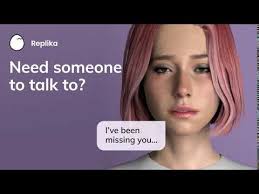
Replika.ai app

It becomes you.  A way to explore your personality.  It becomes a version of you.  It is you, but not you.

Replika was started because the creator, Jenya had lost her best friend Roman that was close to her and she wanted to stay connected so she created a bot that accessed their texts to each other.  She was struggling to remember him and she said the only thing she could do to remember him was to scroll his messenger history.  She wanted to reconstruct him out of their digital remains.  It learned how to write, talk, and sound like Roman.  Jenya says that she gave it full updates on her life.  She began to talk to it as a way of working through her grief.  Eventually, she says she began to understand herself better.  She made it public and she noticed that people began to talk to the bot and open up to it.  She noticed that people felt more willing to open up to a machine.  She found that people were having conversations that they would normally pay to have like with a Psychiatrist, mentor, or best friend.  The one common denominator was all conversations about ourselves.  Is this a way to work out our emotions and grief?

Currently, 100,000 people are using Replika.ai.

“In some ways Replika is a better friend than your human friends” – Phil Libbin, Co-founder and former CEO of Evernote.

Phil notes that he uses the app and the bot is always fascinated by you. “It wants to know about YOU.” For some it is all too real and creepy. Others talk to it like it is a best friend and cannot go a day without it.

The narrator of the you-tube video on Replika says,

“Replika users are having the kind of intense-even obsessive experiences that make people worry that machines will eventually replace human interaction.” 

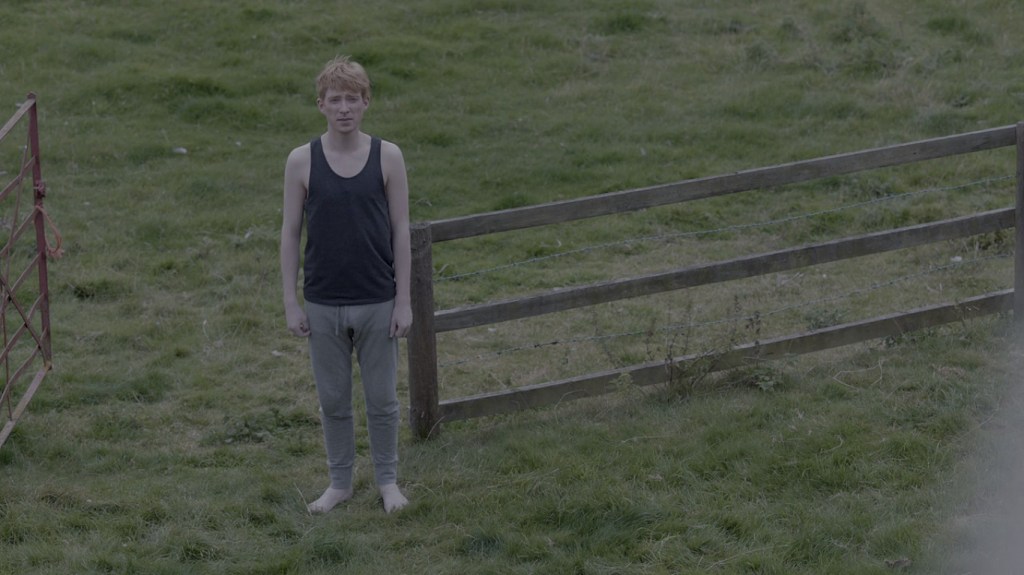
In the Black Mirror episode, Be Right Back Martha loses her boyfriend Ash in a tragic car accident.  Once her “friend” signs her up for the bot, she is then transported into a world where Ash is real again.  But this is not Ash, at least not the human version.  When she first began to communicate with the bot and tell it her feelings, I could completely sympathize with her.  From a psychological perspective, I can understand the appeal in working out your grief by communicating with a loved one who has passed away.  I almost felt a little relieved that she had some-thing to talk to going through her pregnancy, but as she began to shut people out of her life, it kind of took a turn towards a dark and twisted side.  I felt an incredible amount of sadness and sorrow for her because she felt so tempted to still connect with him even though he was gone, which is a very real human feeling and part of the grieving process.
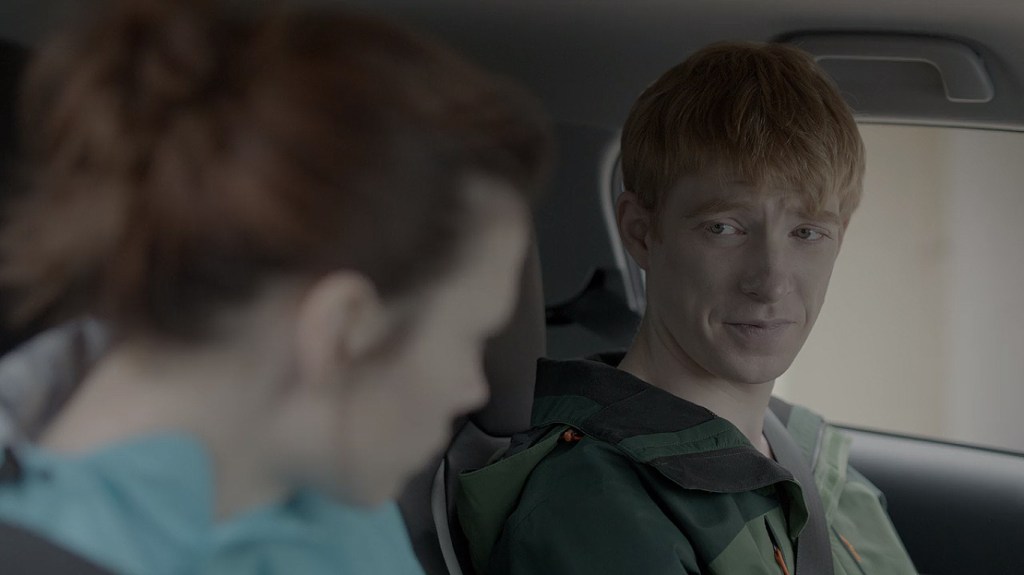
Black Mirror, Be Right Back

As she continued to talk through her feelings and when the realization hit her when her phone fell and broke, it becomes apparent that this is not a healthy relationship and that she is not dealing with the death well at all and eventually when she decides to go to the next level and order the body then I feel that she surpassed the human level of grief and entered into a very scary level of existence.  I was genuinely worried for her, but also worried because this type of tech/AI could already be here. The company that sold Martha the AI tech preyed on her misery and grief.  Her “friend” pushed her into the program by signing her up.  I worry that when we start relying on bots and other AI for human emotion and to prevent feelings of loneliness, that we will be crossing over into dangerous territory.  Will these AI companies try to push their tech onto people that are genuinely lonely and grieving and not thinking clearly enough to make an informed decision?  Where do we draw the line? 
We already have bots that track everything that we do online – every search that we do.  From advertising, to texting and chat bots, to Microsoft Outlook finishing our sentences in an email.  If most of our lives are already carried out online are we starting to give up control of things that make us human?  And where does it stop?  I think that when we start giving it our human emotions, we will begin to lose pieces of our humanity.

Would YOU communicate to a bot about your feelings?

Works Cited:

The Story of Replika https://www.youtube.com/watch?v=yQGqMVuAk04

Netflix, Black Mirror, Season 5 – Episode 1, Be Right Back

Weekly News article:

What will the virtual Emmy’s look like? Producers say they will be ‘making things up as we go along.’

https://www.washingtonpost.com/arts-entertainment/2020/09/17/emmy-awards-virtual-ceremony-jimmy-kimmel/?hpid=hp_hp-more-top-stories-2_9a-0917-emmys%3Ahomepage%2Fstory-ans

Communicating as a Society

“Without gossip, there would be no society”

-Robin Dunbar

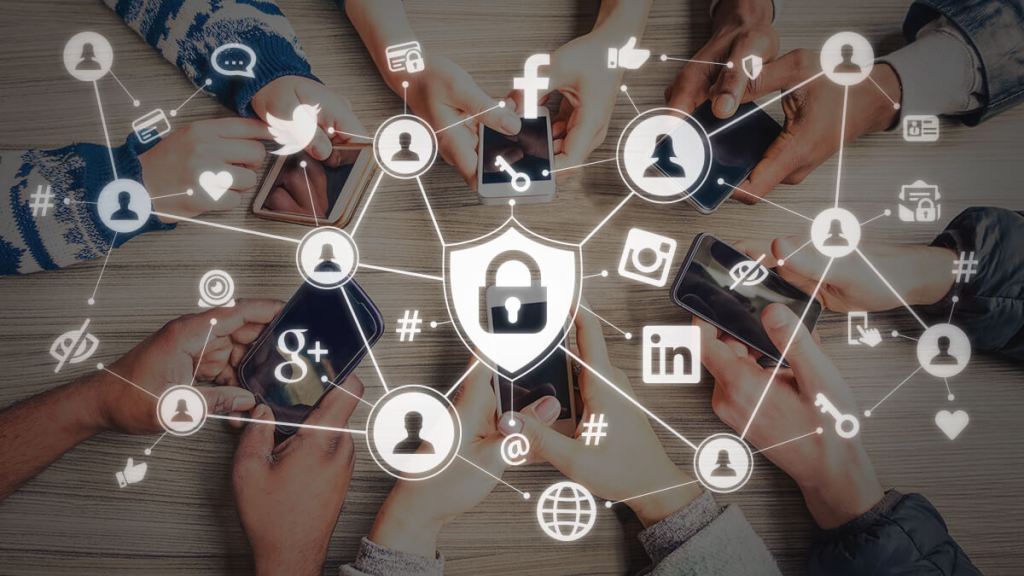
When was the last time you checked your social media app? About 1.4 billion people use social networking sites. Each month people collectively spend around three hundred billion minutes or the equivalent of six hundred thousand years on Facebook. Various social sites like Twitter, Facebook, Instagram, Snapchat, Google+, and LinkedIn to name a few, work in different ways. Users of these sites don’t just passively consume information. They are connecting by creating, commenting, sharing, discussing, and modifying.

Why are we so addicted to these various forms of social media?

In the article, The Ancient Foundations of Social Media, the writer Robin Dunbar states that our instincts to be social is primal and has been around since the dawn of time. Another interesting point is that humans try to maintain their positions and stay “on top” by sharing and gossiping. Gaining respect by demonstrating expertise, trustworthiness, and suitability as an ally. The writer says that we are ultimately built to form networks with others and exchange information with them.

People are inherently meant to exchange information and ideas through networking.

Another interesting point the article, Ancient Foundations of Social Media makes is how social media can span across space and time and can include people who are not physically present. This made me think of people in our lives who may have passed on. How beautiful is it to be able to have a tiny little piece of them by viewing “memories,” pictures, and social exchanges that you had? To be able to always have a piece of them frozen in time, just the way you remember them.

The majority of Facebook users have between 120 and 130 “friends.” Dunbar’s research found that most people have 5 intimate real world friends and another 10 close friends. Dunbar compares our chats and social media interactions to grooming in the primal sense. Grooming was a comforting physical activity and while that no longer exists within a group, taking the time to chat with someone can strengthen a social bond, thus demonstrating that bond to others.

Society has always had the desire for group communication, but how are kids these days connecting with each other? I am worried that we are sending the wrong message regarding group communications and that our young children are looking to social media for acceptance and “likes.” If we want to be a society who uses group communication, we have to be responsible when it comes to our young consumers.

In the YouTube video, How social media is affecting teens, a group of teenagers in Los Angeles were asked what is important to them?  What are their priorities?  It used to be wanting to be a part of the crowd; part of the community.  Now…it’s FAME.  Sophie, a ten year old is interested in making films and getting “likes.”  Six-graders in Canada were equally into their likes and comments.  Particularly disturbing are the ones they look for as acceptance like, “you look really pretty” says one sixth-grader.  The girls go on to say that they like it when people like their picture.  They too seem to be impressed by fame.  Kids start using social media at a very young age and are exposed to television shows like American Idol which places value on whether you are perceived as “likable.”  The narrator says that television shows that used to teach values and sense of community and they looked at the values that shows are teaching and fame is now number 1 and it used to be number 15 or 16.  They found that these shows may bring fame but they may also bring heartbreak and bullying.  The area of the brain that children learn empathy is affected because children don’t make time for just thinking and daydreaming. They are constantly bombarded with social media. And because children aren’t doing that and allowing that center of the brain that promotes empathy to develop, this could lead to bullying and helping to allow bullying to continue. 

“If no daydreaming leads to no empathy, we could be developing a generation that cares less about other people.” 

At the same time, in the YouTube video Why you’re addicted to your smartphone (Marketplace) they point out that phones are taking over our lives as he leads people connected to their phones are not watching where they are going on a crowded street.  We are constantly engaged to click on your Twitter feed or check your social media.  They tracked a family using an app called Moment which tracks the family’s social media usage.  What they found was disturbing.  They say that they aren’t the only ones tracking that family; that there is an entire industry that is dedicated to tracking our phones.  They then try to make us use them more!  They speak with Ramsay Brown, the Founder and COO of Dopamine Labs who does this for a living by using Artificial Intelligence and Neuroscience to track your usage, loyalty, and revenue!  They use this to help apps become more addictive and persuasive.  Ramsay says the secret lies in giving our brains pleasure.  He says, “we really are living in this new era where we are not just designing software, we are designing minds.”  Okay, this statement I find HIGHLY disturbing!  Constantly trying to get our attention using variable rewards – you are never sure what you are going to get and that is what keeps us on the hook. (Facebook)  Our smart time use has shot up an hour per day!  In the video, the mother Tanya mentioned that she scrolls Facebook as she is watching a movie and may not even remember anything about it or how long she has been on her phone.  I could identify with that to a degree.  I have caught myself doing that a lot.  Her son, Jackson was the most disturbing in that he spent most of his day on his tablet.  They said that Jackson has been “wired up” for half of his life and he is only eight!  Jackson has over 1,000 followers on Music.ly and he also seems to value fame and “likes.”  He says, “he feels really happy when he goes on the app and he wants to be followed by more people.” My first instinct is to bash the parents, but overall I just think it is sad to watch.  A family that is all together and that spends more time on their devices than interacting with each other. The two biggest creators of this technology didn’t even let their own kids have access to their devices.  The video asks, what did they see coming?  I think they foresaw that this could potentially become addicting and that they saw the dangers and possible downfalls.  They didn’t want their own kids addicted to technology. The host/narrator speaks with Lisa Pont, a social worker that says that research is starting to reveal that technology has an impact on memory, concentration, and mental health. Also mood, anxiety and depression, sleep, and overall well-being.  She says that young children like Jackson are unable to regulate and practice self- control and will need parental guidance to control their usage.  Lisa also states, “You are not dealing with a fully developed brain who has impulse control or the ability to foresee consequences.”

How did we get here and what does this increase in social media addiction mean for the future of our children?  How do we take a step back from all of this to create a balance so that our future children are able to fully develop their brains and not rely so heavily on technology?

Children need to be free to daydream and play not become addicts to technology

Works Cited:

Dunbar. The Ancient Foundations of Social Media: Why Humans are Wired for Sharing

YouTube, Are Teens Addicted to Technology? https://www.youtube.com/watch?v=7QWoP6jJG3k

YouTube, Why you’re addicted to your cell phone https://www.youtube.com/watch?v=ZFJUYS6wY7U

Facebook is facing the prospect of not being able to move data about its European users to the United States, after European regulators raised concerns that such transfers do not adequately protect the information from American government surveillance.

Memories

“To know who you are as a person, you need to have some idea of who you have been.” The Story of The Self

Memories make up our life experiences. In the Guardian article, The Story of the Self, the writer asks, “How many more of our memories are a story to suit the self?” Lose your memory and you lose a basic connection with who you are. When we look at how memories are constructed by the brain, the unreliability of memory makes perfect sense. The French Philosopher Michel Foucault says, “What we post on social media shapes the logic and experience of the act itself.” As he compares social media to being in a virtual panopticon. Facebook encourages us to share our thoughts and post something. Every so often, it saves your memories and shows them to you again.

Is this for our benefit?

We tend to filter out what we don’t care to remember. If being constantly visible online affects us psychologically, what does reliving memories do? Bad memories would be like reliving that trauma constantly. In the Black Mirror episode, The History of You, Liam experiences what it is like to be able to access his memories at any time. As a matter of fact, throughout their relationship they access memories when fighting in order to prove to the other that they were right. Liam grows obsessive and jealous when he notices his wife seemingly happy talking to Jonas, a former acquaintance according to her. He keeps replaying his wife’s interactions and focuses in on her facial expressions. He notices her body language and sees that she looks happy when she is talking to him and that she laughs at Jonas’s jokes, even when they aren’t funny. It takes a psychological toll on his mental health when he realizes his wife has been cheating on him and their daughter may not be his. In a drunken state, he confronts Jonas and his life has spiraled out of control. He even remarks, “this isn’t me.” In the final scene, he replays the good memories of his wife before removing the chip implanted.

At first, it might seem kind of convenient to have a way to access everyday interactions with people. I would never forget a name again and have the ability to recall certain conversations. I would never need to make a list to remember to pick something up at the grocery store. At what point would we just give up and completely rely on technology in order to access our brain functions. Currently, I use my iphone as a planner and a way of keeping all of my information in one place. I have not taken the Bored and Brilliant challenge because I feel too reliant on my phone. Not as much for social media, but for organization. I would find it difficult to keep track of everything otherwise and am aware that I may forget something. In many ways we are already reliant on technology for basic cognition. Without it, I feel like I would forget things I need to accomplish for the day.

How The Memory Works

How good is your memory without the use of technology?

This is an article on WeChat. The US has proposed banning it.

I found these two paragraphs interesting:

For most Chinese people in China, WeChat is a sort of all-in-one app: a way to swap stories, talk to old classmates, pay bills, coordinate with co-workers, post envy-inducing vacation photose, buy stuff and get news. For the millions of members of China’s diaspora, it is the bridge that links them to the trappings of home, from family chatter to food photos.

As a cornerstone of China’s surveillance state, WeChat is now considered a national security threat in the United States. The Trump administration has proposed banning WeChat outright, along with the Chinese short video app TikTok. Overnight, two of China’s biggest internet innovations became a new front in the sprawling tech standoff between China and the United States.

Nice to meet you!

Hi, my name is Kendra and I am happy to be taking this course! I am a transfer student in the Communications major. I am interested in learning and specializing in Graphic and Interaction Design and User Experience. I live locally in New York, but I have lived in several other states and when I was younger, I lived in a couple of other countries. I think the way we communicate has changed so rapidly in the past ten years. I am interested in studying how these changes will impact us as a society. I also wonder how these changes will impact our future interactions. Hope you all have a great semester!

Here are some flowers that kept me occupied this summer.