
As 2020 progresses, the digital media continues to play a huge role in innumerable people’s lives on a daily basis. The need for having a cellphone on hand has become a norm all around the world. In the ‘Black Mirror’ episode, “15 Million Merits”, it showed a life ruled by social media expectation, status and overall takeover consumption of technology. This episode shows what capitalism, narcissism and technology can potentially do to the world. This episode was aired in 2011 which closely predicted the world we are currently living in 2020. People are more consumed to their technology than to the reality of the world. In the episode, people lived around each other in what looked like a huge building with no windows to the outside world. People were awoken surrounded by television screens and had electronic sensory doors, toothpaste squeezers and camera television screens. The norm was to exercise on a stationary bike exercise machine while having the screen options to watch an X-Factor styled show called “Hot Shots”, use their digital avatars to ride their bikes through various digital sceneries and even learn or practice playing an instrument. Exercising on the bike will grant digital money to be used to buy food, porn, games and a ticket to audition for “Hot Shots”. These people are dressed in grey while other people, who happen to be larger in size, don’t get the opportunity to use the bikes to gain money or digital popularity. They are deemed as lower class people than the ones dressed in grey and wear yellow while cleaning up for the ‘upper class’ people. The upper class people don’t usually engage with one another as much as they do with their technology. With Bing, the main character, wanting freedom and finding Abi as verified to sing for “Hot Shots” he bought the tickets to audition. Before auditioning they were required to drink ‘Cuppliance’ drink which was created so that humans don’t have a meltdown on stage. Abi drinks the drink while Bing does not. Abi sings beautifully to the judges and digital audience, but the judges discard her singing abilities and attest that she was the perfect innocent candidate for the porn industry. One judge is convincing Abi by telling her “You will never have to pedal again, not one minute. We can really work with you”. All while Bing was being taken away for trying to run on the stage to stop her from complying to the judges views of her. The digital crowd screamed “DO IT!” and Abi complied to get a ‘“better” life than being imprisoned in the building.
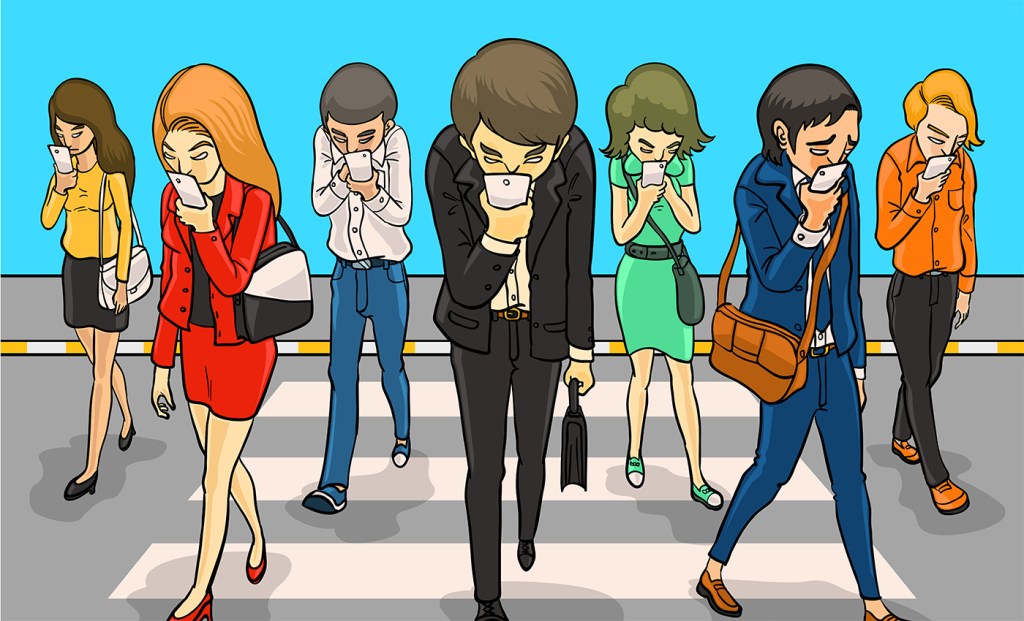
This show has altered my perception of the digital and reality world. It is as if money and fame has become the number one goal for many people based on what they see from the media screens daily. A study was taken on an Canadian family in 2017 to track how much screen time was used on an 8 year old, 15 year old and their parents. It showed that if they continued the rate of their phone usage, they would eventually use up to 15 years just being on their phones in their lifetime. It is scary to admit the similarities from a 2011 film to the reality of 2020. People are doing many of their actions to get clout from their followers and increase their social media fame to prove worthiness to their overall lives. Adjusting to the facts of how digital life can take over our lives by the infinite scroll of social media is finding a solution to help lower the amount of screen time. I personally have been taking social media hiatuses since 2017 and found that there is more love in the stillness, humanity and beings of the world around me than the phone I carry. I occasionally post on my social media, but have my apps notifications muted. This helps me from the distraction of the dings and helps aid in my creativity with all my actions for a better tomorrow. “Social media doesn’t change us, it exposes us”. Let’s be more self-discipline as a collective.
What is a goal you think you can take on to lessen the time you spend on your screen?

 SOCIAL MEDIA & SOCIETY