My Best FrAInd

This week we looked into the world of Artificial Intelligence and were reminded of the differences between a social network and an online community. I think the biggest takeaway that I got from this week was that these tools can be useful for us; two of the biggest uses are to combat loneliness and to asses our personalities.

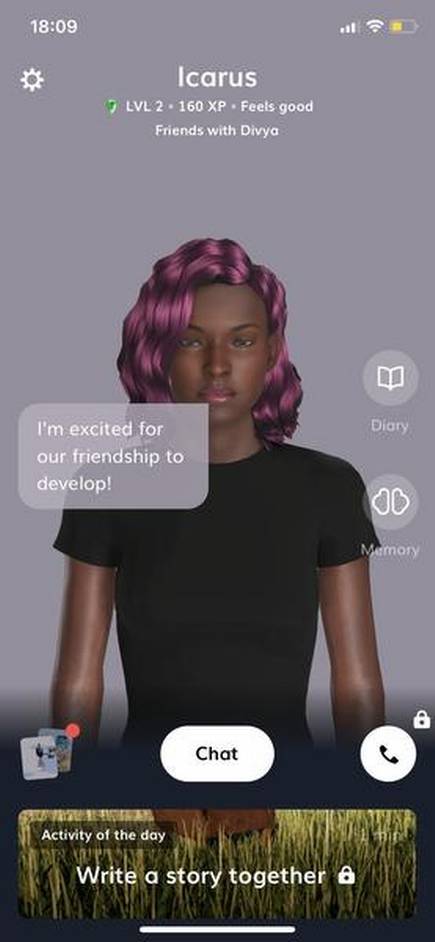
I explored the Replika app after being introduced to the concept. It was interesting to me in the sense that, eventually, it’s supposed to be able to mirror your personality. However, when I downloaded the app, created my AI companion, and began speaking to it, I started to feel an uneasiness:

“Why am I talking to this thing?” “I feel silly telling it how I feel…” “Why is it asking so many questions?” “This feels invasive.”

Those are just a few of the thoughts that went through my head after about 20 minutes of usage. I haven’t been on the app since, but I may go on to try it again eventually. I can see how this can become appealing or addicting for anyone of this generation.We go through some of our own personal relationships mostly talking to someone through a text box, seeing nothing but their picture in the corner of our screens. We are constantly looking for an easy connection, especially through our phones. Who could be easier to connect with than something that’s trying to mirror our very selves?
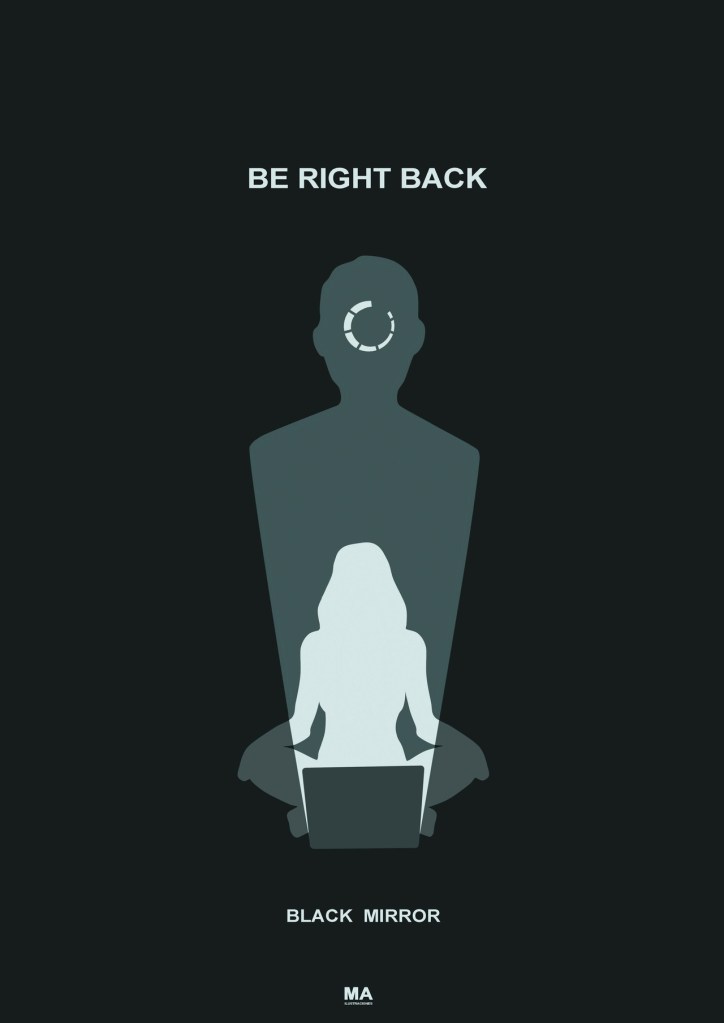
This same sort of theme is introduced when we watch Black Mirror: Be Right Back. After losing her husband, Martha has a hard time connecting with others and moving on from the situation, as anyone who has lost a loved one would. She becomes addicted to talking to her husband’s AI copycat. Even when things get weird or it seems to be unhealthy for her, she continues to hold on to him through this AI companion. It was easier for her to try to connect with the AI version of someone she had already had a strong connection with than trying to start anew and worry about social stresses or completely dealing with her grief head on. The same concept comes with the Replika app (minus the walking and talking/in person factor, but I’m pretty sure that’s coming to our homes soon too).
These AI companions, I think, are the more introverted or trauma induced ways of combating loneliness. We have the more common ways which include social networking and online communities. I think that these two types of sites are different platforms that are starting to merge. Social networking, of course, includes our beloved Facebook, Instagram, and Twitter. Online communities include our online forums linked to hobbies and other interests. However, recently, I am seeing that social media can become a forum, and a forum can lead to a social media connection. When we visit a forum for those who all play the saxophone, are all learning to knit, or who all share the same zodiac sign, we can make connections with people who become life long friends and end up on our social networks. I have also noticed that on social networks like Facebook are implementing the use of pages that link people with similar interests. Anyone can create a page based on a hobby or interest and invite people to like and follow the page. This can create connections that result in another friend added to our social network on the very same platform. This is probably how networks are keeping people hooked on their website; if they can have the friends they know and the friends they don’t yet know on the same platform, why ever leave?

After everything we’ve digested this week, we have seen how AI and other technologies can help and hinder a person’s natural grieving process. What are some other processes that AI could help with or possibly make worse with the intention of making better?

WEEKLY NEWS POST

I chose this article because I think it goes with what we’re learning and it’s relevant to the controversy going on regarding the link between social media and politics.


nhttps://www.bloomberg.com/news/features/2020-09-17/facebook-and-mark-zuckerberg-need-trump-even-more-than-trump-needs-facebook?utm_campaign=news&utm_medium=bd&utm_source=applenews

undefined

Back to the Future

This week, we were reminded of our addictions to our phones and social media. We are constantly reminded of this by our elders and by anti-tech media. I think the more interesting idea that was presented this week was the fact that our addiction is rooted in our DNA. Corporations like Apple, Facebook, etc are simply capitalizing on these behaviors.

How to Break the Power of Money - Yes! Magazine

The articles “The Ancient Foundations of Social Media” and “Tom Standage on the Forgotten History of Social Media”, explain the concept that social media has already existed for most of human existance. According to them, humans are wired to socialize and to gossip. Standage sums this up pretty well when he states, “Modern social media is so compelling because it’s the most convenient and efficient means we have invented so far to scratch a prehistoric itch: the desire to share and network with other people.” After sitting back and thinking about this, I believe this concept to be true. Social networks only give us an advanced platform to do what we already do: we gossip, we speak our minds, we judge people, and we look for concurrence from our peers while receiving judgement from our foes. This was previously done in coffee shops, in school, in newspapers, etc. Social media does all of these same things from afar; we can post our thoughts and ideas, and just about anybody can make comments on them or leave a “like”.

Regardless of how we get it done, we are in need of human interaction. I believe this is why we are so addicted to our phones; it offers a constant broadcast of what everyone in and outside of our circle is doing. However, in order to capitalize on these tendencies, companies go out of their way to make it more addicting for us. For example, in the Marketplace video we watched, it mentioned Snapchat streaks. That is a for sure way to tempt users to get on the app at least once a day. I remember when streaks first came out, there was a huge pressure to keep your streaks with people. Your friends would even get mad at you at times if you lost their streak (it sounds funny written out, but this was real life!). All apps send out daily notifications in order to tempt us to tune in. Facebook sends personal notifications about how much your friends have been posting or how much you’re missing out. Every app has its tactic, but the bottom line is, with each visit to a website or platform, you are left wanting more.

This idea also comes into play when we talk about how we can craft our personalities on social media. In the article “I Tweet Therefore I Become”, we see how addicting creating your ideal persona can be. Through social media we can shape the idea of ourselves in a way that we cannot do in person. I have seen this cause anxiety for some people and I’ve seen it become an opportunity for others. Some people become anxious at the idea of meeting someone in person because of the ease of relaying your (ideal) personality online. I’ve also seen people who take the opportunity to express themselves and use the platforms to their benefit. It all depends on the person, but either way, it has its positive and negative side effects.

The Dangers of Cell Phone Addiction | Redondo Beach Rehab | Clear Recovery  Center

Another big lesson attached to these ideas came from this weeks Black Mirror episode. In the episode, screens are EVERYWHERE.

Fifteen Million Merits - Wikipedia
15 Million merits" - PARTICIPATORY CULTURE AND THE LACK OF REWARDS - Aubrie  Rizzo

In a sense, this is how we walk around today. People walk around with their phones in their faces and their headphones in; it’s so normalized that eye contact can be awkward. They are even pressured into viewing different applications, getting a penalty on their currency if they skip whatever is playing on their screens. When Wraith Babes comes on, Bing was tempted to watch even though he wasn’t initially into it. This is the type of pressure that I was explaining previously where tactics from companies lead to an addiction to content. The episode did a good job of showing how we gravitate towards being famous over the idea of being a working person as well. The show Hot Shot was their rags to riches opportunity. When Abi gets the opportunity to leave the bikes on Wraith Babes, she is pressured to take the opportunity, just as we are pressured to use social media and reap the “benefits” from it, regardless of how the benefits come.

You can make a perfectly reasonable living without fame. Why are we so caught up on the idea of being famous? Do you think this mindset is beneficial?

WEEKLY NEWS

https://apple.news/A-bcAg2mBSjGieKavUQs5VA

This was interesting to me because I didn’t even know that sagging your pants was a law before now. It’s something a little less dark than most recent news.

Realizations…

The biggest thing that really stuck with me this week was not any of the readings, videos, or podcasts. It was the thinking that was brought about after dissecting all of this material together.The realization of the world that I live in today and the realization that it’s probably affecting everyone, including myself, more than we’re willing to admit.

The biggest ideas we reflected on this week were our memories and our dependence on social media/technology. Let’s look at The Entire History of You first :

The obsession that Liam starts to have with memories and the events that occur throughout the episode are pretty good reflections of the relationships that we have with our phones and social media. Comparing this episode with the feelings that students had in the article on MIT Technology Review offers some insight. When this professor asks his students to turn in their cell phones, they describe feelings of being “weird or something”, that their phones may be “depriving them of their relationship to the world”, or feelings of real work and world engagement once the cell phones were gone.If you remember from the Black Mirror episode, all of these ideas were present; for example, the feelings of “being weird”. When the characters are at a dinner party, they begin discussing how everyone should have the memory device, and when one of the women states that she had it removed, everyone is astonished at the fact that she can live without it. They begin ranting about how flawed our brains are when it comes to memory. This matches the feeling that someone had after asking for the time. People were looking at her funny as if saying, “You don’t have a cell phone?”.

We also have the instance where Liam begins depriving himself of the real world once things with his girlfriend don’t work out. Rather than looking around at the life he still has left, he is constantly looking back at his memories to blind himself from what’s actually going on around him. He replays thoughts of what he had woken up to in the past, what his house had looked like before, etc. Although this may seem extremely sad when watching the show from that perspective, this is what we do on a smaller scale when looking at the world through our cell phones day in and day out.

Lastly, we have the realization that in some instances, we are better off and can focus more effectively once these distractions are removed. After removing the device, Liam and the girl at the dinner party are no longer hindered by exact replays of the things that happened in their life. The students who no longer had their phones were no longer hindered by constant buzzing, texts, notifications, and so on.

If everyone takes a moment and looks into their own social media/cell phone usage, they will probably see the same themes, especially for those in my generation. Everyone has let their social media feed or a notification get in the way of a conversation, homework, etc. Everyone has had a Facebook or Snapchat account remind them of a memory from years ago that brought them back to a place or people that they wish they hadn’t been around. There have been times where I have had to shut off my phone to do homework or leave it behind so that I could enjoy myself without the constant distractions. I have also seen the things that are said or done on social media ruin relationships.

Cell phones and social media are not all bad. But when you find yourself over indulging, remember the lessons that we learned this week. My question for everyone is: Do the useful aspects of social media and technology outweigh the bad? And do you think there’s a way that we could give people access to the good without being susceptible to these flaws?

Here’s a short video about a couple who got rid of their cell phones and the cost benefits, just to offer a different perspective.

WEEKLY NEWS

Here is an article about a small college, about the same size as Alfred University, who is currently battling COVID-19 in the only way that they now can, due to outbreaks. I’m sharing this article in order to stress the importance of following guidelines and the real world consequences if guidelines are not followed from the get-go.

https://apple.news/A6mybrnGKTHmGaghD_bHahA

Hi, my name is…

Evelyn. I am a senior Accounting major from Machias, NY, which is a about an hour away from Alfred. I was born in Florida, by my family and I moved here when I was younger. Due to recent events, I’ll be attending school remotely this semester. I look forward to this class, as it’s very different from many of my others and I think I’ll connect with the material, as most of the people from my generation probably would.

photo of beach during dawnWhere I’d rather be ^