
(PERSONAL PROJECT) – For my personal project I am focusing on the issue we face everyday when using social media, and that is the increase in people getting news from these platforms and most of the time having it be misleading or false. With the current trend of more and more people posting about political news, it can sometimes make it feel like that is all that is on social media nowadays. Social media has changed from sharing and keeping up with friends and family to a news outlet that people don’t take the time to make sure if the information is true or credible.
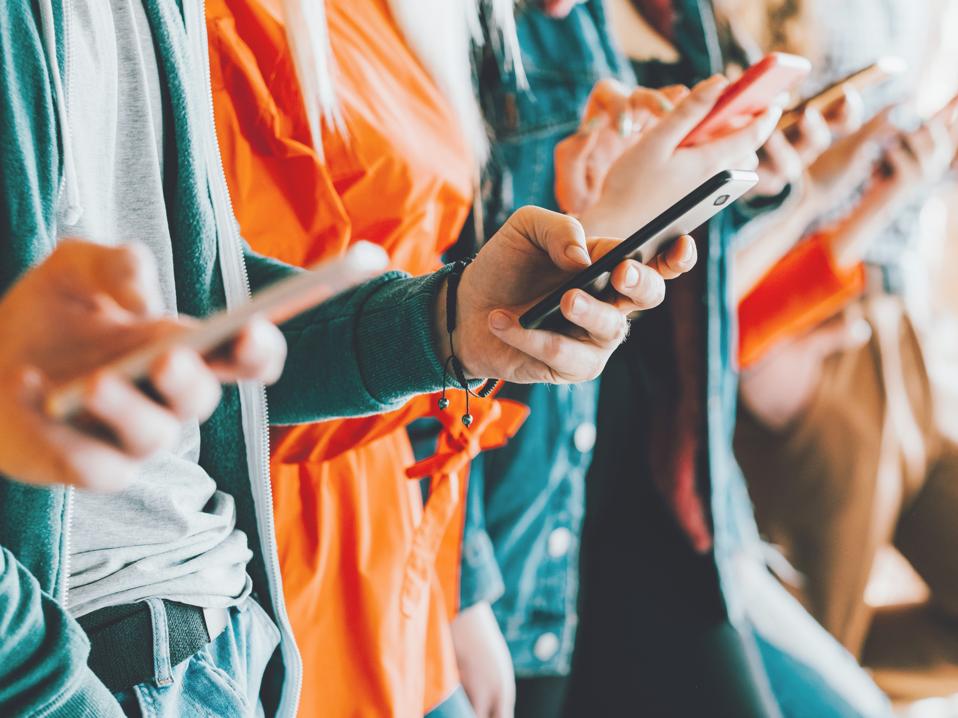
With all that is happening in our world right now from the pandemic, protests, and the election there has been a report that “shows that consumers continue to shift away from the traditional media sources for their news and are moving towards social media and messaging services to find the news” (Vorhaus, 2020). I think the reason for this transition is due to the large millennial generation because they are the ones that drive social media and use it the most. I think this change is headed toward the wrong direction because of how much deception there is online and people tend to take them for their word even though they don’t know them. People will just see something posted so many times they will think to themselves “there is no way that it is fake if this many people are posting it”. This can create chaos and will turn us against each other, which it already has.
“Social media combine the flow of television and the flow of video games to keep the user scrolling through post after post” (Bolter, 2019). This can make social media feel very addictive and not see a problem with it. There would be no problem, but because these platforms have political information and discussion they can threaten the average user with posts they would rather not see. “Traditional conspiracy theories are relatively coherent narratives that seek to explain some disturbing aspect of the political or social world. The new conspiracism presents incoherent, often contradictory assertions rather than a consistent story” (Bolter, 2019). By reading this quote it helps me understand how conspiracies and fake news can easily spread on social media as it is a place where people can say whatever is on their mind and make fake news articles to stir the pot and to try to convince others that their way of thinking is the right way. I can think of these stories as someone just accusing another person they don’t agree with and trying to throw that person’s name under the bus and damage their reputation no matter the cost of doing it. During Donald Trump’s first two years as president he “tweeted more than 600 times about Russia and collusion, more than 400 times lamenting fake news, and more than 200 times each about Clinton and Obama” (Bolter, 2019). Sometimes they would be simple and straight to the point or other times he would be more thorough about it. I think that having a president this vocal can hurt the nations image with other countries and almost make him look a little foolish and childish, at the same time I can understand why he uses social media so much. He tries to clear fake news surrounding him and be more involved creating a less of a barrier between president and citizen.
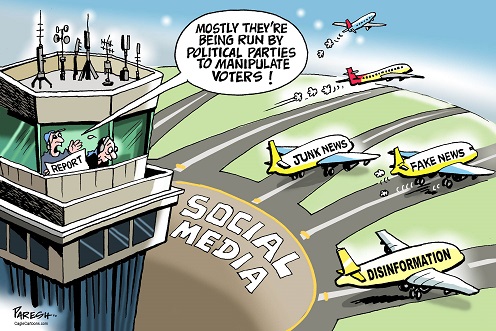
With the election finally coming to an end, hopefully most of the fake news, hate speech and misinformation will be gone and finally we can have trusted news on social media outlets. It always seems there will be fake news, but during these two past elections social media played a bigger role than ever before and even pushed Facebook to make a crazy decision. They decided that they will not be posting any paid advertisements for political news and the election because this year there were so much hate and violence due to the virus and the police brutality that has been a continuing problem for our nation. Now more than ever people rely on social media for a source of news and “there are worries that such content could influence audiences unable to distinguish truth from fact or news from propaganda” (Brooks, 2020). That is the biggest issue with getting the news from online is that you have to take everything with a grain of salt, and if you do want to receive confirmation about something you learned you should give it a quick Google search and see how credible it is. We can be shock about how many things we can mistake for being truthful.

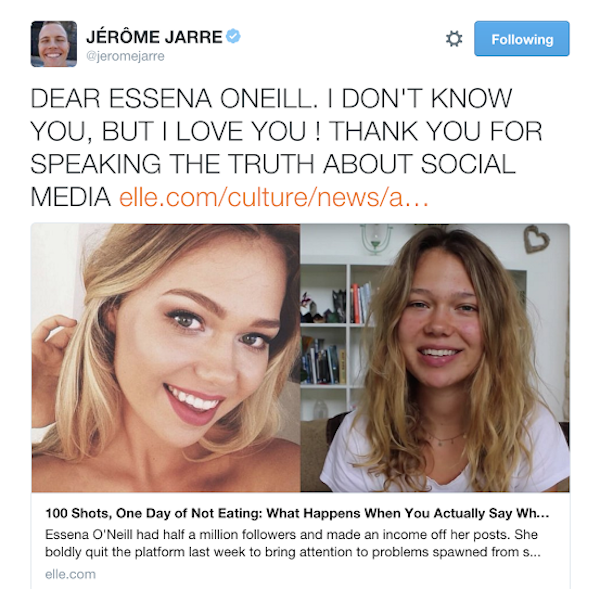
With all the use and misuse of social media we have to remember how it is making the newer generations feel. A study linked the platforms to depression and there may be a larger issue at hand. “The researchers found that social media may harm girls’ mental health by increasing their exposure to bullying and reducing their sleep and physical exercise” (Asmelash, 2019). They go on to say that it does not cause harm, but can easily disrupt normal, everyday activities. There was a clear difference between boys and girls, where the girls had greater psychological distress. The article also gives us ideas to how to help teens with this depression because even if social media is the cause there is a very low chance that a young person would want to miss out on what their friends are doing and saying, which could even create anxiety and further that depression. We need to be able to put up a filter so that these young people will not see such nasty things, or “instead the positive effects of social media use, such as encouraging social interactions, can be more endorsed”(Asmelash, 2019). If we can clean up social media from its toxic and hatred it can be a great place to start as we should strive for change. I think that it has to start with fake news because that is usually at the center of any argument and without that false information there will be nothing more to fight about.
Works Cited:
- Vorhaus, M. (2020, June 25). People Increasingly Turn To Social Media For News. Retrieved from https://www.forbes.com/sites/mikevorhaus/2020/06/24/people-increasingly-turn-to-social-media-for-news/?sh=273510bd3bcc
- Bolter, J. (2019, May 20). Social Media Are Ruining Political Discourse. Retrieved from https://www.theatlantic.com/technology/archive/2019/05/why-social-media-ruining-political-discourse/589108/
- Brooks, C. (2020, June 02). The truth behind fake news and politics on social media. Retrieved from https://msutoday.msu.edu/news/2020/the-truth-behind-fake-news-and-politics-on-social-media/
- Asmelash, L. (2019, August 15). Social media use may harm teens’ mental health by disrupting positive activities, study says. Retrieved from https://www.cnn.com/2019/08/13/health/social-media-mental-health-trnd/index.html










 SOCIAL MEDIA & SOCIETY