
This is going to be our last blog of this semester and what we have learnt overall was quite informative and interesting. Same is our last topic of discussion i.e. “Reality, Authenticity & making Sense of it All”. We are going to talk about the reality, authenticity and the things that make sense.
The first article: “The Kids Are Not Alright” is about reality. What is happening in the real world should be our main concern. In the article, the author mentioned the lives of the children who got raised in the fosters and when they did not get the proper advice for their future many of the children from foster end up having a bad life ahead. And many of the foster children would become involved in the crimes and end up in the prison. The author said that young adults emerging from foster care or the criminal-justice system are in an especially difficult situation, often released without guidance or support. “This abandonment not only worsens the divergence in the individual fortunes of young people,” Kim writes, “but also contributes to the widening gaps in income, wealth, and opportunity that have increasingly become a concern for policymakers.

Kim lays out the problem in the first half of the book, and offers possible solutions in the second. She writes with a quiet anger. Her sentence-by-sentence dissection of a system that isn’t working for so many reveals a place where policy makers could, with a little ingenuity (and, of course, money), make a big difference in the country’s growing inequality.
The next article: “Addicted to Distraction” the author have discussed about many of the things that are accessible to us and that can make us distracted so easily. Not only the internet and the social media but now the games are also getting so seductive for the young children that they spent hours on the internet in order to get mastery on such games.
At this point, I want to ask from you all that what do you think about this situation?
Do you believe that we should have a balance in our lives in order to achieve our goals?
Is internet filled with such seductive material that can summon a person for hours?

The next article: “The Decade the Internet Lost Its Joy” the author said that As someone best described it to me recently, the internet has moved from a flat ecosystem — with a multitude of smaller, trusted communities — to a vertical one, with everyone being pushed together into the same few platforms (investor parlance termed it FAANG — Facebook, Amazon, Apple, Netflix, and Google), all in the pursuit of data collection and ad revenue.
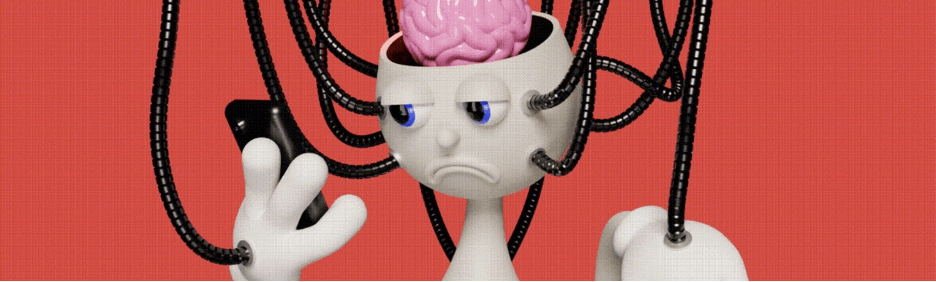
The book “Program or be Programmed” by Douglas Rushkoff is a book which is based on the ten commands for this digital age. In this the author has made the discussion about the fact that the debate over whether the Net is good or bad for us fills the airwaves and the blogosphere. But for all the heat of claim and counter-claim, the argument is essentially beside the point: it’s here; it’s everywhere. The real question is, do we direct technology, or do we let ourselves be directed by it and those who have mastered it? “Choose the former,” writes Rushkoff, “and you gain access to the control panel of civilization. Choose the latter, and it could be the last real choice you get to make.” In ten chapters, composed of ten “commands” accompanied by original illustrations from comic artist Leland Purvis, Rushkoff provides cyber enthusiasts and technophobes alike with the guidelines to navigate this new universe.
I am going to share this week’s news post article which is based on the concerns of democracy in the digital age
https://www.pewresearch.org/internet/2020/02/21/concerns-about-democracy-in-the-digital-age/
 SOCIAL MEDIA & SOCIETY
You must be logged in to post a comment.