
From Governor William Bradford opening pioneers’ mail intended for England, to President George W. Bramble’s sweeping home-based monitoring, the inspirations driving government investigation have changed little despite fast advances in mails innovation. However very regularly, American residents have been the cause of all their problems with regards to securing privacy, consistently doing without common freedoms in shocking occasions of battle just as for ordinary customer spaces. Every one of us currently adds to an ever-developing electronic record of web-based shopping sprees, photograph collections, wellbeing records, and political commitments, open to nearly any individual who cares to look.

American Privacy follows the genealogy of social standards and lawful orders that have twisted around the Fourth Amendment since its selection. In 1873, the presentation of postcards split American assessment of public validity. Longer than a century later, Twitter has its spot on the range of human association. Between these two hubs, Anthony Comstock pursued an ethical campaign against disgusting writing, George Orwell wrote 1984, Joseph McCarthy chased Communists and “degenerates,” President Richard Nixon followed himself directly out of office, and the Supreme Court of the United States gave its most influential authentic suppositions concerning the privilege to privacy to date. Caught here, these memorable representations amount to a lively depiction of privacy’s victors and challengers.
Lawfully, mechanically, and truly grounded, American Privacy finishes up with a call for Congress to perceive how advancement and violation go inseparably, and a test to residents to secure privacy before it is lost totally.
Agent Katie Hill’s short vocation in Congress untied up that Ernest Hemingway depicted chapter 11 occurring: steadily and afterward out of nowhere. On October 18, the traditional source redstate distributed an article claiming sexual connections among Hill and two staff members, alongside an express photo of Hill. Other right-inclining distributions got the story, and it started rising around Twitter.
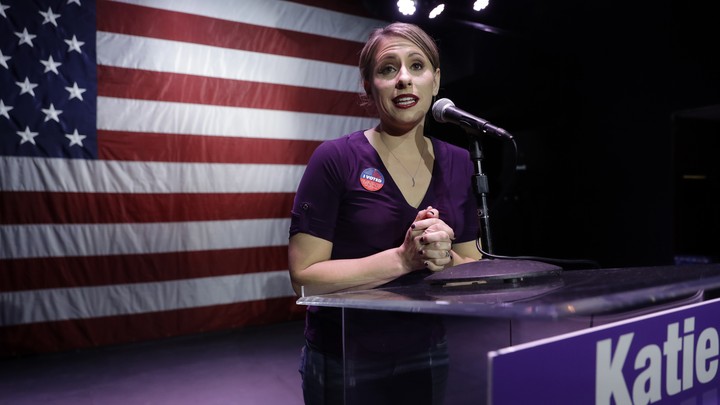
The Hill embarrassment has an uncanny inclination. It is both exceptionally recognizable—the political sex outrage is in a real sense wonder as old as this nation—but positioned in a setting that causes it to seem bizarre and awful. As I wrote in Lawfare before Hill’s abdication, this is the main occurrence of which I am mindful when a politically adjusted distribution has distributed an express photograph of a resistance legislator for the evident political increase. It’s both an indication of how revolting the political scene could become and a token of how terrible, for the numerous customary individuals who have endured this sort of misuse, the world as of now is.
The effects of nonconsensual pornography can be devastating. Victims report severe anxiety and depression. Many lose their jobs. Some are afraid to even step outside. The victims’-rights lawyers Carrie Goldberg and Annie Seifullah describe how their respective former partners used intimate photographs of them to try to destroy their careers. It is for this reason—recognizing the harm that nonconsensual pornography represents—that the vast majority of states plus the District of Columbia have criminalized the practice in recent years.
References
Daniel J. Solove (2006), “A Brief History of Information Privacy Law”
Available at: https://scholarship.law.gwu.edu/cgi/viewcontent.cgi?Article=2076&context=faculty_publications
[Accessed at: 6 November 2020]
Quinta Jurecic (2019), “The Humiliation of Katie Hill Offers a Warning”
[Accessed at: 6 November]

I found some good news about the U.S. economy added more jobs than expected in October and the unemployment rate fell sharply even as Americans continue to grapple with Covid-19 and its dampening impact on business.
https://www.cnbc.com/2020/11/06/heres-where-the-jobs-are-for-october-2020-in-one-chart.html
 SOCIAL MEDIA & SOCIETY
