
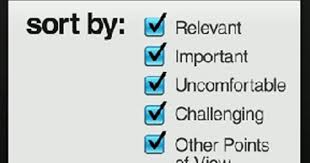
This week was a weird class where we didn’t actually meet on our usually Wednesday afternoon on zoom. We did have some very interesting articles to read and video to the watch. The one I think really focuses on a problem is the TED talk “The Filter Bubble”. In the TED talk Eli Pariser talks about Facebook and algorithm that have been put in place. These algorithms choose what you see on your Facebook feed based on what you clicked on, what posted you liked, what pages you follow and it then uses all this information to recommend new pages or people and to decide what to show you on your feed. Eli goes to talk about his own experience with this algorithm. He talks about have he liked to follow both republicans and democrats so that he could see both view points and stay informed on different topics because no one talks about the same thing. Eli then explained that he started to notice that his feed was pretty much of the democrat view points and this happened because the algorithm saw that he was clicking on way more of the democrat friends links then the republican so it decided he didn’t want to see them any more and basically cut them out of his feed. Eli then talks about how Facebook isn’t the only one doing this but so is companies like Google, Netflix, Amazon, Huffington post, and others. Now I do think this is a good thing for companies like Netflix and Amazon where you want to see things of you taste or that you would be interested in and it creates more personalization. With places like Google and Huffington post these are places where people go to find information and personalizing these causes people to miss out on important information and be less informed unless they dig deep. These algorithms have to help people stay informed by making sure things that are important and current stay on peoples feeds even if they don’t fit to what they normally like or click on and by not doing this we are just hurting ourselves by keep people less informed about events that could have a great affect on our lives and others and just letting them see cat videos all day.
Two article that we read ” Essena O’Neil Quits Instagram” and “A follow Up to That” talk about an Australian Instagram model/influencer. People like this have really taken off and have found an pretty easy way to go make money through sponsors once they have thousands of followers. Essena comes out and talks about her own experience with this and how companies will pay for the clothes you wear and then you just spend your day doing photo shoots for Instagram pictures. Some of these pictures are then edited or the pose that you use alter the look of your body to make you fit that ideal standard. This then becomes a toxic environment where people see these post and think they need to look like the model/influencer to be accepted by society when these aren’t really achievable standards. Essena has come out and quit all social media for this reason and has been trying to get rid of the idolization of something that is not really and cant really be achieved.

I think both of these are sort of tied together because with the filter bubble its all about getting you to see things that you want to see and with Instagram it is about making your photos to what people want to see so you can maximize follows and likes and therefore make more money. To do both of these you have to sort of trick the users into thinking they are seeing the different people and pages they follow equally when the user is only seeing what the algorithm or the model/influencer want them to see. With just that slight change things that are of high importance that everyone should know about are not see and go unnoticed because of that. Do you agree with Eli and Essena that there has to be change with social media and even just the internet to allow people to see real life and be more informed?
News Article
This article talks about peer influence and the effect of likes on a post like Instagram have on the teenage brain.
 SOCIAL MEDIA & SOCIETY
You must be logged in to post a comment.