
Journalism is changing and we have to consider the way in which we get our news. Online there is a great amount of opinion, but there is little reporting and rigorous fact-checking or editorial scrutiny, as suggested in the article, Goodbye to the Age of Newspapers. It is unpredictable whether the Internet will be able to support journalism at a level that is comparable to newspapers, the the former methods of journalism are not matching up with the developments of new media. Rosenstiel says, “More of American life will occur in shadows. We won’t know what we won’t know.”
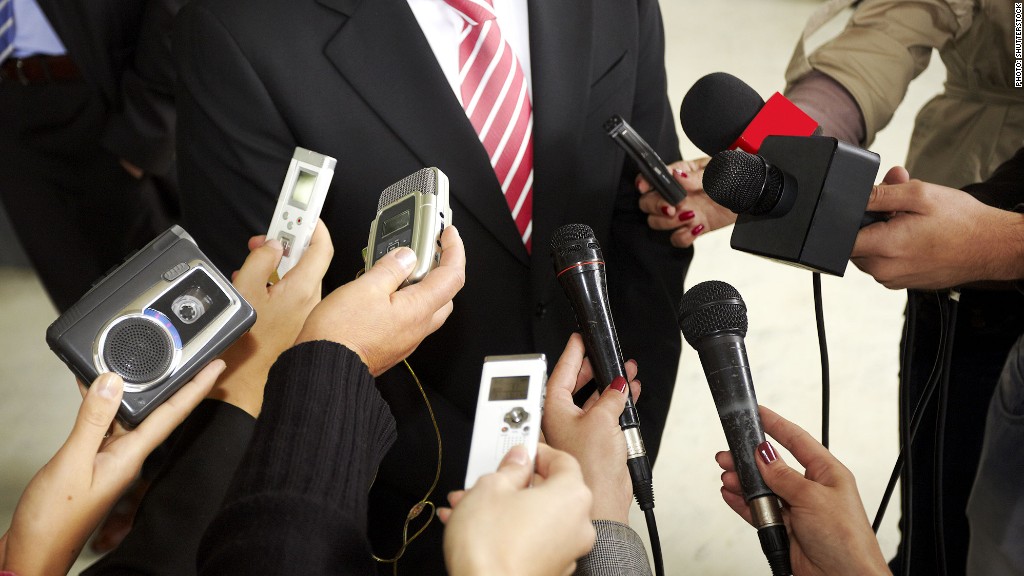
William Arkin agrees that something happened post 9/11 in which people disappeared from the airwaves and we don’t see as many journalists reporting. We see journalists who are the commentators on what is going on. (Democracy Now, Longtime Reporter) He says this is a tough spot to be in because journalists are supposed to be unbiased, but at the same time, they are supposed to be explaining to the public what is going on with inside information. Arkin feels that we are becoming shallower with our coverage particularly in areas of national security. “We’ve shifted from the Industrial Age to the Information Age.” Consequently, we have also shifted from the dominance of the military-industrial complex to a more difficult-to-diagnose information complex.” I found it interesting that Arkin says for instance, Amazon is one of the largest defense contractors, that they are building the cloud and building data centers to support the intelligence community and the military. He also says there are other civilian companies who we think are acting civilians that are benefiting from military backing.
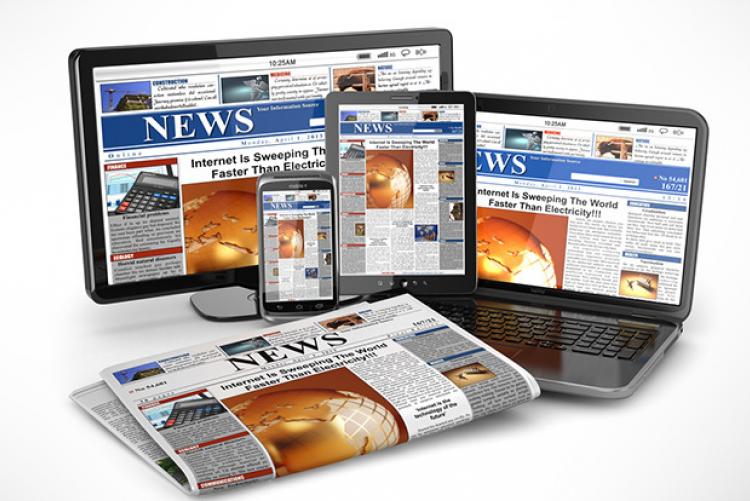
Arkins suggests that today’s journalism is biased using the example of a panel discussion on television. He says that in the mainstream press and newspapers, we don’t populate that panel with people who are in opposition. That the problem is that there aren’t critics who are countering what is being said. Hinting at a time of journalism that is at risk for extinction and a moral code that is now overlooked, he says, “I just don’t think the American public gets well served by the fact that there isn’t a broad range of opinions on those panels. I want to see peaceniks. I want to see academics. I want to see historians.” The lack of biased opinion and the spread of misinformation can be examined by exploring the impact of Facebook and social media….
Nearly two billion people use Facebook every month, and about 1.2 billion of them daily. It has become the largest most influential entity in the news business, commanding an audience greater than that of any American or European television news network, any newspaper or magazine in the Western world and any online news outlet. It is also the most powerful mobilizing force in politics, and it is fast replacing television as the most consequential entertainment medium. (2017. Can Facebook…) Its widespread influence has become a liability. During the U.S. election, propagandists used Facebook to turn fake stories into viral sensations. “With its huge reach, Facebook has begun to act as the great disseminator of the larger cloud of misinformation and half-truths swirling about the rest of media. It sucks up lies from cable news and Twitter, then precisely targets each lie to the partisan bubble most receptive to it.”
A team of researchers at M.I.T. and Harvard did a study on how 1.25 million people shared information during the 2016 campaign and they found that social media created a right-wing echo chamber and social media was used to transmit a hyperpartisan perspective to the world. Their finding reinforced that people would use social media sites like Facebook to cocoon themselves in a sort of self-reinforcing bubble. The NYTimes article, Can Facebook Fix its Own Worst Bug? says that Trump had benefited from a media environment that is now shaped by Facebook by utilizing a single feature known as the ‘News Feed.’ Digital activist, Eli Pariser gave this phenomenon a title of “The Filter Bubble.”
Facebooks own researchers have been studying the filter bubble since 2010 and published an in-house study in 2015 which they found that the News Feeds algorithm did filter out some opposing views in your feed, but the bigger effect was the users’ own choices. They found that when the news feed did not show people views contrary to their own, they tended not to click on those stories. Zuckerberg felt like Facebook was let off the hook. He wanted Facebook to become a global news distributor that is run by machines, rather than humans who would try to look at every last bit of content and exercise considered judgement. (Can Facebook…)
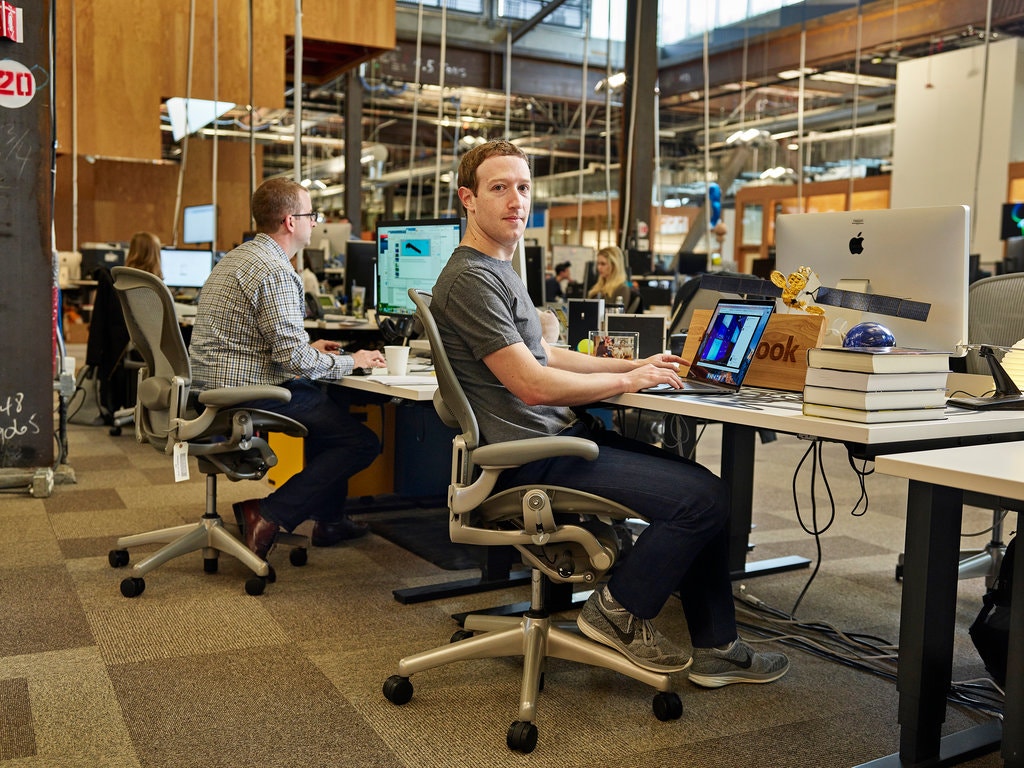
“At some point, if they really want to address this, they have to say, ‘This is good information’ and ‘This is bad information,'” says Emily Bell, the Director for the Tow Center for Digital Journalism at Columbia Journalism School. “They have to say, ‘These are the kinds of information sources that we want to privilege, and these others are not going to be banned from the platform, but they are not going to thrive.’ In other words, they have to create a hierarchy, and they’re going to have to decide how they’re going to transfer wealth into the publishing market.” The article states that in many ways, how Facebook changes the news is really a bigger problem with News Feed, which is dominance. That News Feed wouldn’t be much of an issue if it weren’t crowding out every other source.
The News Feed’s team aren’t making decisions that consider human ideas like ethics, judgement, intuition, or seniority. They are concerned only with quantifiable outcomes about people’s actions on the site. Data is the only truth that News Feed is searching for and the News Feed team are ultimately trying to figure out what users want; what they find meaningful and use that data to give them more of what they want. Social-science research shows that most of us simply prefer stuff that feels true to our worldview even if it isn’t true at all and that the mining of all of those preferences is likely to lead us deeper into bubbles rather than out of them.
Questions: In what ways can we best support and sustain professional journalism in a digital media environment? Do you feel that Newsfeed/Facebook could effectively support journalistic efforts to bring accurate news to the people?
Works Cited:
January 9, 2019. Democracy Now. Longtime Reporter Leaves NBC Saying Media Is “Trump Circus” That Encourages Perpetual War
April 25, 2017. NYTimes Magazine: Can Facebook fix its own worst Bug?
March 4, 2009. Goodbye to the Age of Newspapers (Hello to a New Era of Corruption)
 SOCIAL MEDIA & SOCIETY
Hello, you are right that now the way we use to see journalism is being changed and we are now getting the news from very new sources. Yes, on the internet if a news get viral there are a lot of opinions we get to see on it and we get the idea that what the world is thinking about that particular news. But still at this level we cannot make even an opinion about the fact that either Internet can make it up to the level that newspapers have.
LikeLike