This week’s topic “Copyright, Privacy and Fair Use” was a serious one to share the opinions on. The material that is being provided was filled with the cases in which the Copyright situations and cases are being shown and in order to understand fully about the sensitivity of the data you use in daily life.
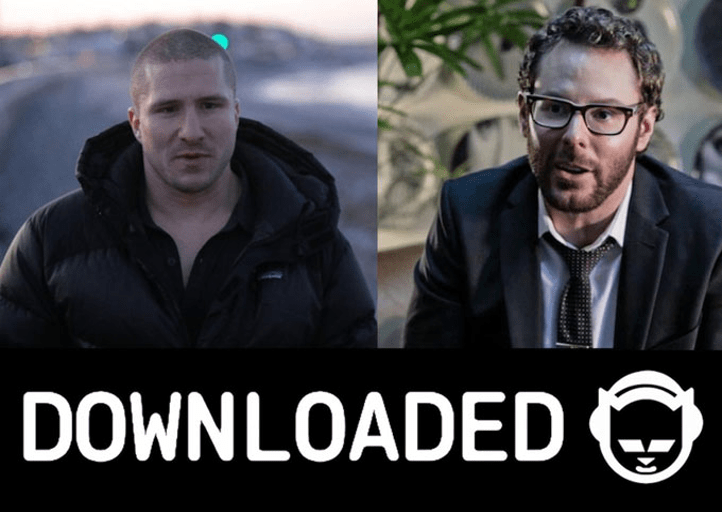
First of all, the documentary i.e. “Downloaded: Napster Documentary” was an interesting video to watch. The people of the 90s still who use to have their own computer and if they are lucky enough their own internet connection, they would certainly know about what Napster is. In this modern world where the streaming and downloading of the music is just a game of the clicks, it’s easy to forget what a monumental ground shift Napster represented. The common fact that everyone remembers is that when Napster launched the music industry collapsed, the service remain in the industry for two years, and in that time its influence on how people obtained, shared and enjoyed music was more profound. This documentary was just a case that how two people shared an idea and their service had broken the music industry down yet give people a new thing to look on the internet and it was quite an adventure back then to have the music on your internets.
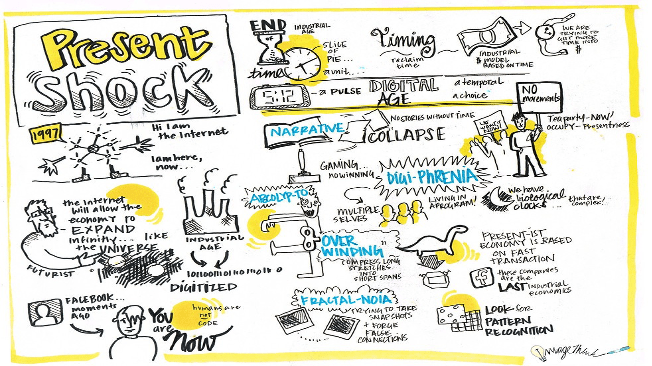
Second I found the “Douglass Rushkoff on Present Shock” an interesting book in which the author has shared the though-provoking facts. Unlike other social theorists, Rushkoff explores how it has caused a focus on the immediate moment that can be both disorienting or energizing. In an era that seems intent on deleting the art of narrative, Rushkoff creates a compelling narrative of the way we live now. He said that some of us are finding it hard to adapt the present shock. Alvin Toffler’s 1970 book, Future Shock, theorized that things were changing so fast we would soon lose the ability to cope and on this Rushkoff argues that the future is now and we are contending with a fundamentally new challenge.
What do you say about this thought of Rushkoff? Do you agree with him why or why not?
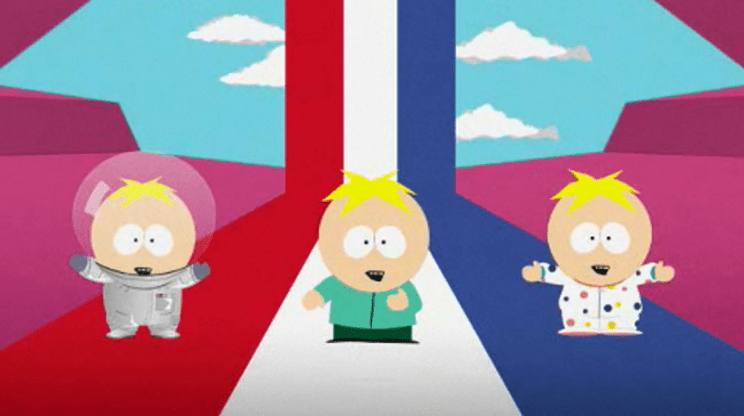
The article “South Park wins Lawsuits over “What What in the Butt” was based on a conflict between a singer and Viacom on a a short video clip that was being used in one of the episode entitled “Canada on Strike” of South Park by Brownmark Films. Later the judge in light of the “Fair Use” of Copyright act said that “Anyone who views the South Park episode in question will realize that the show was trying to lampoon the recent craze in our society of watching video clips on the internet that are — to be kind — of rather low artistic sophistication and quality.”
The judge then applied for four factor test of “fair use” and determined that a clip that lasts less than a minute in a 25-minute episode was not terribly substantial and would not ruin the Brownmark’s market enjoyment of its video.
The “Fair Use Doctrine” shares a Copyright act which provides a framework for determining whether something is a fair use and identifies certain types of uses such as criticism, comment, news reporting, teaching and research as examples of activities that may qualify as fair use.
For this week’s news article, I am going to share a Fair Use Week news which was celebrated in February 2020.
 SOCIAL MEDIA & SOCIETY
This sentence of yours is so true, “Rushkoff explores how it has caused a focus on the immediate moment that can be both disorienting or energizing.” Things are changing very fast within the last ten years and it can be a little disorienting to try to keep up with it all and to also anticipate the direction it is going. There is a lot more time spent in front of a screen and if not carefully monitored, can be bad for our social and mental well-being. I feel like it is easy for me to balance both overall, (although I sometimes feel the difficulty) because I have been alive to experience how life was before we became so tech connected, but I wonder how it is for the younger generation when they have grown up with the technology/social media mindset. I would think that natural ways of balancing ones life would be more difficult to connect to on some levels. I feel like there is the underlying current that if you don’t change with technology that you may get left behind, especially at the rate at which it is changing. Of course, I also wonder if people always feel this way when they start getting older..
LikeLiked by 1 person
This is a very well written article! I enjoyed reading this very much I agreed with many of things you talked about. It’s hard to keep up with all these technological advances I know I can’t, with the rate that we are advancing in technology it’s difficult to estimate where technology will be in the upcoming years. If we look at the next generation, there already getting exposure from this at like 3 years old, making there lives bounded to technology because it’s such an early age.
LikeLike