
The way in which we seek social justice has changed. Digital activism is the new protest, even though people still take to the streets and protest. Some argue that technology is weakening social movements. It is much easier to throw up a hashtag on Twitter than it is to organize a peaceful protest. Digital movements offer greater scale, but this won’t matter if there is no motivation or momentum. Easier to mobilize does not always mean easier to organize. In the TED talk, Online Social Change: easy to organize, hard to win, Zeynep Tufekci talks about how movements like Occupy Wall Street in 2000-2014 couldn’t measure quantifiable change and weren’t proportional to the energy they inspired. Today’s protests seem to not embrace the benefits of working together through differences.
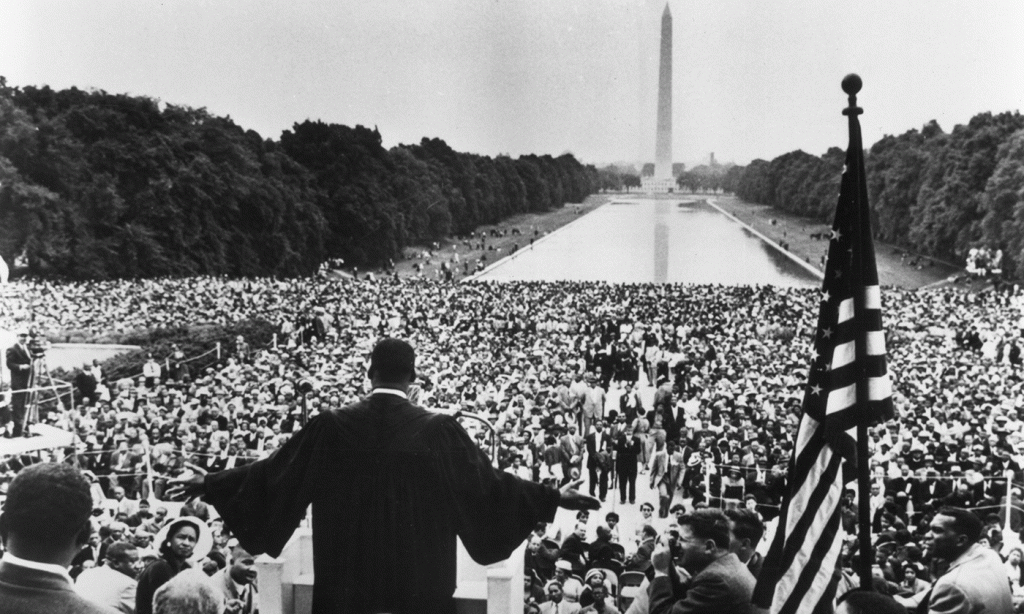
Digital campaigns are compared to startups that got too big too fast and doesn’t know how to grow or think collectively. For MLK’s famous march/speech in order to spread awareness and gather momentum, a mimeograph was used to create leaflets that organizers snuck into a University to use. There were logistics involved such as carpooling, meeting on several occasions, and organizing peaceful protests, conversations that were had over a period of time. Tufekci argues that you lose something when we take away the process. This process she argues forms the ability to think together; to think collectively to accomplish a goal. Part of the thought process and execution of the goals helped the movements to gain momentum. It is much easier to post a snippet and end it with a hashtag, but by doing this are we doing the movement a disservice. Are we actually discrediting the movement? We may be losing it before even gaining traction. Now, people are getting used to seeing hashtags but they could be losing their significance.
Digital movements offer greater scale, but this won’t matter if there is no motivation. In the reading, Digital Culture Shift Report, the Movement Strategy Center suggest five movement pivots. Each hold a broad awareness that grounds approaches to the Internet in a clear analysis of power. They propose an approach to the Internet with a digital justice lens, helping groups whom are frequently excluded have more access.
Hold broad awareness that grounds approaches to the Internet in a clear analysis of power. The conventional framing of the “digital divide” presumes that more access to technology will address social inequities, but the everyday lives of poor and working people are not lacking in technology. In fact, their lives are technology-rich. However, much of
the technology is used to track or make decisions about them. Some people may view
technology as an infraction on their privacy. Big data can reproduce existing discriminations.
Lead with a bold vision for our digital future. Reimaging the meaning and role of civic, political, and organizational tech. For example, crowdsourcing, democratic participation, Voter Activation Network, and grassroots-led campaign platforms)
Shift focus and funding to elevate new voices and necessary partnerships between those at the margins and those in the mainstream. This talks about the need to build power being the goal of social movements and the best way to build power is through relationships. They suggest reorienting our approach to include the interests of marginalized communities thereby creating a fight that both marginalized and privileged communities can participate in resulting in enough power to win structural changes that guarantee equity.
Align and advance a movement-wide and multi-level strategy. Field leaders joined by foundations recognize the need for a more integrated approach. Together they ask questions like, how do we balance security and privacy? How will we connect the entire world’s populations? How will we archive all information and make this knowledge accessible? And How can technology make democracies more participatory and responsive?
Trust and innovate to transform inequality. According to the reading, both require risks and relationships for new voices and visions emerging from this digital culture shift.

Network sociologist, Manuel Castells describes how “being able to make and maintain and negotiate networks gives people power.” Technology disrupts networks and may offer opportunities for less privileged people to obtain control, but the privileged have often already regained control of those networks.”
Question: Have you participated in digital movements? What did you find rewarding? What did you find to be challenging?
Works Cited:
Ten Twitter Hashtags that changed the way we talk about Social Issues
The Digital Cultural Shift: From Scale to Power
Weekly News Article:
 SOCIAL MEDIA & SOCIETY
I have participated in a digital movement which was for giving out food to people that needed it in New york city due to the food shortage that was happening. it was very interesting to see the types of people that appeared at the event. We were all there for the same reasons and the motive was to help people in need which take a lot for people in the city to spare time for the needs of others. I always did stuff like that every change I get.
LikeLiked by 1 person