
This week we seen the use of digital activism in many forms like from the book group 2 presented on Wednesday and learned more about digital activism through the TED Talk with Zeynep Tufekci and the article on the Washington Post. All of these works are people using their platforms to campaign for change in social aspects. We have seen people using social media, literature, and protest.
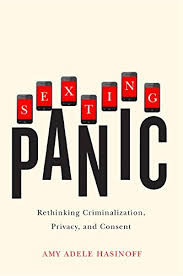
Sexting Panic seemed to be a very interesting book. From hearing group 2 present it was a clear use of activism. The author Amy Adele Hasinoff is an activist. Hasinoff is clearly making us recognize a clear social issue that is trying to make teens unable to express themselves. Sexting is bound to happen at a young age because of the things young people are exposed to nowadays. The book reminds us of laws that are unjust that the person whose privacy was invaded has to pay the price. Instead of trying to punish people for things they will ultimately end up doing in life they should punish the people who expose them. Sexting is the sending of explicit messages and images through text. Everyone is free to do many things in their life and this is one. If someone wants to send their partner something explicit that is their right to do. If the recipient leaks those photos they are in the wrong and the person who sent the photo does not deserve to be punished. If we punish the leakers instead it will be a better resolution to the problem. What people send them should stay private unless both people want it to be spread. The wrong people are being punished for something that is out of their control.
The TED Talk was a description of the effects of online activism and other forms. She feels online activism does not how that long lasting effect like the original forms of activism like protest. She is partly correct because as she explains these social media movements are easy to grow and make big, but it does not last as long as protest movements that keep those interactions. Now people just participate and movements, but do not change their way of thinking. This is not enough people need to agree there is need of change and think collectively to resolve the issue. This was lost from the shift to starting movements on social media instead of protesting movements. All of the attention is good, but lets not forget the point for a real social change.

Hashtags on Twitter changed the way we talked about social issues as well. One big hashtag I remember was the #IceBucketChallenge. The challenge became very huge, but what started as a way to get people to donate for research funds for ALS became something people were just doing for fun. Attention was being raised to the challenge, but the cause was lost. It was something for friends to do to challenge their friends to donate money to a cause while adding some fun to it to encourage others. Before seeing some celebrities doing donations I did not know what the ice bucket challenge was for besides just dumping cold water on your head. What I take from this article is the same from the TED Talk. With online activism growing in popularity it is taking away some of the benefits of going out and protesting.

WEEKLY NEWS: https://people.com/human-interest/50-richest-americans-almost-have-more-money-than-half-the-country/
The article I chose was a news article I saw on Twitter I found very shocking. The 50 richest people in America have almost more wealth than the entire U.S. I just thought that was a crazy fact.

 SOCIAL MEDIA & SOCIETY
I like what you said about the use of only online tactics resulting in effects that are not necessarily long lasting. I kind of had a similar idea so I definitely agree. I also really like what you said about people participating, but not changing their mind sets. I think because we can hide behind screens, we forget that there are people, lives, and ideas on the other side. We forget to try to understand a point of view before we try to defend our own (not that this doesn’t happen in real life, but I think technology definitely increases the effects).
LikeLike
This is very well written post! I agree with evep31 about your idea of people hiding behind there screens just saying no to everyone else’s opinion. I believe most people that do this are just trying to get an arise out of someone to get that extra attention. If people treated social media differently excepting other peoples ideas then social media would be better place for everyone.
LikeLike
I like that you said that “With online activism growing in popularity it is taking away some of the benefits of going out and protesting.”. I feel like this was very true especially since it was evident in the protest happening over the summer. I think that protesting became a little “easier” since a lot of people were re sharing posts and videos of the protest. A lot of people online did their part to bring awareness or even to state their feelings of what was happening. But I think in protests a lot of the impact happens out on the street. When everyone is out there physically putting in the work to speak for justice, it can really intimidate the higher power. Online, The strength in numbers isn’t as intimidating as it seems and theres a lot that can be ignored. I will say though that digital activism has also been good in a way. A lot of more people especially the young people i believe are starting to care more about justice and how things are handled in our political system.
LikeLike