
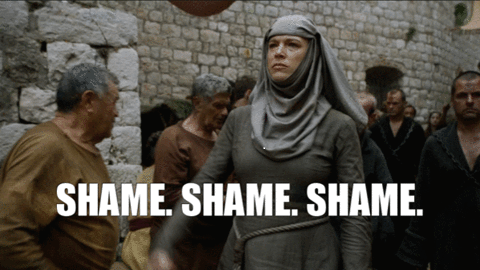
Cancel culture has become a way for people to publicly shame others who they feel have acted inappropriately. In some ways it has brought attention to many injustices and called individuals out for their bad behavior, but it also has consequences. It is easy to hide behind a desk and a computer and say things that you wouldn’t normally say to someone. What has happened to our ability to talk things through and engage in conversation? According to a Harper’s Magazine article, A Letter on Justice and Open Debate, the free exchange of information and ideas, the lifeblood of a liberal society, is daily becoming more constricted. According to experts, we are becoming a society of intolerance to opposing viewpoints. The normalcy of public shaming and censorship is going to be stifling to our democracy.
“The way to defeat bad ideas is by exposure, argument, and persuasion, not by trying to silence or wish them away.”
-A Letter on Justice and Open Debate, Harper’s Magazine, July 7, 2020.
The opposite side of this argument is discussed in the Independent article, The Spiral of Silence: How Social Media Encourages Self-Censorship Online. The article argues that social media stifles discussion on important issues. This resonates with me because I know that sometimes I would like to post my true opinions but resolve to not post them because of facing backlash from others. I also don’t want to “have it out” with family members who may feel opposition to what I am saying. I really just don’t feel like arguing with anyone. Yet, I also am weary of not being able to have real discussions with others. I feel like now, politics are so tied in with everything that is going on that it would be difficult to have a thoughtful and informative discussion. In the article, How Social Media Encourages, researchers produced a report suggesting that Facebook and Twitter make us less likely to express opinions if we think others will disagree with us. The researchers concluded, “An informed citizenry depends on people’s exposure to information on important political issues and on their willingness to discuss these issues with those around them.” I wonder what will happen to our democracy if we are unable to have real discussions?
We have become a nation of shamers and judgement makers. I have a hard time knowing how to feel about this because in the moment it can seem like a good thing if someone is facing consequences for their bad behavior. Quite possibly, they wouldn’t have been caught and could go right on through life being a jerk. But where does it stop? This is a difficult topic and I don’t think there is necessarily one solution. It only takes one minute to post something on social media that you regret possibly for the rest of your life. Does that mean that you should lose everything when there is the possibility of learning something?
In the Black Mirror episode, Hated in The Nation, we saw what happened to the people who publicly shamed an individual by posting #deathto_ The journalist, Jo Powers was sent a cake with obscenities and constantly harassed online and had obscenities shouted at her when walking down the street. When Jo is murdered, Blue who is working with the police suspects it has something to do with her online column. Blue and the detective, Karin have opposing viewpoints and Karin downplays the effects of internet rage when she says, “That internet stuff drifts off like weather. It’s half-hate, they don’t mean it. The hate in a marriage, that’s in 3-D, that’s had work put into it, that’s sincere.” When they continue to investigate the murder, they speak with a teacher who also applied the hashtag and find out that it was crowd-sourced. The teacher tells them about the #deathto_ hashtag and doesn’t see anything wrong with it. She thinks it is funny.
When they do the autopsy of Jo, they find the ADI drone honeybee lodged in her brain and that is when the episode takes a further twist. Blue figures out the connection between the bees and the hashtag and finds out that the person who gets the most hashtag in a day will be killed. Unaware, the hashtaggers are sought out and attacked by an individual ADI bee which seems to attack their nervous system giving them a seizure and convulsions. “The technician said that the ADIs crawl through the area of the brain where you feel pain, causing immense agony.” They meet a woman who is badly shamed on the internet and her roommate, Garrett is the one responsible for the attacks. He had written a manifesto explaining that he is doing this to show the effects of public shaming. They discover that he has a list of everyone that has used the #Deathto_ hashtag. He then sends the swarm of bees to kill everyone on the list for using the hashtag. He escapes, but it is later shown in a remote city with Blue tailing him. It is implied that justice will be served. I thought this was a good episode in that it highlighted Internet bullying, harassment, public shaming, and the dangers of AI all in one episode.
How do you feel about public shaming? Have you ever been the victim of internet bullying?
Works Cited:
The Spiral of Silence: How Social Media Encourages Censorship Online https://www.independent.co.uk/life-style/gadgets-and-tech/spiral-silence-how-social-media-encourages-self-censorship-online-9693044.html
Harper’ Magazine, A Letter on Justice and Open Debate, July 7, 2020.
Black Mirror, Hated In The Nation (Netflix) Season 3, Episode 6
Weekly News Article
Pecorrin, Allison, Turner, Trish. Unanimous Senate commits to peaceful transfer of power after Trump refuses. ABC News. September 24, 2020.
 SOCIAL MEDIA & SOCIETY
I really liked what you said about internet bullying and its connection to the episode we had to watch this week. Sometimes when I watch these episodes I find it hard to find a meaning to them, But this one was fairly easy. The tweets that were sent out during this episode actually do happen in everyday life and its basically just someone hiding behind a screen and saying the worst things possible to another living person, just because they disagree with a decision they made. It can be directed towards kind of famous people and Im willing to bet all of them just laugh at there phone like the journalist in the episode.
LikeLike