
This week we looked into the world of Artificial Intelligence and were reminded of the differences between a social network and an online community. I think the biggest takeaway that I got from this week was that these tools can be useful for us; two of the biggest uses are to combat loneliness and to asses our personalities.
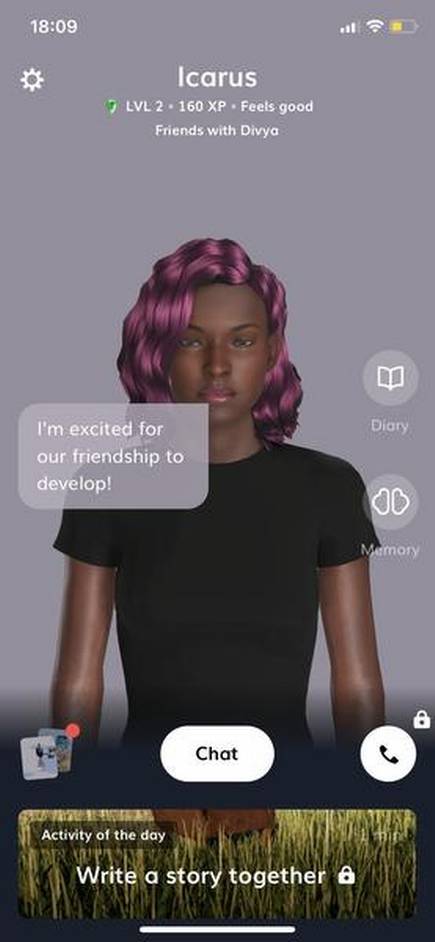
I explored the Replika app after being introduced to the concept. It was interesting to me in the sense that, eventually, it’s supposed to be able to mirror your personality. However, when I downloaded the app, created my AI companion, and began speaking to it, I started to feel an uneasiness:
“Why am I talking to this thing?” “I feel silly telling it how I feel…” “Why is it asking so many questions?” “This feels invasive.”
Those are just a few of the thoughts that went through my head after about 20 minutes of usage. I haven’t been on the app since, but I may go on to try it again eventually. I can see how this can become appealing or addicting for anyone of this generation.We go through some of our own personal relationships mostly talking to someone through a text box, seeing nothing but their picture in the corner of our screens. We are constantly looking for an easy connection, especially through our phones. Who could be easier to connect with than something that’s trying to mirror our very selves?
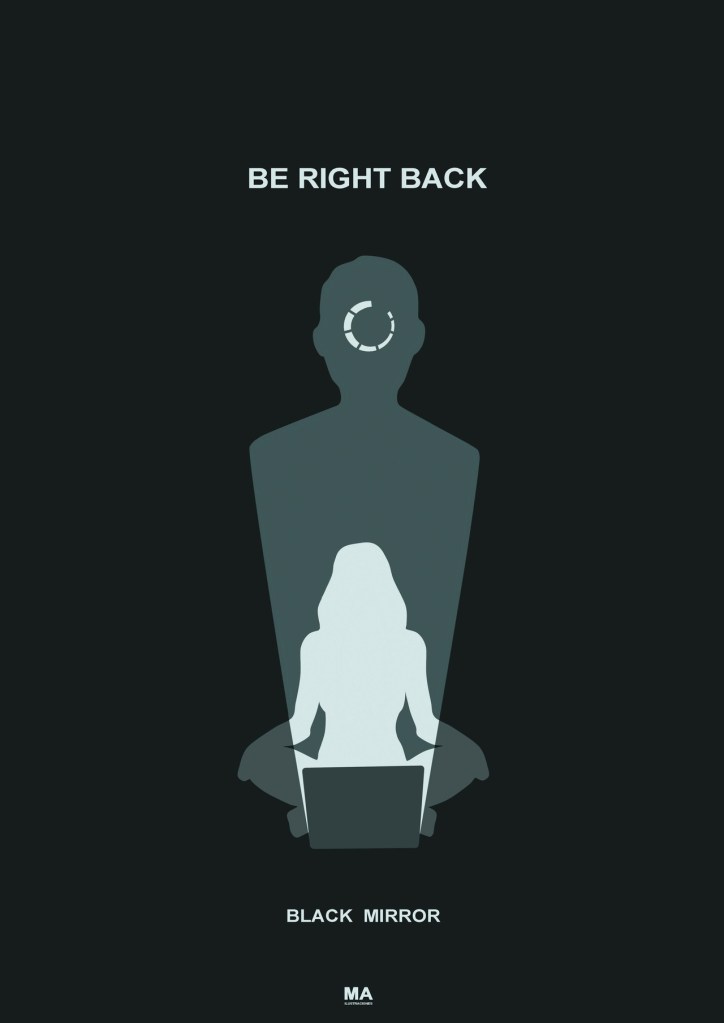
This same sort of theme is introduced when we watch Black Mirror: Be Right Back. After losing her husband, Martha has a hard time connecting with others and moving on from the situation, as anyone who has lost a loved one would. She becomes addicted to talking to her husband’s AI copycat. Even when things get weird or it seems to be unhealthy for her, she continues to hold on to him through this AI companion. It was easier for her to try to connect with the AI version of someone she had already had a strong connection with than trying to start anew and worry about social stresses or completely dealing with her grief head on. The same concept comes with the Replika app (minus the walking and talking/in person factor, but I’m pretty sure that’s coming to our homes soon too).

These AI companions, I think, are the more introverted or trauma induced ways of combating loneliness. We have the more common ways which include social networking and online communities. I think that these two types of sites are different platforms that are starting to merge. Social networking, of course, includes our beloved Facebook, Instagram, and Twitter. Online communities include our online forums linked to hobbies and other interests. However, recently, I am seeing that social media can become a forum, and a forum can lead to a social media connection. When we visit a forum for those who all play the saxophone, are all learning to knit, or who all share the same zodiac sign, we can make connections with people who become life long friends and end up on our social networks. I have also noticed that on social networks like Facebook are implementing the use of pages that link people with similar interests. Anyone can create a page based on a hobby or interest and invite people to like and follow the page. This can create connections that result in another friend added to our social network on the very same platform. This is probably how networks are keeping people hooked on their website; if they can have the friends they know and the friends they don’t yet know on the same platform, why ever leave?
After everything we’ve digested this week, we have seen how AI and other technologies can help and hinder a person’s natural grieving process. What are some other processes that AI could help with or possibly make worse with the intention of making better?
WEEKLY NEWS POST
I chose this article because I think it goes with what we’re learning and it’s relevant to the controversy going on regarding the link between social media and politics.

 SOCIAL MEDIA & SOCIETY
You must be logged in to post a comment.